



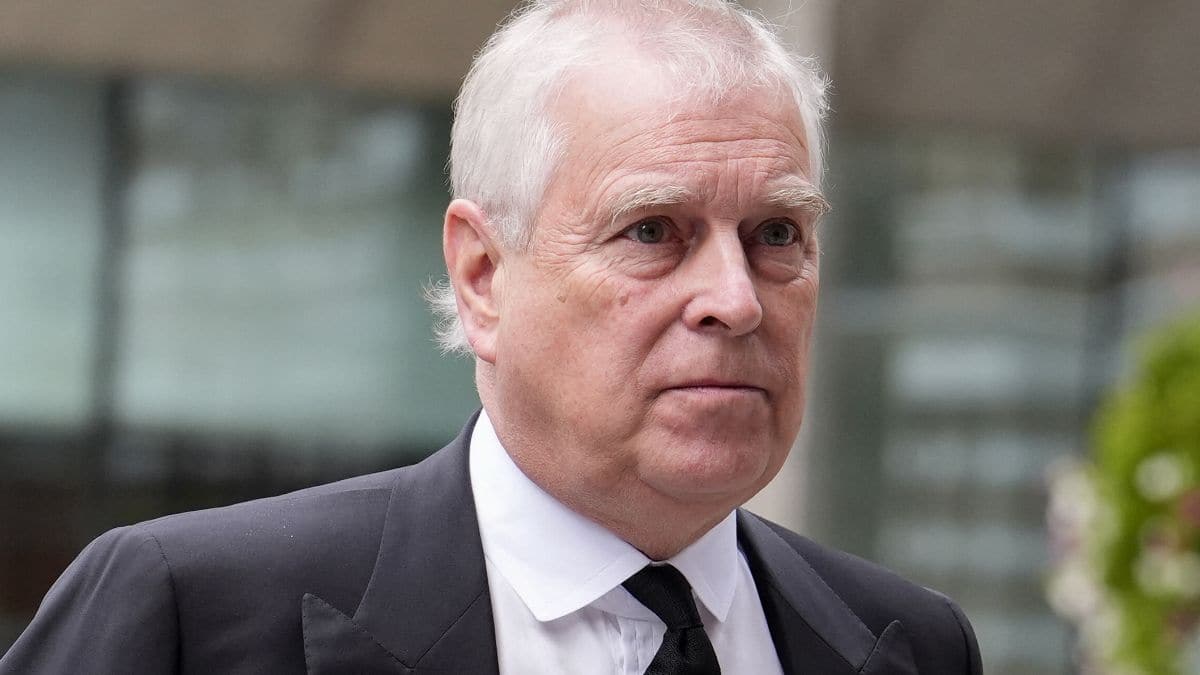
On February 19, 2026, Andrew Mountbatten-Windsor, once known to the world as Prince Andrew, Duke of York, was arrested by the British police on suspicion of misconduct while in public office, linked to his dealings with convicted sex offender Jeffrey Epstein, including the recently released, shockingly graphic images of him in compromising positions.
The arrest took place at his residence on the Sandringham estate in Norfolk as investigators searched properties tied to the case.
This is not merely another chapter in the long, sordid Epstein saga; it is something far more consequential. It is the moment the British establishment, monarchy included, was forced to submit, visibly and undeniably, to the rule of law. Not a conviction, but a constitutional shock.
Let us be precise. Andrew has been arrested on suspicion, not convicted. The investigation centres on allegations that he shared sensitive or confidential information with Epstein during his tenure as a UK trade envoy.
Under British law, misconduct in public office concerns a serious and wilful abuse of official power and can carry severe penalties, including life imprisonment in the gravest of cases.
Andrew has previously denied any wrongdoing related to his Epstein association, yet the symbolism of the arrest eclipses the legal technicalities.
Since Andrew is now described as the first senior British royal in modern history to be arrested, it is an earthquake in constitutional terms.
For years, the Epstein scandal has exposed financiers, celebrities, and politicians across continents. But meaningful criminal accountability beyond Epstein himself and his associate Ghislaine Maxwell has remained limited—until now.
Prince Andrew’s name had surfaced repeatedly in civil litigation and media scrutiny, leading to his withdrawal from royal duties and loss of titles. Yet, until now, the legal system had stopped short of physically confronting the royal at the centre of those associations.
This arrest changes that psychological boundary. It signals that the Epstein scandal is no longer merely a transatlantic criminal story; it has become a test of Western institutional credibility.
Britain, it seems, has made a calculated gamble: law over legacy. The British state understands symbolism better than most; it built an empire on it. So, this arrest is not accidental theatre—it is assertion. The monarchy survives in 2026 only if it submits to the same law as everyone else.
King Charles III has publicly expressed support for the legal process, emphasising that the investigation must proceed appropriately.
This is crisis management at a civilisational level. The British monarchy is today not defending Andrew but itself.
The timing is also geopolitically significant. Western democracies frequently lecture the Global South on transparency, accountability, and rule of law, yet they themselves face rising domestic scepticism, fuelled by perceptions of elite impunity.
By allowing the arrest of a royal—even a disgraced one—Britain is making an argument not just to its citizens but to the world: institutions must be stronger than lineage, even if it is a centuries-old active monarchy.
India, with its republican constitution forged in resistance to colonial hierarchy, has always rejected inherited authority as a basis for legal privilege.
From our perspective, this moment is layered with historical irony. The empire that once insisted on deference to the Crown must now demonstrate equality before the law, a principle India embedded in its founding framework in 1950.
For Indian observers, this is less a scandal than a validation of a long-held belief: no system, however ancient or dynastic, can endure unless it is accountable. India’s own democratic journey has repeatedly tested that idea, sometimes imperfectly, but persistently.
There is no doubt that Britain has taken a real risk. Arresting a figure so closely tied to the monarchy was a considerably brave move involving real danger. Yet not acting would have been even worse. In the Epstein era, silence is interpreted as complicity.
Now, what happens next will decide many things. An arrest only begins a legal story; it does not end one. Investigators are continuing searches and inquiries tied to the case.
The world will now watch whether charges are formally filed, how independent the prosecution proves to be, and, most importantly, whether accountability will extend beyond a single individual. Should the case falter under pressure, it will only reinforce global cynicism.
The Epstein scandal has always been about more than crimes. It has been about systems that allowed proximity to wealth and influence to dull scrutiny.
Prince Andrew’s arrest marks the first time one of the most symbolically powerful institutions in the West has been drawn directly into that reckoning through criminal procedure.
That is why this moment matters globally, and why it will be studied far beyond Britain.
History rarely offers neat moral endings, and occasionally accountability. Now, it has arrived with a knock on the royal door.
(The author is a freelance journalist and features writer based out of Delhi. Her main areas of focus are politics, social issues, climate change and lifestyle-related topics. Views expressed in the above piece are personal and solely those of the author. They do not necessarily reflect Firstpost’s views.)
End of Article

