



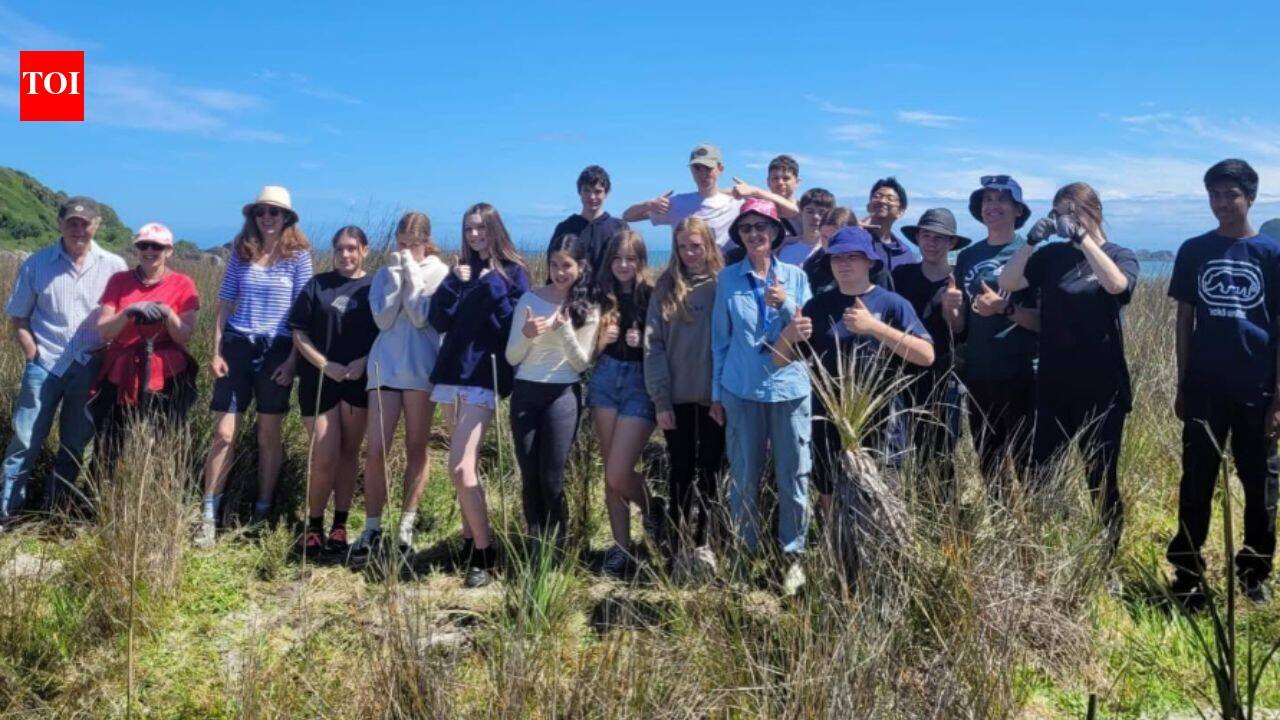
A coastal area in New Zealand that was once bare pasture and windswept grassland has been transformed after 29 years of planting by school students. Since 1997, generations of Buller High School students led by now retired school teacher Janet Pottinger, have helped bring native vegetation back to Tauranga Bay and nearby Cape Foulwind.The work was carried out through Buller High School’s Year 9 environmental programme. According to local Department of Conservation, sudents planted native shrubs and trees along a walkway, seafront and car parks, gradually changing areas that were once mostly windswept paddocks, grassland and pasture.The final planting took place in November 2025, shortly before Pottinger retired. The Department of Conservation (DOC) staff joined the students and Pottinger for the planting day, marking the end of her 29-year involvement in the project.The change is now visible across the area. What was once largely open grassland has been replaced by native vegetation, creating shelter and habitat for a range of species. The landscape has also changed significantly for visitors who come to see seals and walk along the Cape Foulwind Walkway.Photographs taken over the years show how the landscape changed. An area that was still largely grassed in 2004 had become covered with flax and other vegetation by 2015. Another roadside area photographed before planting in 2010 had changed significantly by 2016.The change was also visible along the track. Photographs from 2004 and 2008 show how vegetation quickly began covering areas that had previously been open.
Role of Harakeke
Former DOC ranger John Green, who attended the final planting, recalled what the area was like when it came under DOC management in 1987. At the time, staff were finding dead penguins because of dog attacks. Cattle were also collapsing shearwater burrows. The situation is different today.Harakeke, also known as New Zealand flax, was the main plant used in the project. It was chosen because it grows quickly, is hardy in coastal conditions and provides habitat and a food source for native birds and other animals.The plants also helped create conditions for other native species to establish. Birds attracted by its summer flowers also helped spread seeds, supporting the growth of vegetation beyond the areas directly planted by students.Over time, the restored areas became home to a range of native wildlife. DOC said they now support sooty shearwaters, blue penguins, fairy prions, weka, seals and many other native birds, lizards and invertebrates.
More than 12,000 plantings
The scale of the work carried out over nearly three decades was huge. According to Pottinger, students planted 12,425 plants during 108 planting trips.Around 2,800 students were involved in the project over the 29 years. With four planting trips taking place each year, the work became a regular part of the school’s environmental programme.Pottinger said students remained enthusiastic about the trees they planted. Some later returned with their families to see how much the plants had grown.“Over the years I have found that the students were always very enthusiastic about the trees they planted and many of them were proud to show their whanau years later how much their plants had grown,” she said.At the final planting in November 2025, Pottinger said the timing had worked out well because she was retiring and there was no longer anywhere left to plant. DOC said the project showed the value of doing a little work regularly.The project was also awarded a West Coast Tai Poutini Conservation Award, a Trustpower West Coast Supreme Award and a Plant Conservation Network Award.
