



6 min readMay 13, 2026 12:53 PM IST
First published on: May 13, 2026 at 12:53 PM IST
As Prime Minister Narendra Modi arrives in Oslo next week for the forthcoming India-Nordic Summit, the visit carries the weight of a long-overdue diplomatic milestone. This is the first time an Indian Prime Minister has set foot on Norwegian soil since Indira Gandhi’s visit in June 1983 — a gap of over four decades that belies the profound, if often understated, historical and contemporary linkages between our two nations. From the linguistic resonances of the word sambandh (connection) in Hindi and samband in Norwegian, to the pioneering fisheries projects of the 1950s, the roots of this relationship run deep. Yet, as the Prime Minister joins his counterparts from Denmark, Finland, Iceland, Norway, and Sweden, the agenda is less about nostalgia and more about a strategic recalibration towards a partnership of the future.
The Nordic region, often viewed through the prism of its exceptional social models and tranquil landscapes, has emerged as a powerhouse of specialised technology and capital. For an India navigating a volatile global order, the “Nordic Way” offers more than just inspiration; it offers concrete solutions to the most pressing challenges of our century. The Oslo Summit represents a pivot from traditional diplomacy toward a “Green Strategic Partnership” that spans the blue economy, renewable energy, and deep-tech innovation.

Norway occupies a unique position in this constellation. It was among the first countries to recognise an independent India in 1947, and our developmental journey has been quietly intertwined ever since. In the early 1950s, Norway launched its first-ever international development programme in Kerala. This pioneering initiative, focused on modernising fisheries and introducing motorised boats, was a hallmark of the Nehru-Gerhardsen era. It is a testament to the project’s success that its legacy lives on through the National Institute of Fisheries Post Harvest Technology and Training (NIFPHATT), remaining a vital part of Kerala’s coastal economy.
Today, the opportunity exists to replicate this model of localised excellence by deepening cooperation with selected Indian states — such as Kerala, Tamil Nadu, and Gujarat — that possess the coastal or industrial infrastructure to absorb Norwegian expertise. The economic logic for a deeper engagement is now irrefutable, especially following the landmark EFTA-India Trade and Economic Partnership Agreement (TEPA). This agreement is a game-changer, committing EFTA countries — including Norway — to a target of $100 billion in investments in India over the next 15 years. Central to this will be the role of the Government Pension Fund Global, Norway’s sovereign wealth fund. As one of the world’s largest investors, its increased exposure to the Indian market would not only provide the long-term patient capital required for India’s infrastructure but also signal a vote of confidence in our economic trajectory.
One hopes the Prime Minister’s discussions in Oslo will pave the way for more direct institutional investment into India’s burgeoning green-tech and manufacturing sectors. Energy security remains the cornerstone of our strategic complementarity. Norway’s technology in offshore wind, green shipping corridors, and carbon capture and storage (CCS) is a perfect match for India’s scale and manpower. As India seeks to decarbonise its heavy industries, the Norwegian experience in the circular economy and renewable energy offers a viable roadmap. Our collaboration on green shipping corridors, in particular, could revolutionise maritime trade, making the “Blue Economy” a sustainable engine for growth. The potential for Norway to assist in scaling up India’s hydrogen mission or providing specialised maritime competence is immense.
Furthermore, the Arctic-Indian Ocean linkage is a burgeoning frontier for scientific cooperation. The Arctic and the Indian Ocean are no longer disparate geographies; they are ecologically and strategically linked by the science of climate change, demanding a shared response. India’s interest in the Arctic is not merely academic; the melting of polar ice has direct consequences for the Indian monsoon and our food security. By strengthening ties with Norway, a key Arctic Council member, India can enhance its polar research capabilities and contribute to global climate monitoring.
This scientific synergy is underpinned by a shared commitment to multilateralism, the rule of law, and a democratic world order — values that resonate strongly in both New Delhi and Oslo. India’s relations with the Nordic countries remain an under‑exploited asset in our foreign policy. We have no major disputes dividing us, and the few irritants that have arisen — such as Denmark’s refusal to extradite an arms‑smuggling pilot or Norway’s controversial custody decision involving an Indian child, rooted in cultural incomprehension of practices like eating with one’s hands — should be seen as episodic incidents rather than structural obstacles. The misunderstandings over these matters linger, but their potency has been defused, and they are best resolved through sustained dialogue and a willingness to appreciate cultural differences. Beyond such episodes, the potential for partnership is immense. Scandinavia’s reputation for social innovation, green technology, and democratic resilience aligns well with India’s own aspirations for inclusive growth and sustainable development. At a time when the turbulence of the Trumpian era has unsettled global norms, India and the Nordic countries share a common interest in defending world order and stability. Making common cause with them would not only diversify India’s diplomatic portfolio but also strengthen our voice in shaping a multipolar system that values fairness, cooperation, and rules‑based governance. The opportunity is clear: To transform a relationship free of major conflicts into one of purposeful collaboration.
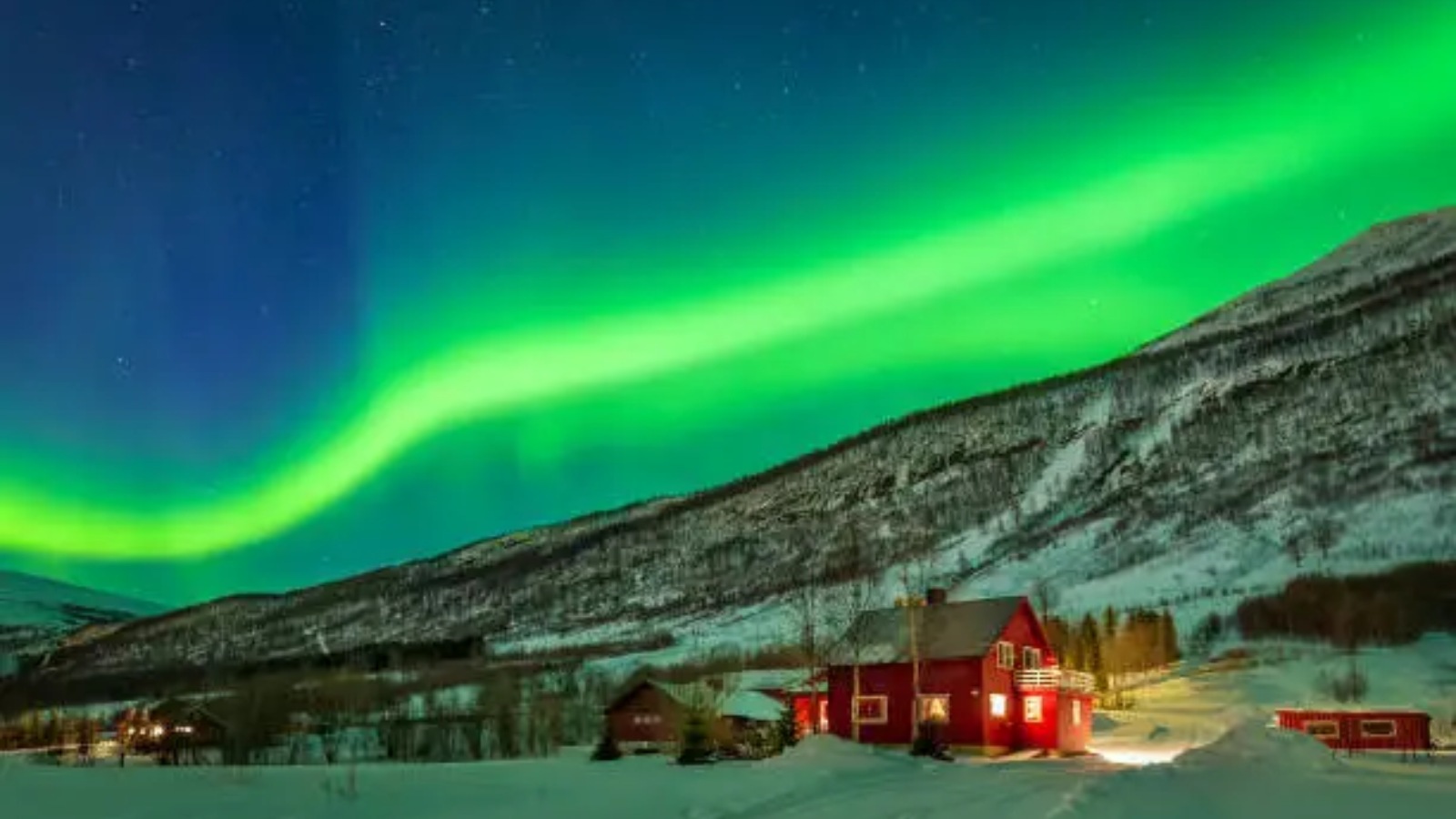
As the leaders gather in Oslo, they will find that the complementarity is striking. Norway has the specialised competence; India has the scale to drive global solutions. From the historic church of St Olav in Serampore to the high-tech shipyards of the present, the journey of India and Norway has been one of quiet, steady growth. Forty-three years after the last Prime Ministerial visit, the Oslo Summit is the moment to transform this historical sambandh into a transformative strategic alliance for the 21st century. The northern lights may be distant from the tropics, but the horizons we seek are increasingly one and the same.
The writer is a fourth-term Member of Parliament (Lok Sabha) for Thiruvananthapuram and chairman of the Parliamentary Standing Committee on External Affairs
