



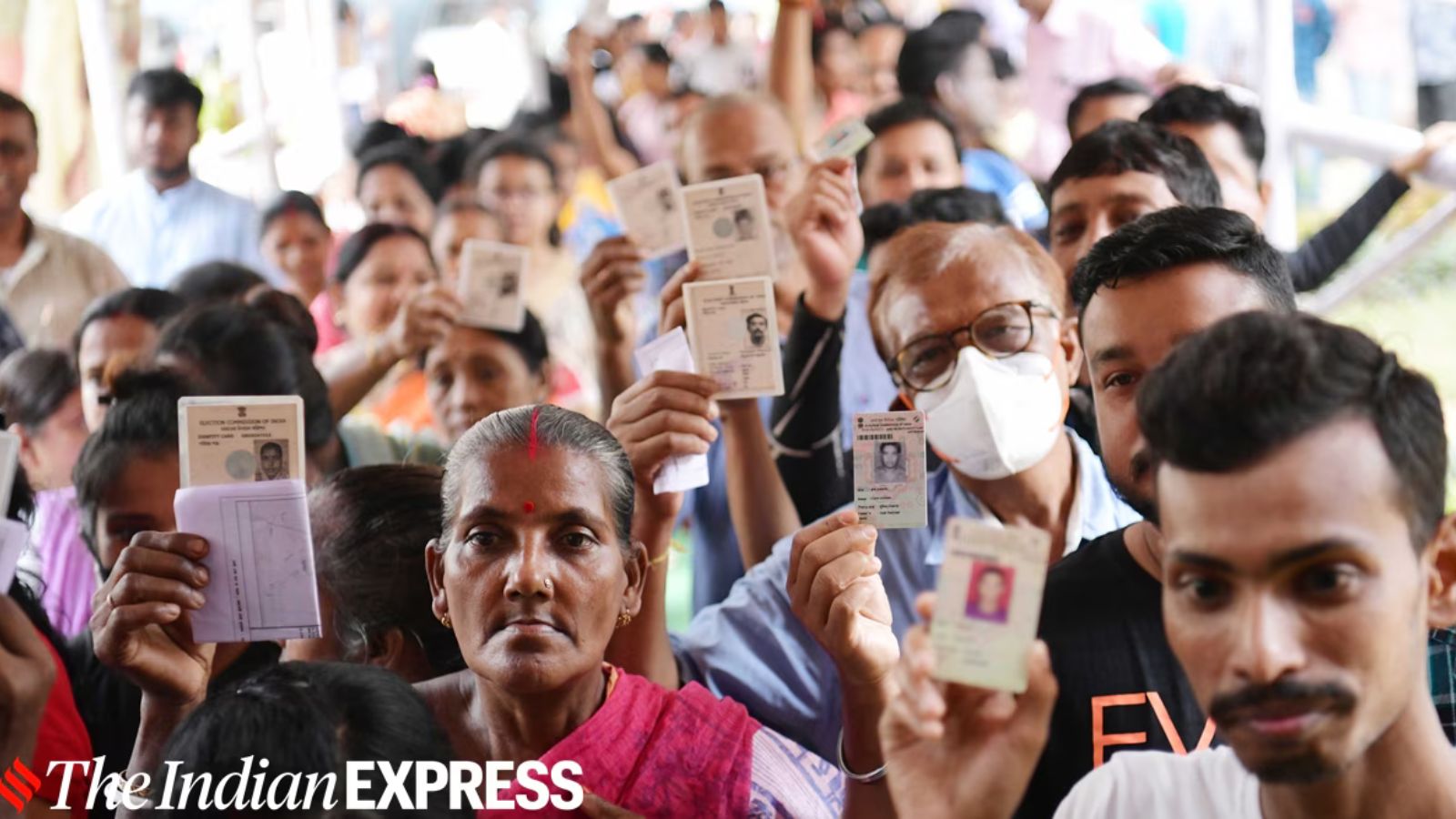
I have long been an advocate of what I thought in the 1990s was an emerging shift in India from the politics of identity to the politics of performance. I took this as the hallmark of a maturing electorate, one that stopped voting based on “who we are” and chose instead to vote after assessing “what they do”. However, recent years have seen the resurgence of identity politics nationwide — and surprisingly, as I realised during the recent election campaign in Kerala, even in the country’s most progressive state.
Kerala has long been celebrated as a state where politics was defined less by identity and more by performance. Its high literacy rates, robust welfare systems, and history of alternating governments between the Left Democratic Front (LDF) and the United Democratic Front (UDF) have given the impression of a polity where governance, social development, and public accountability mattered more than communal or caste affiliations. For decades, Kerala stood apart from the national trend, resisting the pull of identity politics that swept across much of India. Yet recent years, and especially the most recent election campaign, suggest that this exceptionalism is eroding. Kerala, too, appears to be succumbing to the politics of social engineering, where community identity, bloc voting, and religiously defined interests are gaining prominence.

The shift is subtle but unmistakable. Campaign rhetoric, especially at the informal level, has increasingly been targeting specific communities, with parties seeking to consolidate support among religious and caste groups while pretending to appeal to the electorate as a whole. In constituencies across northern Kerala, contests have been framed in terms of Hindu–Muslim polarisation and “cultural nationalism”, and in central Kerala, fears are being stoked among Christians that a Congress-led United Democratic Front government will surrender to Muslim domination. Across the state, candidates have been chosen not merely for their competence or vision but for their ability to represent and mobilise particular blocs. This marks a departure from the earlier emphasis on welfare policies, education, healthcare, and poverty alleviation, which once dominated the political discourse.
The mechanisms of this social engineering are familiar from other parts of India, but their growing presence in Kerala is striking. Community identity mobilisation has become more visible, with religious organisations and caste associations like the Nair Service Society and the Sree Narayana Dharma Paripalana Yogam playing an increasingly active role in shaping electoral outcomes. Bloc voting, once considered alien to Kerala’s political culture, is now assumed by parties as a given, with strategies built around securing the loyalty of specific groups defined by religion or caste. Phrases like “Muslim consolidation” and “Ezhava voting intentions” are uttered by contenders in informal conversation. The curious term “ChriSanghis” has emerged, Christians sharing the Sangh’s suspicions of Muslims. The Congress-led UDF is characterised as a “party of minorities” even by the supposedly godless Communists, whose LDF government organised an Ayyappa Sangamam six months before the elections! Interests that were once articulated in universal terms — such as access to education or land rights — are now framed through the lens of religious identity, with parties promising benefits or protections tailored to particular communities.
Several factors explain this shift. The national rise of identity politics has inevitably seeped into Kerala, despite its progressive reputation. The growing strength of the Bharatiya Janata Party (BJP) and its allies in Kerala’s political arena has forced both the LDF and UDF to recalibrate their strategies, often by shoring up their own communal bases to counter the BJP’s appeal. Economic anxieties, including unemployment and inflation, have created fertile ground for identity-based appeals, as parties seek shortcuts to consolidate votes in a competitive environment. Identity politics offers a more predictable calculus than performance politics, which depends on the debatable evaluation of governance outcomes.
The implications of this transformation are profound. Kerala risks losing its distinctiveness as a state where progressive politics and welfare-oriented governance defined the political landscape. The rise of identity politics threatens to fragment society along communal lines, undermining the social cohesion that has historically been one of Kerala’s strengths. It also risks producing policy paralysis, as parties prioritise symbolic representation and communal appeasement over broader developmental agendas. When interests are defined in communal terms, the universality of politics is compromised, and the inclusiveness of democracy is weakened.
This is not to suggest that performance politics has disappeared altogether. Welfare schemes, healthcare initiatives, and education reforms continue to matter, and voters remain attentive to governance failures. Yet the growing prominence of identity politics means that these issues are increasingly filtered through communal lenses. An educational policy, for instance, may be judged not only on its effectiveness but also on whether it is perceived to favour or disadvantage a particular community. In this way, identity politics reshapes the very terms of political debate, subordinating performance to communal considerations.
Kerala’s trajectory thus mirrors a broader national trend. The politics of identity, once thought to be waning in the face of modernisation and development, has resurged with renewed vigour. Even in this bastion of progressive politics, community identity and bloc voting are becoming central features of electoral strategy, relying more on stoking communal anxiety than ever before, and raising questions about the future of Kerala’s social democracy. Will the state continue to be a beacon of welfare-oriented governance, or will it be engulfed by the same identity-driven currents that dominate much of India? The answer will depend on whether political actors and civil society can reclaim the space for judging performance, eschewing dark threats of “Jamaat influence” or “Christian persecution” and reaffirming the universal values that once defined Kerala’s political culture.
While performance politics remains relevant, there is a sense in which politicians feel they will only get to “perform” if they can first mobilise votes through identity-based appeals. The task ahead is to ensure that Kerala does not lose sight of its tradition of inclusive, welfare-oriented governance, even as it navigates the pressures of communal polarisation. Only then can it preserve its distinctiveness and continue to serve as a model of democratic progress.
The author is a fourth-term MP for Thiruvananthapuram (Lok Sabha) and the author of Why I Am a Hindu
