



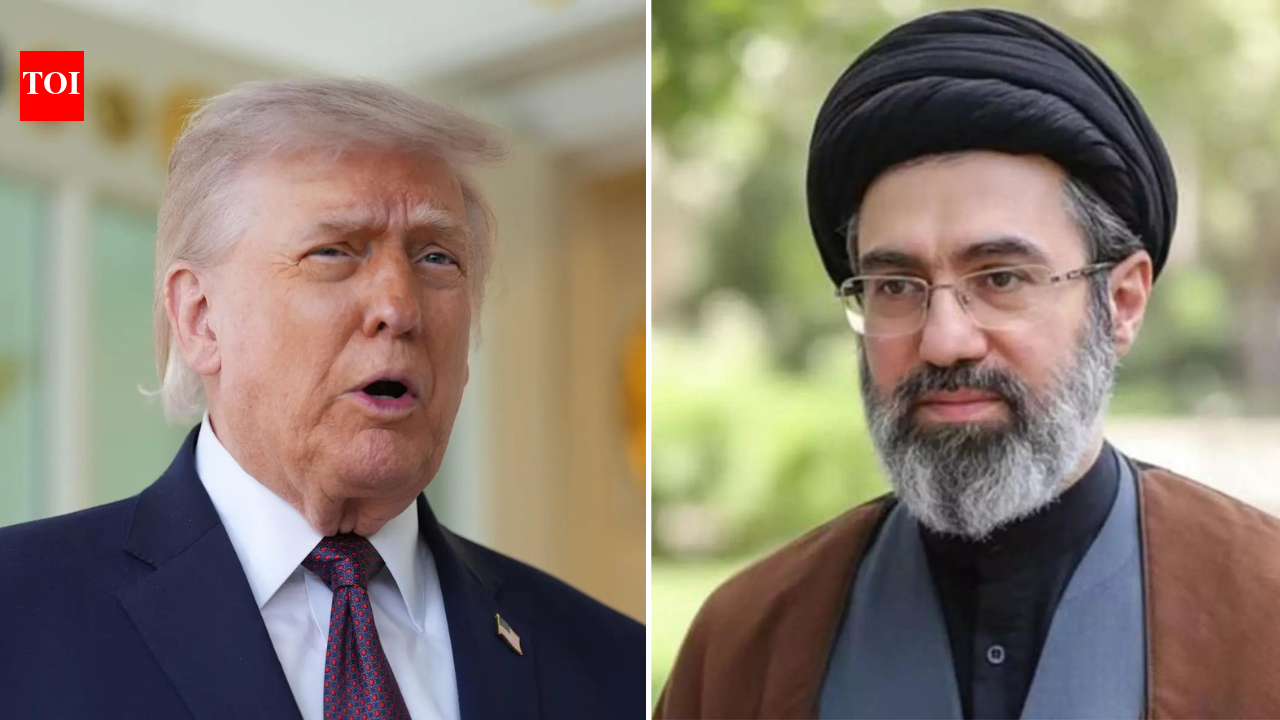
US President Donald Trump on Thursday announced a 10-day ceasefire between Israel and Lebanon, alongside an invitation to both Israeli and Lebanese leaders to visit the White House for “meaningful talks” aimed at de-escalation after what he described as a “very long time” without direct engagement. The truce between Tel Aviv and Beirut marks a temporary pause in hostilities following months of heightened escalation.The breakthrough, driven by high-level phone diplomacy, has brought a brief halt to exchanges between the government of Benjamin Netanyahu and the Hezbollah-backed Lebanese bloc.
Meanwhile, the fragile ceasefire appears increasingly strained, as Washington escalates pressure on Tehran even while pushing parallel peace efforts elsewhere in the region. The United States on Thursday warned it could resume air strikes on Iran and impose a naval blockade of its ports if Tehran refuses to accept a deal to end the ongoing conflict that has engulfed parts of the Middle East.The warning came just hours before fresh diplomatic manoeuvres involving Israel and Lebanon, showing the sharp contrast between tentative peace efforts in one theatre and rising tensions in another.At the same time, Pakistan’s military leadership stepped into the diplomatic arena, with Field Marshal Asim Munir visiting Tehran to meet Iranian peace negotiators as Islamabad attempts to facilitate a new round of US-Iran talks after the first meeting in Pakistan last week ended without agreement. Iranian state television showed Munir holding discussions with Mohammad Bagher Ghalibaf, who had led the Iranian delegation in those earlier talks.Separately, US defence secretary Pete Hegseth issued a stark warning, saying: “If Iran chooses poorly, then they will have a blockade and bombs dropping on infrastructure, power and energy,” signalling that military pressure remains firmly on the table alongside diplomacy.However, Trump’s wider push to stabilise the region has produced mixed outcomes. While battlefield tensions with Iran have eased under the ceasefire framework, Washington and Tehran remain locked in parallel confrontation. Instead of direct military escalation, pressure has shifted to economic and strategic fronts, particularly around the Strait of Hormuz, where maritime chokepoints and reported restrictions on Iranian port access continue to keep tensions simmering.Following a two-week truce announced on April 7 between the US and Iran, Israel continued its strikes against Iranian proxy groups in Lebanon, an action Tehran said violated the ceasefire and threatened the fragile understanding with Washington.US and Israeli officials, however, maintained that Lebanon was not part of the Iran ceasefire, calling Tehran’s position a “misunderstanding.” Behind the scenes, Trump administration officials reportedly pressed Israel to scale back its operations to avoid undermining broader peace efforts with Iran.Trump had earlier signalled urgency for dialogue, posting on social media that he was seeking “a little breathing room between Israel and Lebanon,” noting that leaders had not spoken directly in decades.After announcing the ceasefire, Trump said he had invited Netanyahu and Lebanese President Joseph Aoun to the White House for peace talks, potentially marking the first direct engagement between the leaders in 34 years.
