



Cut your finger, and within days the skin knits itself back together without a single instruction from you. Catch a mild cold, and your body fights it off while you sleep. We tend to credit medicine for making us well, yet a great deal of healing happens on its own, quietly, inside us. The ancient Greek physician Hippocrates noticed this long before anyone understood how it worked. Natural forces within us are the true healers of disease, runs the line so often linked to him. It’s a popular rendering of an idea that sits at the very root of his medicine. Hippocrates believed the body holds its own power to recover, and that the doctor’s real job is to help that power along rather than fight against it. Twenty-five centuries later, science keeps proving him right.
Quote of the day by Hippocrates
“Natural forces within us are the true healers of disease.”
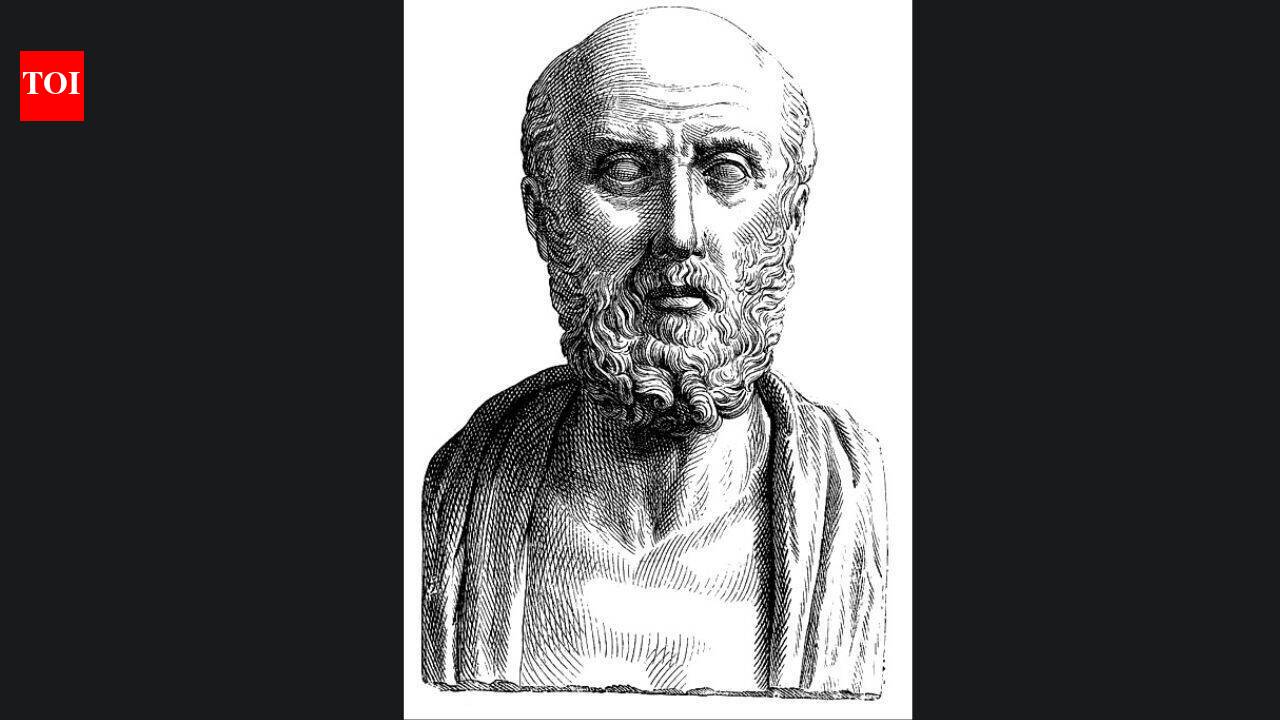
Who was Hippocrates
Hippocrates lived in ancient Greece, roughly 2,500 years ago, and is often called the father of medicine. At a time when illness was widely blamed on the anger of the gods, he argued that diseases had natural causes that could be observed, understood and treated. That single shift, from superstition to careful observation, helped turn medicine into something closer to a science.His name lives on in the Hippocratic Oath, a pledge of ethical conduct that doctors still echo today. Whether every famous line attributed to him is truly his is another matter, since much was written by his followers and translated many times across the centuries. But the core of his thinking is well recorded, and the healing power of nature sits right at the heart of it.
What Hippocrates actually taught
The exact six-word version of this quote is a modern, polished translation, but the idea behind it is genuinely his. In the writings known as the Hippocratic Corpus there is a real and recurring teaching that nature itself is the physician of disease. Greek medicine captured it in a phrase later written in Latin as vis medicatrix naturae, the healing power of nature.What Hippocrates meant was practical, not mystical. He had watched the body recover from countless ailments. Fevers breaking, wounds closing, strength slowly returning. From all that watching he concluded that the body has a built-in pull toward balance and repair. The wise physician, in his view, works as nature’s assistant, clearing obstacles and offering support, rather than forcing a cure by brute effort. It was a humble and, in hindsight, remarkably modern way to think about medicine.
What is the meaning behind the quote by Hippocrates
At its simplest, the quote says the real healer is not the medicine, the doctor or the hospital, but the living body itself. Treatments matter, but they mostly work by giving the body’s own repair systems the chance to do their job.This is easy to forget in an age of powerful drugs and clever machines. We picture cures arriving entirely from outside us, handed over like a parcel. Hippocrates reminds us that the most sophisticated healing technology any of us owns is already sitting inside our skin. The immune system hunting down an infection. A broken bone quietly rebuilding itself. A wound sealing shut while you get on with your day. These are the natural forces he was pointing at, the constant, unseen work of a body trying to mend itself.
Why this quote is relevant
Modern science has only deepened respect for this idea. We now understand in detail how the immune system, cell repair and the body’s balancing systems carry much of the load in getting us well. Good medicine increasingly sees itself as a partner to those processes rather than a replacement for them.None of this means turning away from doctors or treatment, which Hippocrates himself never did. He was, after all, a physician to his core. The point is gentler than that. Healing is something your body actively does, given half-decent conditions, and that deserves respect. It can quietly change how we treat ourselves when we fall ill, with a little more patience and a little less panic.
How to apply this quote in daily life
You can honour this idea in some simple, sensible ways.
- Give healing time. Many minor illnesses and aches settle on their own with rest. Letting your body have that time is often part of the cure, not a delay to it.
- Support the basics. Sleep, rest and looking after yourself give your body the conditions it needs for its repair work. They matter most exactly when you’re run down.
- Don’t panic at every symptom. A body that mends cuts and fights off bugs is doing its job. A bit of trust in that can spare you a lot of needless worry.
- Work with professionals, not against your body. When you do need a doctor, think of treatment as helping your body’s own healing along, which is precisely how Hippocrates saw it.
Other famous quotes by Hippocrates
- “Life is short, and the art long; the occasion fleeting; experience fallacious, and judgment difficult.”
- “Make a habit of two things: to help, or at least to do no harm.”
- “The physician must be able to tell the antecedents, know the present, and foretell the future.”
There’s something quietly reassuring in this ancient idea. You are not a passive patient simply waiting to be fixed from the outside. Your body is already, constantly, working to heal you. Hippocrates only asked physicians to notice that power and help it along. Thousands of years later, with all our science, it remains some of the wisest advice in medicine. Trust the healer within, and give it what it needs.

