



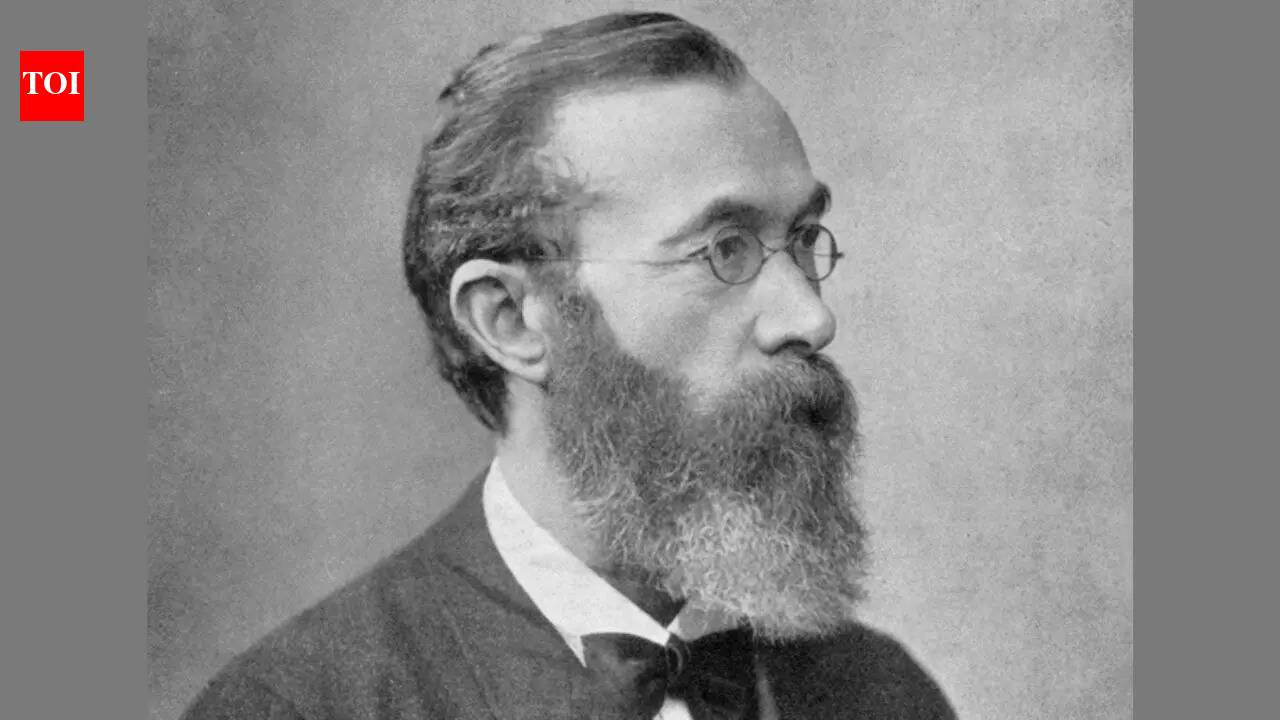
Most people use words like trust, honour, fairness, and respect without thinking too much about what they actually look like in physical form. In daily life, these ideas guide decisions constantly. People stay in jobs because they feel respected. They continue friendships because they trust someone’s intentions. They leave situations when fairness disappears.Yet none of these things exist in a way that can be held, weighed, or placed in front of you.That gap between what people talk about and what actually exists in the physical world is what Wilhelm Wundt pointed to in one of his more reflective observations on human thought. Wundt, often described as the father of modern psychology, spent much of his work trying to understand how the mind builds meaning from experience. His point here is less about philosophy and more about something people already live with every day without noticing it.
Quote of the day by Wilhelm Wundt
“We speak of virtue, honour, reason; but our thought does not translate any one of these concepts into a substance.”
At first reading, the line feels abstract. But the idea underneath is straightforward.Wundt is pointing out that human beings constantly rely on concepts that do not exist as physical objects. There is no single, visible form of “honour” that can be shown the way you would show a chair or a book. Yet people still recognise when it is present or missing.The same applies to fairness or reason. People argue about them, defend them, expect them, and sometimes feel betrayed when they are absent. But none of these ideas can be separated from actions or placed into something concrete.The quote draws attention to a simple contradiction in human life. The most important things people depend on are often the ones they cannot physically point to.
What is the meaning of “our thought does not translate any one of these concepts into a substance”
In practical terms, Wundt is describing how the human mind works with ideas that have no physical form.Take trust. In everyday situations, trust decides whether people share responsibilities, enter agreements, or depend on someone else. But if you try to locate trust as a “thing,” there is nothing to find. It only becomes visible through behaviour.The same happens with honesty or courage. You do not see honesty itself. You see someone telling the truth when it would have been easier not to. Courage is not visible as an object either. It is recognised when a person acts despite fear or pressure.So the mind builds meaning through patterns, actions, and repeated experiences. Over time, these patterns turn into concepts. The concepts feel real because their effects are real.Wundt’s observation sits in that space between language and experience. People speak as if these ideas are objects, but in reality they are ways of understanding behaviour.
Why this quote still feels relevant today
Modern life runs heavily on measurement. Numbers define performance at work, success in school, reach on social platforms, and outcomes in business. What can be counted often gets the most attention.But most daily decisions are still influenced by things that cannot be measured cleanly.A manager may choose to keep a team member not because of numbers alone, but because that person is seen as dependable. A person may trust a doctor not because of data in front of them, but because of behaviour, communication, and consistency. A friendship lasts not because of measurable outcomes, but because of shared understanding over time.In many situations, what is most important sits underneath what is visible.That is why Wundt’s idea continues to feel current. It reminds people that life does not operate only on measurable inputs. Some of the strongest forces in human behaviour are not physical at all.
Lessons we can take from this quote
- Not everything that matters can be measured
A lot of systems today depend on numbers. But trust inside a team, or respect in a relationship, does not appear neatly in a chart. Still, those things decide whether systems actually work.
- People respond to ideas as if they are real
Even though concepts like honour or fairness have no physical form, people react strongly when they feel these are violated. That reaction itself shows how real those ideas are in practice.
- Behaviour is where abstract ideas become visible
No one sees “integrity” directly. It becomes visible when someone refuses to lie, or takes responsibility when it is inconvenient. The idea only exists through action.
- Human thinking extends beyond physical reality
One of the unusual parts of human cognition is its ability to treat invisible ideas as guiding forces. This is how societies form rules, expectations, and shared systems of behaviour without needing physical objects for each idea.
About Wilhelm Wundt
Wilhelm Wundt was a German psychologist and philosopher whose work helped shape psychology into a structured field of study. Born in 1832, he established one of the first formal psychology laboratories in Leipzig in 1879.His work focused on how people perceive, interpret, and organise experience. Instead of treating the mind as something abstract and unreachable, he tried to study it systematically.Wundt’s influence spread widely because he helped shift psychology toward observation and experimentation. His ideas also opened up broader questions about how humans build meaning from everyday experience.
Other well-known quotes by Wilhelm Wundt
- “Psychology attempts to investigate the processes of consciousness.”
- “The distinctive task of psychology is the investigation of processes representing inner experience.”
- “Our mind brings us the most important bases of our thoughts without our knowing the process behind it.”
- “Physiology and psychology together cover the field of vital phenomena.”
How to see this idea in daily life
This idea becomes clearer when looked at through everyday situations.People rarely choose friends or colleagues based on visible traits alone. Decisions are shaped by repeated behaviour, tone, reliability, and consistency. Over time, those patterns form impressions like “trustworthy” or “fair,” even though those labels do not refer to anything physical.In workplaces, the same thing happens. Teams function not just because of skill sets, but because of how people treat each other. If trust breaks down, even strong systems struggle to hold together.In personal life too, values often matter more than visible outcomes. Respect, honesty, and understanding shape relationships in ways that are not always easy to describe, but are easy to feel when they are missing.
Final thoughts on this quote
Wundt’s observation stays relevant because it highlights something people experience every day without naming it.Much of human life is guided by ideas that cannot be physically shown, yet they influence almost everything that matters. These ideas do not exist as objects, but their impact is visible in decisions, relationships, and the way societies function.In a world where measurement often gets priority, this serves as a reminder that not everything important can be reduced to something you can hold in your hand.

