



7 min readJul 27, 2026 04:09 PM IST
First published on: Jul 27, 2026 at 04:09 PM IST
The appointment of a high-powered task force by the Prime Minister to reform India’s public examination system is welcome, and Nandan Nilekani is a natural choice to lead it. Having worked with him briefly on the National Knowledge Commission, I know he combines intellectual clarity with a rare ability to translate large ideas into workable institutions. He understands technology; he also understands that it must ultimately serve public trust. The man best equipped to build a technological fix is also perhaps the one most likely to warn that technology alone will not be enough.
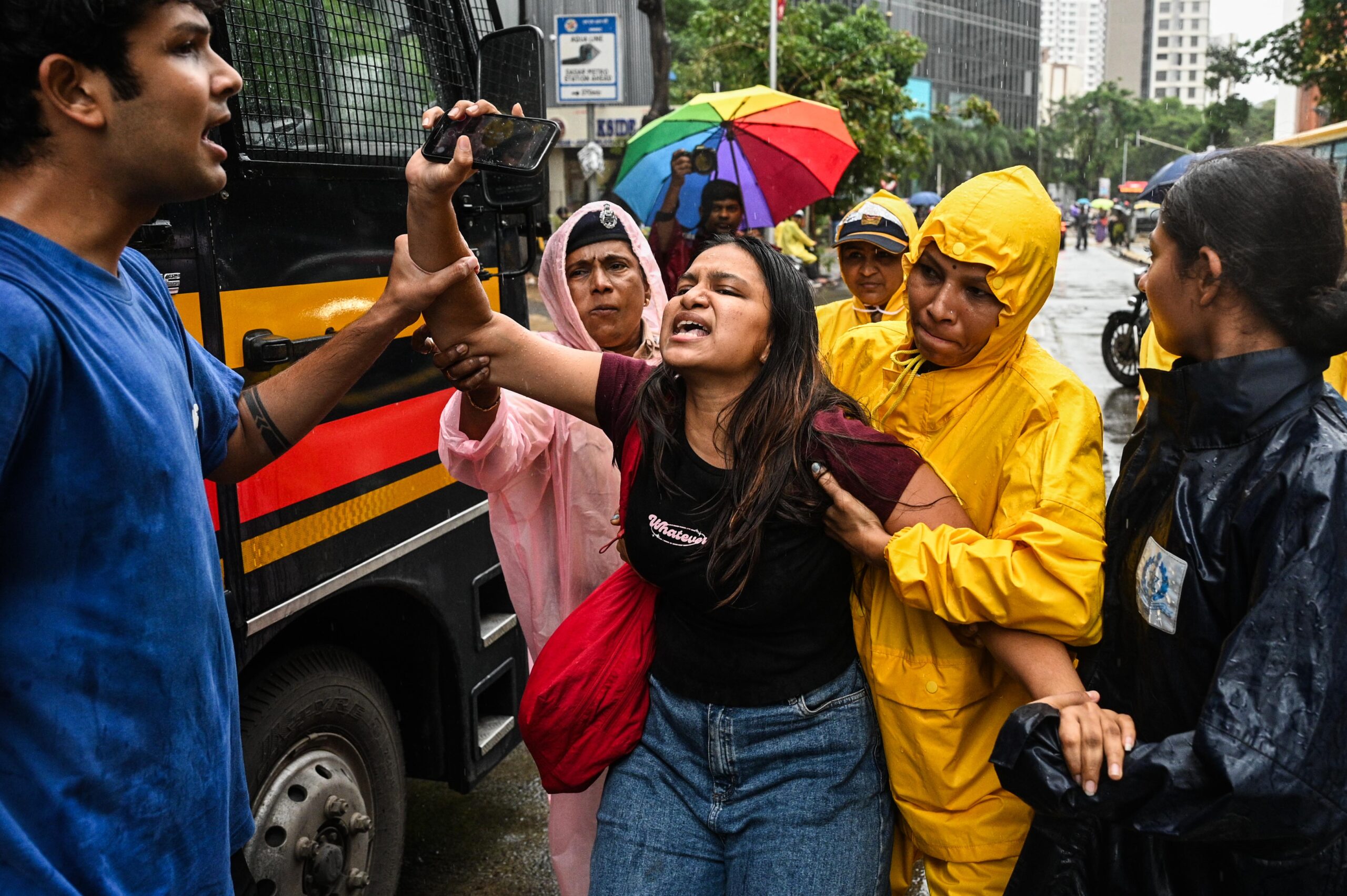
India is still absorbing the enormity of what happened at Jantar Mantar. A youth-led protest compelled the resignation of the Union Education Minister and forced the government to concede that the crisis could not be managed through routine assurances. Ministerial resignations have become exceedingly rare; responsibility is usually dispersed until it disappears. This one represented the return, however briefly, of political accountability. Yet what the protesters exposed was larger than the fate of one minister. They exposed a crisis of trust.

As Vice-Chancellor of the University of Jammu for six years, I came to understand the almost sacred character of a public examination. The jurisdiction was vast — from Poonch and Rajouri to Doda and Kishtwar in the mountains — and lakhs of students appeared in its examinations, often travelling over hard terrain merely to reach a centre. For each of them, the integrity of the system was the foundation of their faith in the university. An examination is a covenant between the university and the student: The student submits to its discipline on the assumption that the institution will protect the integrity of the process. Once that faith is broken, every mark becomes suspect, and every honest candidate diminished.
During my years as Vice-Chancellor, there was not a single leakage of a question paper. It was not because we possessed miraculous technology or it required “rocket science”, but because we invested authority in officers of impeccable integrity. No one, not even the Vice-Chancellor, held unnecessary information; institutional integrity often depends on ensuring that those who do not need to know are not permitted to know.
There was only one occasion when an attempt was made to twist my arm. A serving Cabinet minister wanted his doctor-aspirant daughter awarded the marks she needed to pass a paper. The request carried all the weight of political office. There was no question of yielding. Had one student been given undeserved marks, the injury would not have been confined to one examination. Every honest student would have been cheated, every conscientious teacher insulted, and the university’s word emptied of meaning.
This is why the present crisis cannot be understood as a technical malfunction alone. Technology can secure databases, track the custody of papers and authenticate candidates, and Nilekani’s task force can undoubtedly design a more robust architecture. But no digital system can compensate indefinitely for compromised appointments, weak institutions or the absence of moral courage. Technology cannot manufacture integrity.
For millions of Indian families, a competitive examination is often the narrowest bridge between inherited circumstances and a different future, for which parents exhaust savings and students surrender years to coaching rooms. I have lived that world: Cycling at six each winter morning to Gokul Nath’s smoky room, where he taught a huddle of six or eight of us, his notes pressed through carbon paper into a copy for each – knowing that as a Kashmiri Pandit, I would have to fare better merely to have a chance. A leaked paper therefore inflicts more than procedural damage: it becomes the leakage of faith in the republic. That is what the young at Jantar Mantar understood more quickly than many in authority.
As dean of SIS at JNU, I work among students who question power almost instinctively. They can be perceptive, courageous and morally compelling; they can also be doctrinaire, theatrical and impatient with complexity. But youthful dissent should never be answered with condescension. I had learnt this much earlier in Srinagar, when the stone had become a form of political expression. Some of the young were driven by grievance, some by forces willing to exploit their anger; but nearly all believed that established institutions had stopped hearing them. I condemned stone-throwing then and do so unequivocally now. Yet treating every angry young person as a mere law-and-order problem is not strength but the abandonment of politics.
This is what makes Jantar Mantar significant. Gen Z did not invent anger; what distinguishes it is the speed with which private frustration becomes collective action.
The so-called Cockroach Janta Party was both comic and politically astute: A creature associated with neglect and extermination became a symbol of survival — you may ridicule us or disperse us, but we will not disappear. Humour became resistance. The meme walked out of the mobile phone and occupied Jantar Mantar. But this moment should not be romanticised. Virality is not organisation; outrage is not policy. A movement can secure a resignation without possessing the institutional imagination to redesign an examination system. Gen Z can expose, mobilise and disrupt; it must now acquire the less glamorous capacity to remain engaged after the barricades are removed.
Nor should the government regard the task force as the end of the matter. Its recommendations must be made public, recruitment to examination bodies transparent, responsibility clearly assigned, and penalties swift. The new architecture must begin with a simple principle: Everyone entrusted with an examination must be chosen for integrity before efficiency, for independence before convenience.
The young at Jantar Mantar forced India to remember that democratic power is not invulnerable. The resignation of a Union minister was not a humiliation of democracy; it was democracy functioning as it should — citizens demanding an answer and political authority accepting consequence. The larger responsibility belongs to all of us who administer universities and educate the young. We cannot ask students to believe in merit or lecture them about patience while institutions repeatedly betray their trust. The task before the Nilekani committee is to create a leak-proof examination system. The task before the republic is larger: To become worthy once again of the faith of its young.
The writer is dean, School of International Studies, JNU
