



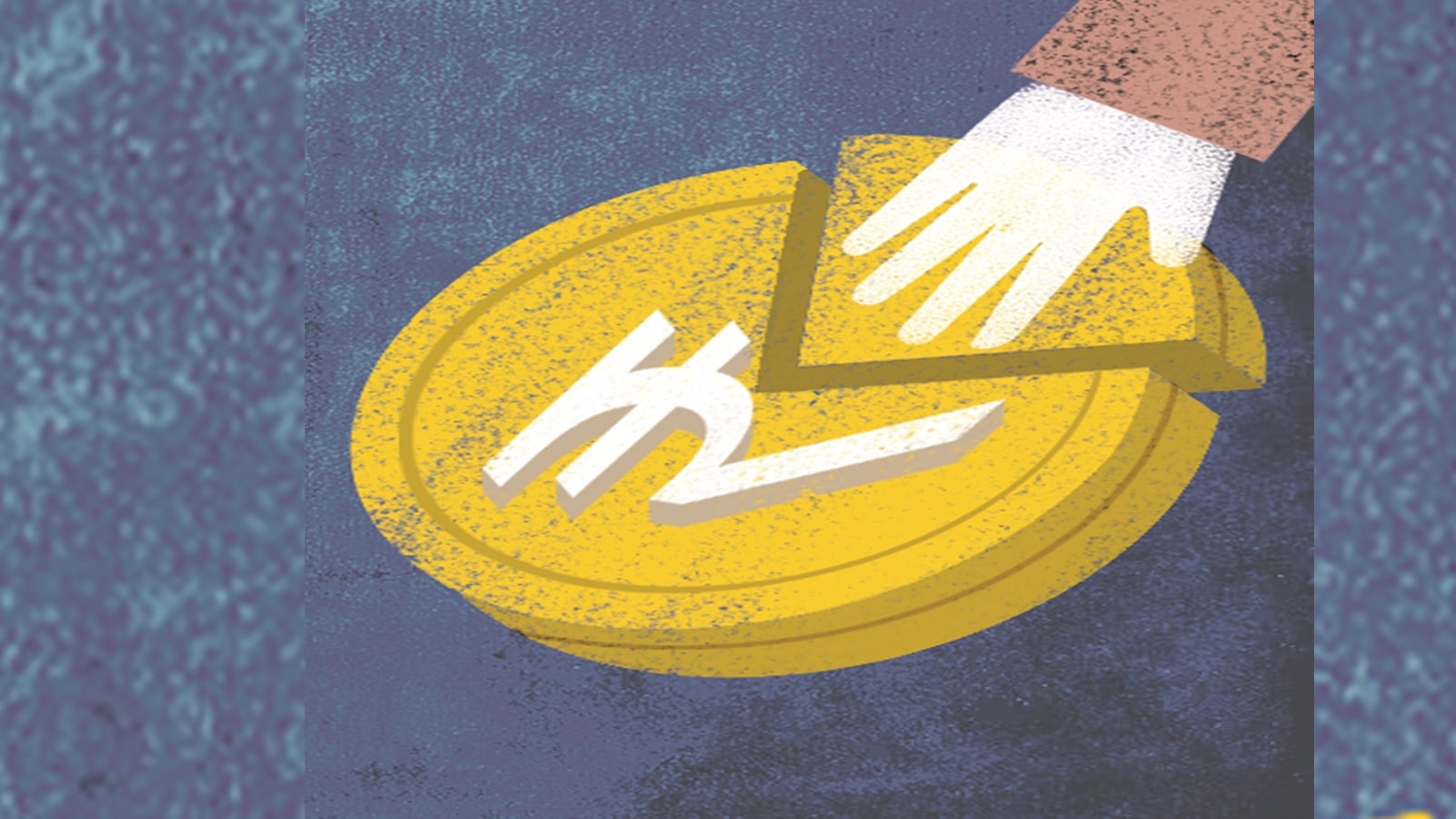
For some, a certain brand of mercantilist logic has whispered that the currency has to be the only “shock absorber” during an external crisis. And for a few others, a weaker currency is a shortcut to prosperity and competitiveness — a neat trick to boost exports and undercut global rivals. But as history and economic theory repeatedly demonstrate, when depreciation shifts from a tactical adjustment to a continuing bout, the much-hoped for pressure valve gives way or the hoped-for “competitive edge” quickly dulls, leaving behind a trail of inflationary wreckage and hollowed-out balance sheets.
The allure of a depreciating exchange rate lies in its simplicity: It makes ones’ goods cheaper for foreigners. However, this is often a Faustian bargain. For many emerging and developed markets alike, the reality of a currency in freefall is not a boom in exports, but often a harsh blow to purchasing power and investor confidence. Imagine yourself in the shoes of a big global financial investor. How confident will you be in investing a billion dollars if you lose 9-10 per cent in a year due to depreciation?

To understand why currencies often fall farther and faster than fundamentals suggest, Econ 101 refers us to Rudi Dornbusch’s overshooting model. Dornbusch observed that because goods prices are “sticky”, they change slowly, and as financial markets are “fluid”, exchange rates must do the heavy lifting in the short term to reach equilibrium.
When a central bank pivots to an expansionary stance, the currency doesn’t just settle at its new long-run value; it “overshoots” it, collapsing violently before slowly appreciating back. For a country already facing a crisis of confidence, this overshooting can trigger a self-fulfilling prophecy of capital flight.
This struggle is encapsulated by the Mundell-Fleming Model, which presents the “Impossible Trinity”. A country cannot simultaneously have a fixed exchange rate, free capital movement, and an independent monetary policy. When authorities try to fight market forces during a depreciation bout such as the current one, they often find themselves cornered. If they raise rates to defend the currency, they choke domestic growth; if they let it slide, they import inflation.
India’s economy and the rupee have faced brutal currency storms before, like the Global Financial Crisis (GFC) in 2008-09 and the 2013 Taper Tantrum, and bounced back smarter. Following the GFC, the world saw a race to the bottom as nations sought to devalue their way to recovery. However, those with high external debt found that a weaker currency meant their dollar-denominated liabilities swelled in local terms, fuelling corporate insolvencies rather than export miracles. The RBI then slashed its repo rate from 9 per cent to a low 4.75 per cent and cut reserve requirements (cash reserve ratio/statutory liquidity ratio), freeing up Rs 2.25 lakh crore, and rolled out special dollar windows for oil importers and non-banks.
The government also unleashed fiscal firepower: A stimulus package worth 3 per cent of GDP, including excise duty cuts from 14 per cent to 4 per cent (boosting consumer spending) and income tax relief (Rs 67,000 crore). The fiscal deficit ballooned to 6.5 per cent of GDP.
Fast forward to the 2013 Taper Tantrum, when the Federal Reserve merely hinted at slowing its bond-buying programme and emerging markets saw their currencies decimated. Countries like Turkey and Brazil learned that a depreciating currency acts as an immediate tax on the citizenry. As the cost of imported energy and food spiked, the resulting “cost-push” inflation eroded any gains made by exporters, proving that one cannot devalue one’s way to long-term wealth if the industrial base relies on imported inputs.
The rupee crashed by around 20 per cent. The RBI hiked short-term rates by 200 basis points, allowed banks to raise foreign currency funds through Foreign Currency Non-Resident (FCNR-B) deposits and swap them at a concessional rate, and offered oil-dollar swaps to ease import bills. The government chipped in with a gold import duty hike from 6-10 per cent to 26 per cent, cut non-plan expenditure by 10 per cent, pruned subsidies (fertiliser decontrol hints), advanced diesel deregulation and recommitted
to the FRBM target of 3 per cent overtime. The result: The rupee stabilised, the current account deficit shrank from 4.8 per cent of GDP to 1.3 per cent as oil prices fell and gold curbs bit. Growth dipped to 5 per cent, but it laid the groundwork for inflation targeting.
Cut to 2026. India has reported a BoP deficit for two years in a row and FY26 may well make it the third year in a row. Notably, FPIs inflows were in the positive for only one of the last five years. Moreover, net FDI inflows since Aug-25 have been negative. Thus, even a smaller level of absolute CAD has become a funding challenge, creating headwinds for the rupee.
Monetary measures (for example, the spate of recent administrative RBI measures, a separate swap window for oil companies, sterilised interventions, tiered reserve requirements etc.) can help but may not suffice, and blunt use of interest rates during a supply shock may only impair growth.
Fiscal measures (oil price rejig, subsidy reforms) and broader policy reforms (energy security, distribution reforms, inclusion of energy sector, specifically electricity and petroleum products under GST) will be needed. With rising repatriation pressurising net FDI, retaining existing investors, not just attracting new ones, through measures such as ease of doing business norms, policy stability, attractive incentives and building long-term investor confidence will be needed to shore up confidence in the currency, as also seen in the past episodes.
The lesson for policymakers is clear. The rupee is more than a price; at times like these, it is also a barometer of credibility. While a modest depreciation can be a useful vent for economic pressure, a chronic fall is a fever that can eventually consume the patient. Stability, not destabilisation, is the true engine of growth.
Importantly, even if the US-Iran conflict were to end tomorrow, issues such as tariffs, Section 301 investigations, AI-related fears, geopolitics and BoP weakness could take centre stage and weigh on the currency. Policymakers, therefore, will need to mount a sustained and coordinated effort to boost confidence in the long-term story. We need all policy hands on the deck.
The writer is group chief economist, L&T. Views are personal

