



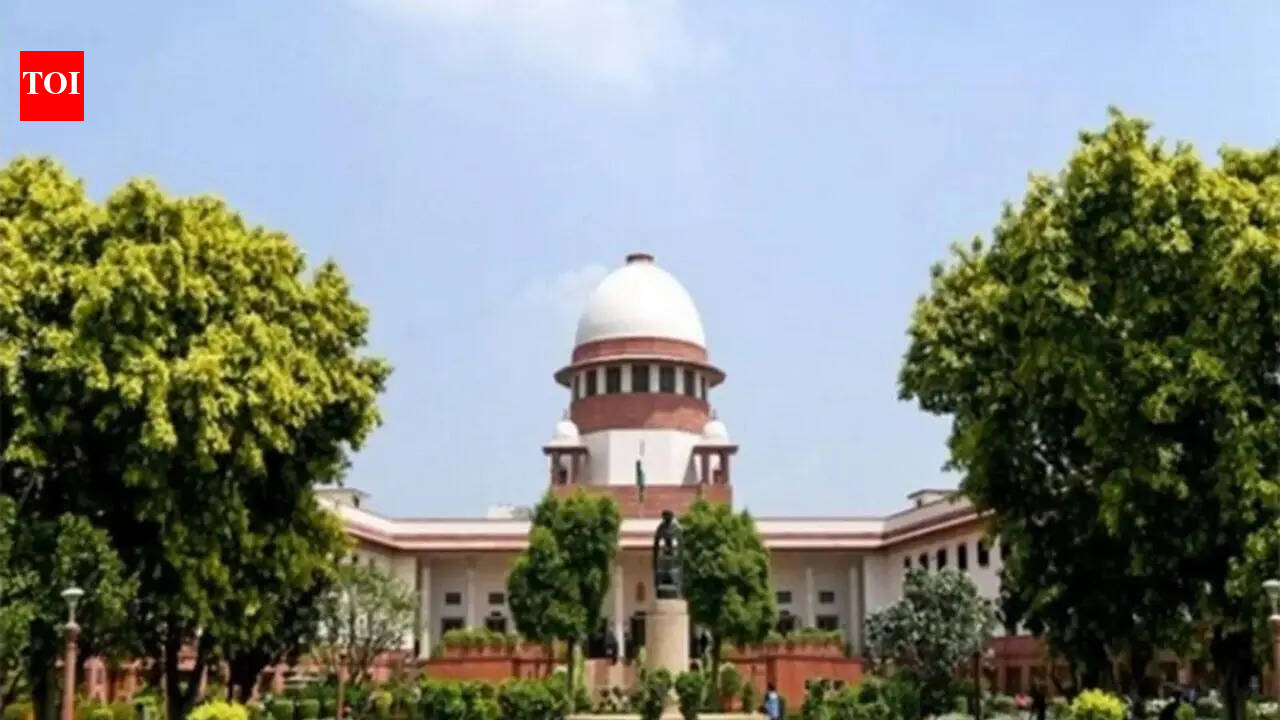
NEW DELHI: Noting that the Madhya Pradesh High Court order declaring the disputed Bhojshala complex in Dhar district a temple only validates the fears and concerns that they have raised all along since the 2019 Ayodhya verdict, the Jamiat Ulama -i- Hind (JUH) on Friday released a report arguing that Supreme Court’s interpretation of the Places of Worship Act reveals how “deeply majoritarian politics has penetrated legal validation”.JUH said that it was just a coincidence that the report was being released on the day the Bhojshala order came. Speaking at the programme attended by senior lawyers, legal experts, former judges, researchers, and intellectuals, JUH president Maulana Mahmood Asad Madani observed that disputes did not end with the Babri Masjid issue; rather, new controversies relating to Gyanvapi, Mathura Eidgah, Kamal Maula Mosque, and other religious sites are now being raised, reopening old wounds.The report titled “A critical analysis of Babri Masjid judgement and the Case of the Places of Worship (Special Provisions) Act 1991’ provides a detailed analysis of major Supreme Court judgments, including the Ismail Faruqui Case and the Ayodhya verdict, claiming that certain judicial interpretations weakened constitutional principles relating to the protection of religious places.In particular, the report discusses the far-reaching implications of the observations made in the Ismail Faruqui case, wherein a mosque was held not to be an essential part of Islamic practice in every circumstance. “As the judiciary increasingly accommodates Hindutva majoritarianism, Muslim sacred spaces have become legally vulnerable, culturally contested, and politically targeted,” the report stated.The report said The Places of Worship Act of 1991 was designed to freeze the religious character of worship sites as they existed on August 15, 1947. “Yet recent court rulings have interpreted the Act so narrowly that fresh claims against mosques in Varanasi, Mathura, and elsewhere are now proceeding.”“The arguments deployed in those cases—concerning essential practices, belief, archaeological evidence, and civilisational memory—are now being recycled in ongoing litigation involving the Gyanvapi Mosque in Sambhal, the Shahi Eidgah at Mathura, and others,” the report states.The report recommended that the judiciary must uphold the Places of Worship Act as intended and it be strictly implemented and protection of religious places should be treated as a constitutional obligation. It further recommended that “communal politics and historical claims should not be allowed to become instruments for legal disputes.
