



4 min readApr 16, 2026 07:06 AM IST
First published on: Apr 16, 2026 at 07:06 AM IST
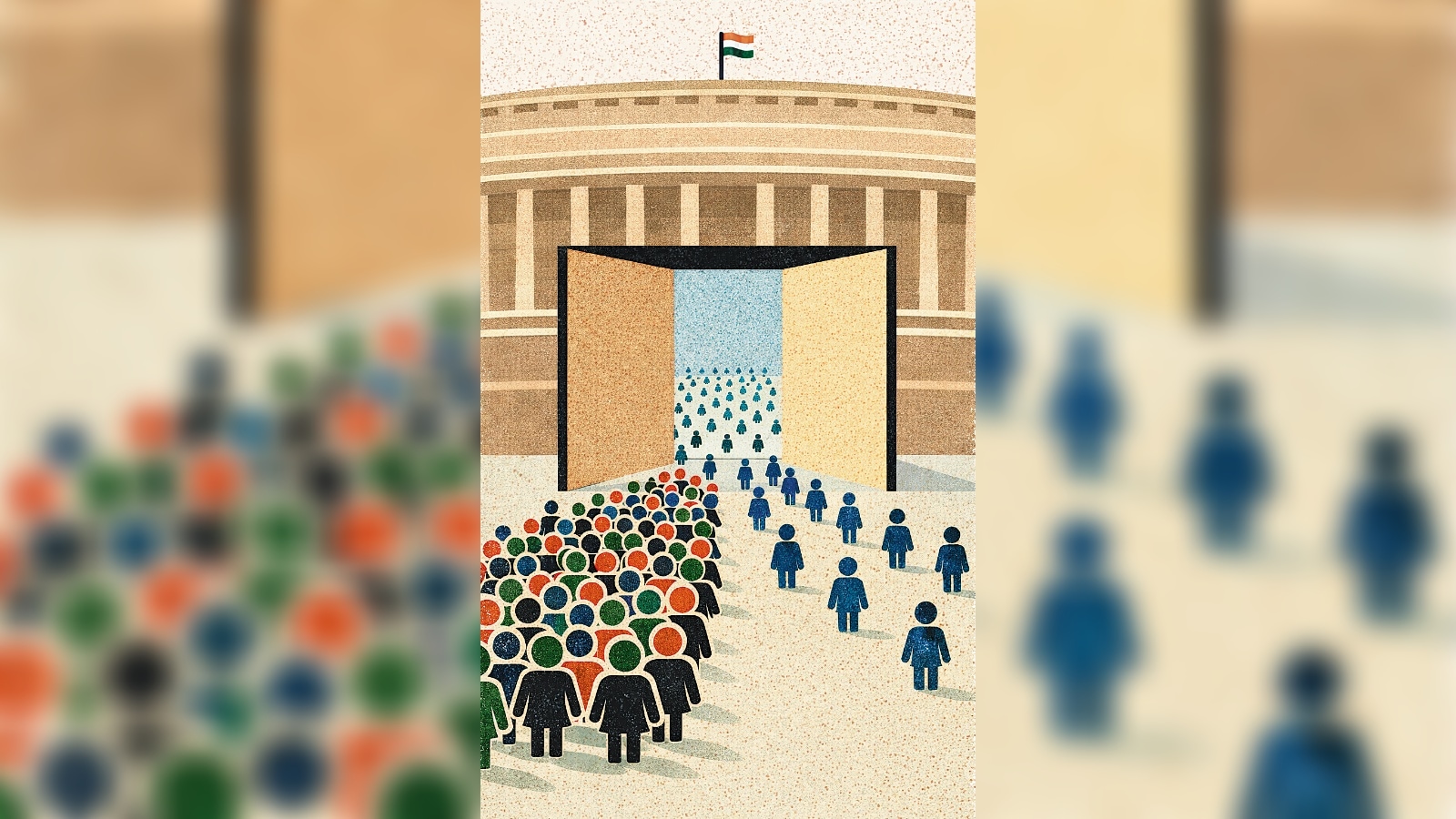
The last time India drew its parliamentary map, the country had 55 crore people. That was 1971. Today, India has over 140 crore citizens, yet the Lok Sabha still has 543 seats. Expanding its strength is no longer optional. It is a democratic imperative.
Each Member of Parliament today represents nearly 26 lakh citizens. This distortion is the result of a freeze imposed nearly 50 years ago, one that was always meant to be temporary. The rationale was clear. Southern states had invested in women’s education and public health, leading to lower fertility rates. A population-based redistribution at that time would have unfairly penalised them while rewarding states that had not controlled population growth. This freeze was later extended until the first Census after 2026. While constituency boundaries were adjusted using 2001 Census data, the inter-state distribution of seats remained unchanged. With Census 2027 set in motion, the delimitation question can no longer be postponed.

If Parliament does nothing, the consequences for the South will be severe. Once fresh Census data is published, by effect of Article 81, 82 and 330A, delimitation kicks in and the existing 543 seats — with the constitutional leeway to expand to 550 — will have to be redistributed among states purely on population basis. The southern states’ share in Parliament would shrink sharply, while northern states would gain significantly. Even delimitation purely based on the 2011 Census would not fully protect the south.
Layer this with the Nari Shakti Vandan Adhiniyam, which mandates one-third reservation for women post-delimitation. Out of Kerala’s reduced 12 seats, four would be reserved for women, leaving just eight general seats. Today, Kerala has 19 male MPs. Under this scenario, 11 of them would have no constituency to contest.
This is precisely what the government seeks to prevent. PM Narendra Modi’s proposal expands the Lok Sabha to around 850 seats and increases state representation equally on a 50 per cent increase formula, instead of cutting down one set of states to accommodate another. Constituency boundaries within states can then be redrawn using 2011 Census data while the inter-state balance is protected. The numbers make the case. Karnataka rises from 28 to 42 seats. Tamil Nadu from 39 to 59. Kerala from 20 to 30. Andhra Pradesh from 25 to 38. Telangana from 17 to 26. The five southern states together gain 66 additional seats, while their collective share remains exactly 23.7 per cent. The arithmetic of government formation does not change.
Without intervention, Tamil Nadu loses eight seats. Under this proposal, it gains 20. Kerala avoids losing a third of its representation and instead gains 10 seats. Opposition to this model is, in effect, opposition to the south’s interests. This is not a proposal that asks the south to accept a smaller voice in the name of national adjustment. It ensures that the south gets more seats in absolute terms, its share remains the same in percentage terms, while avoiding a punitive redistribution.
This expansion of the House also improves governance. Today, an MP in Karnataka represents nearly 25 lakh people. After expansion, that number drops to around 16 lakh. In Tamil Nadu, it falls from 19 lakh to about 13 lakh. Smaller constituencies mean more accessible representatives, better accountability, and stronger democratic delivery. The Opposition offers alternatives, but none withstand scrutiny. Linking seats to GSDP would concentrate power in a handful of states like Maharashtra and Gujarat, while also making representation volatile and dependent on economic cycles. Digressive proportionality, as suggested by Shashi Tharoor, violates the principle of one person, one vote, one value by giving unequal weight to citizens based on geography. It would also leave states like Tamil Nadu and Karnataka worse off than under a clean pro-rata expansion.
At its core, this is a choice between two futures. One where the south loses representation due to inaction. Another where every state gains seats, no state loses share, and governance improves. This proposal achieves exactly that. It protects the south, strengthens democracy, and creates a fair pathway for women’s reservation to be implemented without unintended distortions.It is the most practical, balanced, and forward-looking solution before us. I will vote for it, and I hope every MP who examines it honestly will do the same.
The writer is a BJP MP representing Bengaluru South
