



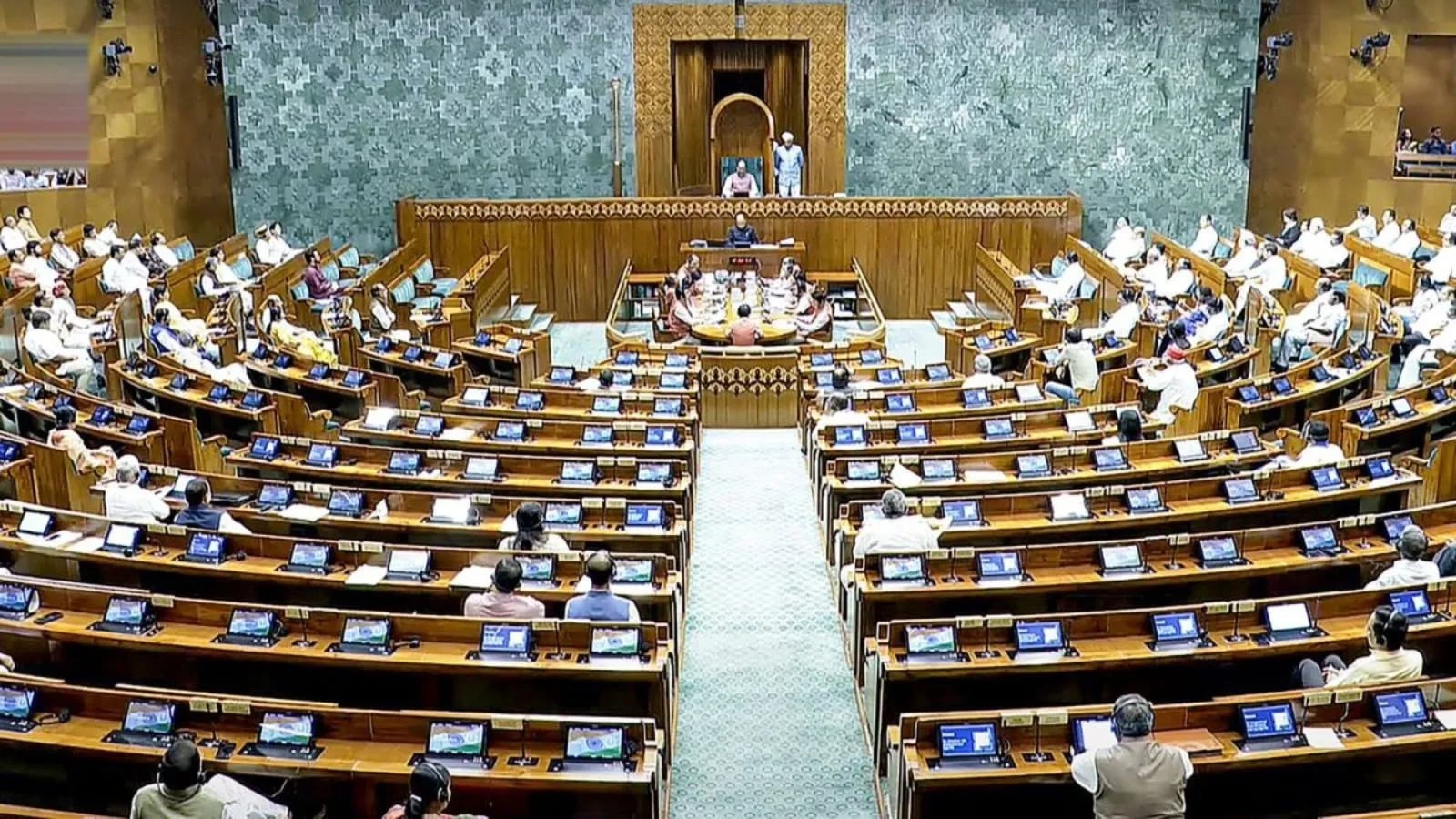
The defeat of the trifecta of Bills in the Lok Sabha has already been disingenuously portrayed by the Treasury benches as a setback for Indian women. Let us be clear: The rejection was not a vote against women’s representation — a cause for which there is near-unanimous consensus across the aisle — but a decisive stand against a legislative Trojan Horse. Under the noble guise of the Nari Shakti Vandan Adhiniyam, the government attempted to smuggle in an ill-conceived delimitation exercise that would have fundamentally skewed the arithmetic of our Union and devastated our democracy. By tethering the long-overdue empowerment of women to the demographic volatility of a redrawing of boundaries, the government sought to use a moral imperative as a shield for a political land-grab.
There is no logical or constitutional reason why women cannot be granted their 33 per cent reservation today, based on our existing parliamentary strength. Instead, the government presented a “Buy One, Get One Free” offer that no self-respecting federalist could accept. The idea was just like the disastrous demonetisation – “pass in haste, repent at leisure”. To accept these Bills was to accept a “political demonetisation” that would have effectively disenfranchised states that have successfully implemented national goals of population control and human development; it would have rendered small states irrelevant and punished major contributors to the exchequer by rewarding economic excellence with political irrelevance. The Opposition has done the nation a favour by warding off such a catastrophe.

But we should be grateful to the government: Its over-reach offers us a providential opportunity to examine fundamental questions about the very design of our democracy, nearly eight decades after Independence. We must ask ourselves if a model of parliamentary representation designed in the mid-20th century is still suitable for a sprawling, diverse nation of 145 crore people with such vast disparities among its constituent units. As we look toward the inevitable results of the next Census, we are confronted by a demographic divergence that threatens our federal fabric.
On one side stand states, primarily in the south, that have governed well, curbed population growth, and invested in the education and health of their citizens. On the other are states where population growth has been rampant. If we adhere to a simplistic “one person, one vote” formula, we perversely reward failure and penalise success. We risk creating a Union where a handful of states, by virtue of their demographic weight alone, can dominate the national discourse and the national exchequer, while those contributing the most to our GDP and social progress find themselves reduced to bystanders in the national conversation.
We must, therefore, explore alternative models of representation that can balance the rights of individual citizens with the rights of the constituent units, since the Constitution calls us a “Union of States”. In the United States, the Connecticut Compromise solved a similar deadlock by creating a bicameral system where the House reflects population, but the Senate treats every state as an equal, regardless of size. In the European Union, the principle of degressive proportionality ensures that while larger nations have more weight, smaller nations are given a minimum threshold of representation that prevents them from being steamrolled, and bigger states have a ceiling so they do not dominate the Union. It is all very well for the BJP to mouth pieties about “one citizen, one vote, one value”, but in a land of such major cultural diversity, how about giving equal importance to “one state, one equal partner, one value”?
Then there is the question of whether the proposed solution isn’t worse than the disease in our democracy. Can a Lok Sabha of 850 really have any meaningful discussions, or will it become a notice board and echo chamber, a desi version of the Chinese People’s Consultative Congress? In Friday’s debate, the Home Minister asked how a single MP could meaningfully represent 30 lakh people. Doesn’t the answer lie in a clear division of labour between the more numerous MLAs, who represent smaller units of population in their states, and a smaller set of MPs, whose role could be confined to broader policy questions and larger development issues?
Could we not, perhaps, consider a radical redesign of our own two chambers to balance each other more effectively? Perhaps the Rajya Sabha ought to evolve from a secondary chamber into a true “House of the States” with equal or near-equal representation for all units of the Union, acting as a genuine federal check on the Lok Sabha. We must also confront the elephant in the room: Is it time to reconsider the size of our constituent units? The sheer administrative and political weight of our largest states often dwarfs that of many sovereign nations. There is a compelling case for breaking up some of these unwieldy behemoths to ensure better governance and a more balanced federal equilibrium. When Mayawati was chief minister of Uttar Pradesh, the legislature passed a resolution urging that the state be divided into four (I have urged, in this column, the establishment of a States’ Reorganisation Commission to examine this and related ideas).
These are just some of the issues that need to be considered before the Census triggers the process that makes a future delimitation inevitable. They are not questions that can be answered in a hasty two-day session called without adequate consultation with state governments, political parties, or civil society. What we need is a great national consultation, involving all state chief ministers, all political parties, and civil society. We must address everything from the fiscal imbalances where tax-contributing states feel exploited, to the political imbalances where performing states feel ignored.
The government’s defeat is a victory for the spirit of the Constitution. It has hit the “pause” button on a potential disaster and opened a window for a more profound conversation about the nation’s future. Let us pass women’s reservation as a standalone measure. But let us also treat the redrawing of our democratic map with the solemnity, the time, and the inclusive consultation it deserves. Our Union is too precious to be sacrificed on the altar of cynical electoral arithmetic.
The writer is Member of Parliament for Thiruvananthapuram, Lok Sabha and the author of India: From Midnight to the Millennium, The Battle of Belonging and other books on Indian nationhood
