



7 min readMay 7, 2026 07:08 PM IST
First published on: May 7, 2026 at 07:08 PM IST
Howrah was once called the Sheffield of Asia. The jute mills along the Hooghly were the largest concentration of organised industry in the subcontinent. Calcutta was India’s commercial capital. In 1950-51, Bengal produced roughly 27 per cent of the country’s manufacturing output. I knew that Calcutta. Before I joined the foreign service, one of my first jobs was at Hindustan Lever in the city, and a young man arriving in Calcutta could be sure he had come to where the country’s commerce was conducted. The lights stayed on. The trams ran. The companies hired.
What had taken a century to build was dismantled by something more deliberate than economic mismanagement. The Left Front took office in 1977 and held it for 34 years. Beneath the rhetoric of the working class, an organised shadow state took root. Permission to build, to run a shop, to set up a kiln, to register a transport route, to hold a panchayat meeting, came with a cut. The cadre collected, the party banked. By the 2000s, when the Left Front itself attempted to reverse course and bring Tata Motors to Singur, the Trinamool Congress in opposition staged a hunger strike that drove the project to Gujarat.

The Trinamool Congress took power in 2011 on the promise of poriborton. What followed was the same machinery in a new uniform. Bengal’s 27 per cent share of national manufacturing has fallen to below 5 per cent. Per capita income, once 127 per cent of the national average, has slipped to 84. More than 6,000 registered companies have moved their head offices out of Kolkata. The voter who watched her jobs and her money walk out of the state had a score to settle, and a ballot in her hand to settle it with.
At the centre of it was a record on women that no incumbent in Independent India has had to defend. A woman Chief Minister presided over the torture and killing of the women of her state. The rape and murder of a postgraduate trainee doctor at the RG Kar Medical College in August 2024. The night-long vandalism at the crime scene by a mob the Kolkata Police chose not to disperse. The Calcutta High Court’s order transferring the investigation to the CBI on the finding that the Kolkata Police’s inquiry did not inspire confidence. The 42-day strike by junior doctors, many of them women.
Sandeshkhali, January 2024. The women of an island in the Sundarbans came out into the streets against a Trinamool district council member who remained a fugitive for 55 days while the state police filed nothing. A Chief Minister whose own movement once spoke of poriborton has presided over a regime in which the women of her state had to seek refuge in courts, in central agencies, and on the streets, against her own cadre. It is unconscionable.
What the women of Bengal had to endure was matched only by what the state’s young people had to give up. Twenty-one crore in cash was recovered from a single locked flat in Salt Lake on the night of the first ED raid. Further recoveries on associated properties pushed the total past Rs 50 crore. Cabinet minister Partha Chatterjee, who as education minister had presided over the West Bengal School Service Commission, was arrested. In April 2024, the Calcutta High Court cancelled the appointments of 25,753 teachers, Group-C and Group-D staff under a recruitment found illegal.
An entire school recruitment cycle turned into a counter at which posts were sold. Layered above that scam was the ration scam that pulled in another minister, Jyotipriya Mallick. The voter understood the connections. The first to suffer in a state run by a mafia is the citizen who refuses to pay the bribe.
Against this stood a record of another kind. Four crore 21 lakh houses completed under the Pradhan Mantri Awas Yojana over the past decade. Fifteen crore tapwater connections under Jal Jeevan Mission, against a base of 3 crore in 2019. Roughly 55 crore beneficiaries under Ayushman Bharat. Direct Benefit Transfer rendering obsolete the leakages that once defined every welfare programme in Bengal. This was the floor on which every BJP karyakarta in Bengal stood when she asked for votes.
Behind that floor stood a network. The party’s booth-level cadre, the panna pramukhs, the karyakartas who endured intimidation, threats, and physical violence did the unglamorous work of registration, transport, and turnout. The lives lost in earlier rounds of post-poll violence were not rhetoric the karyakarta had to be reminded of. She had lived through it. The Home Minister, Amit Shah, walked through Bengal district by district, knowing what his cadre was carrying. What they were attempting was not an electoral upset. It was the breaking of a citadel.
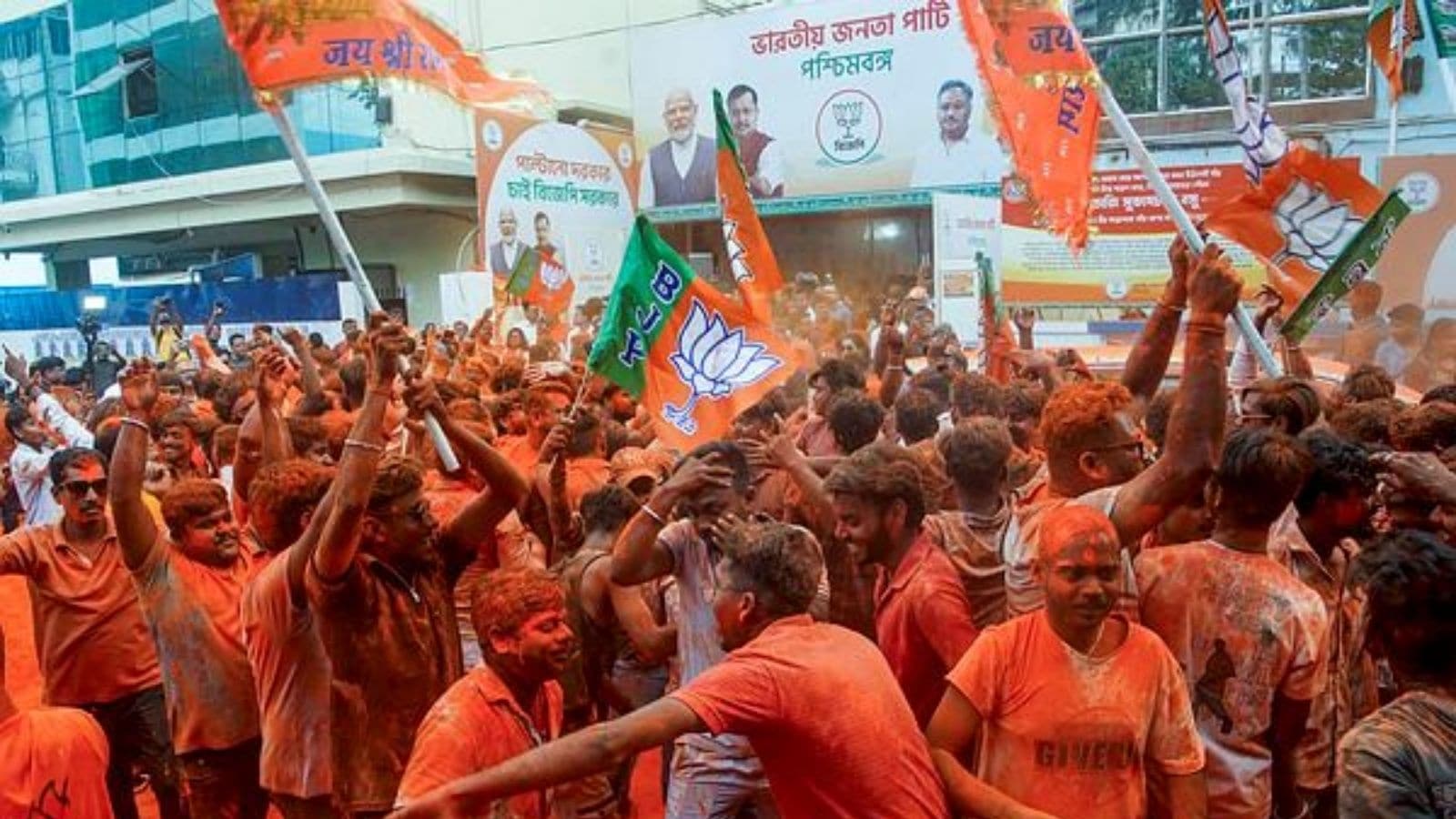
The faces of this breakthrough tell their own story. Ratna Debnath, the mother of the RG Kar victim, fielded by the BJP in Panihati, demolished a 15-year-old Trinamool stronghold. Rekha Patra, who stood on her own soil at Sandeshkhali to demand what the state had refused her, carried that demand to a contest in Hingalganj. On May 4, Bengal settled the score. Forty-nine years of mafia rule have ended. This was not only an electoral verdict. It was a moral one.
But this is already being contested. The Special Intensive Revision of the electoral rolls is being characterised by the losing side as voter suppression. The data settles the question. Of the 20 constituencies that saw the highest deletions during adjudication, the Trinamool Congress won 13. An exercise of targeted exclusion does not produce that outcome. The 92.93 per cent voter turnout settled the question of whether the rolls were credible.
What the voter has asked for is not difficult to read. Peace and freedom from the violence that has shadowed her streets. Prosperity, and the return of work to the city she lives in. Stability, and an administration that does not collect a cut for letting her live. A cultural and economic renaissance of the state that gave the country its first industrial belt, its commercial capital, and the early architects of national administration. The Calcutta I worked in is recoverable. Bengal is ready to resume its contribution to a Viksit Bharat by 2047. Behind every welfare delivery and infrastructure decision of the past decade has been a Prime Minister who treats the citizen as the unit of account. The reward for keeping faith with that citizen has now been recorded.
The author is Union Minister of Petroleum & Natural Gas
