



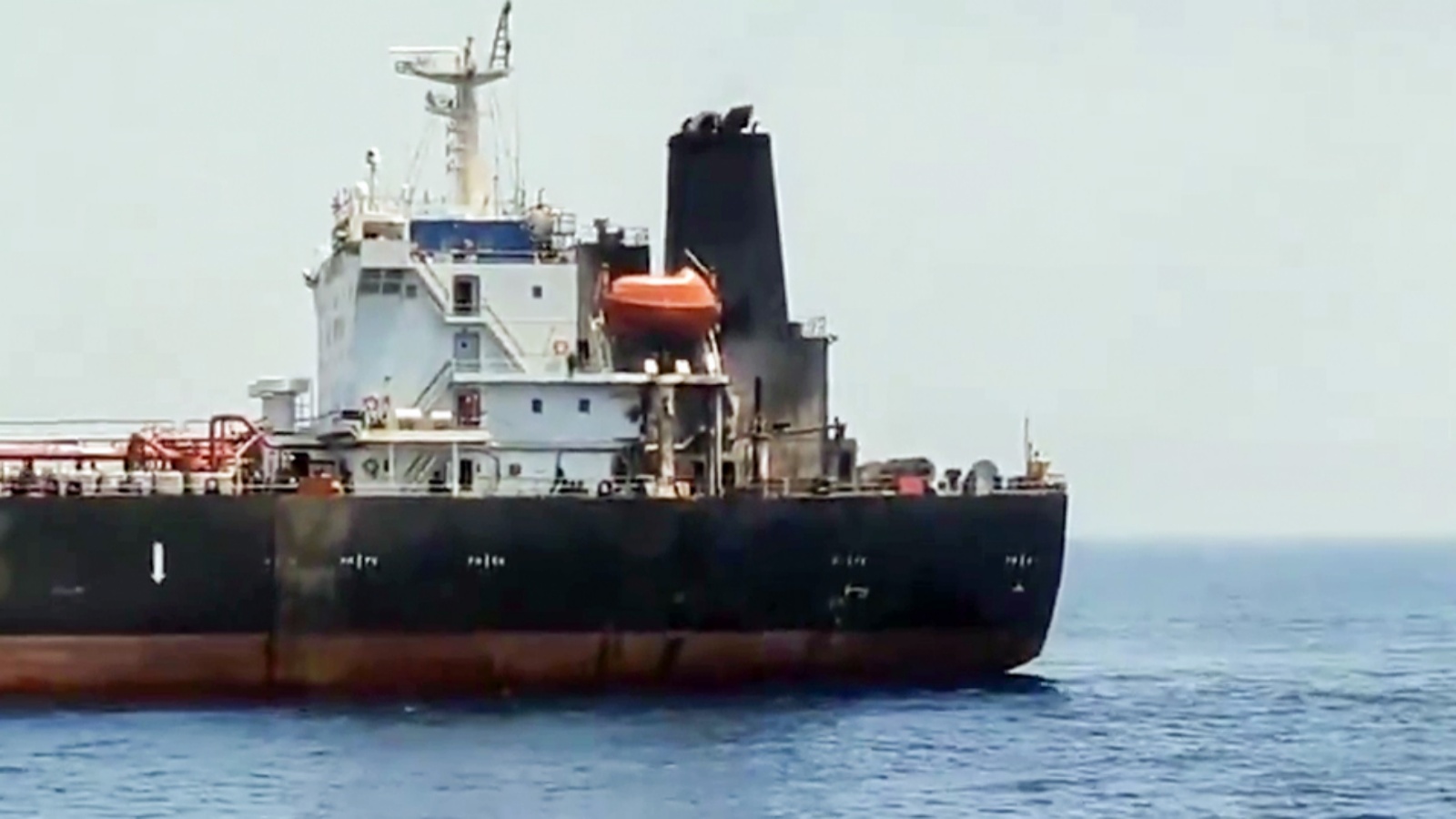
The US and Iran may have reached an agreement to reopen the Strait of Hormuz, but the killing of three Indian seafarers aboard the tanker MT Settebello by US forces last week still rankles. The attack was a stark reminder that the norms and conventions that once protected neutral shipping from the consequences of interstate conflict are in rapid decline, steadily yielding to military expediency.
It could be argued — as some did following the attack — that the ship had only itself to blame for its misfortune. Attempting to slip past the US blockade in the Strait of Hormuz was always fraught with risk. In particular, deliberately switching off their AIS systems to avoid detection suggests that the vessels knowingly assumed significant risks and paid the price. Still, that line of reasoning misses the larger point.

The US imposition of a blockade over Hormuz was, by many measures, an illegal act in itself. The strait in question is no ordinary waterway. Nearly a fifth of the world’s oil trade passes through it; any disruption reverberates across energy markets, supply chains and shipping networks. Moreover, this is a maritime space traversed every day by thousands of civilian mariners who ensure the uninterrupted flow of global commerce. It is not a place for Washington to hold hostage in a zero-sum game with its adversaries.
Erosion of neutrality and decay of rules-based order
Ironically, the US, which has for decades held itself out as the principal defender of the maritime rules-based order, now threatens the very principles it once claimed to uphold. The core tenets of freedom of navigation, the protection of shipping, and restraint in the use of force came under strain from the very power that once claimed to defend them but did not hesitate to target neutral-flagged vessels in pursuit of strategic ends. It is not a coincidence that the Settebello was just one of three vessels with Indian crews struck by the US in the space of four days.
For one thing, US forces certainly disregarded the principle of proportionality. Even if one were to accept Washington’s contention that the vessel was engaged in sanctions evasion, the use of lethal force against neutral shipping demands an exceptionally high legal threshold. At a minimum, the MT Settebello should have been warned and afforded the opportunity to comply. The US Central Command claims the Settebello had been cautioned multiple times, but the ship’s UAE-based operator, iOS Marine, maintains no warnings were given.
There is no indication that the ship resisted visit, search or capture by US forces — the key requirement for the use of force against a neutral civilian vessel in international law. If the operator’s account is accurate, it is difficult to see how the exceptionally high threshold for the use of lethal force against neutral merchant shipping was met. In any event, the attack raises serious questions as to whether the limits of the law were exceeded and if the US exercised the restraint required under international humanitarian law.
Navigating contradictions of India’s strategic imperatives
Importantly, the fact that the strike occurred even as Washington remained engaged in talks with Tehran to strike a deal is a contradiction difficult to miss. Whatever the legal arguments advanced in its defence, the episode sits uneasily with the stated objective of de-escalation and reveals the extent to which civilian shipping has become expendable in the pursuit of strategic objectives.
The issue matters especially to India, which supplies about a fifth of the world’s maritime workforce, and whose sailors are among those most exposed to instability in conflict-prone waters. Even so, it takes the death of Indian seafarers for their safety and welfare to become a matter of diplomatic urgency. In the current instance, too, New Delhi’s protest to Washington came only after Indian lives had already been lost.
In many ways, the incident itself is less troubling than the precedent it establishes. The attack on the Settebello is unlikely to remain an isolated episode. Washington and Tehran may have agreed to a framework for de-escalation, but the underlying sources of friction in the Gulf remain unresolved. Should tensions intensify again, the temptation to target vessels suspected of sanctions evasion is unlikely to disappear.
The danger is that extraordinary measures, justified as responses to an extraordinary crisis, would gradually become normalised. In time, the targeting of commercial shipping may come to be seen as a legitimate instrument of statecraft — an outcome that should be unacceptable to the international community.
Admittedly, India’s dilemma is a difficult one. In recent years, it has invested heavily in a strategic partnership with the United States. Its challenge is not merely to seek accountability for the deaths of Indian citizens, but to defend principles central to India’s maritime interests, regardless of who violates them.
New Delhi cannot afford to be a passive spectator as rules and norms at sea are steadily dismantled. However it chooses to convey the message, it ought to make clear to Washington that the killing of Indian sailors cannot be dismissed as unfortunate collateral damage arising from hostilities in the Strait of Hormuz. India cannot countenance the subordination of long-established maritime norms in the global commons to American geopolitical imperatives.
The writer is a retired naval officer
