




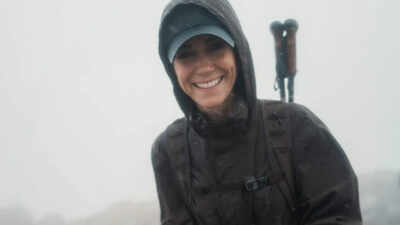
Seems like Kate Middleton has added a new feather to her royal hat!Just a couple of years after sharing her cancer diagnosis, and a little over a year since her remission, Catherine, Princess of Wales, has finished the National Three Peaks Challenge — that too, under 24 hours.For the unversed, this is one of the UK’s toughest endurance events, and it’s no small feat. Per The Guardian, Kate did it to raise money and shine a light on the Royal Marsden Cancer Charity, which is connected to the hospital where she got her treatment. This particular milestone is important for the Princess of Wales not just because of how physically demanding the challenge is, but also because it marks such a big moment in her own recovery.Per People, Kate talked about the trek as a chance to “explore life beyond diagnosis.” She wanted to show that cancer recovery isn’t just about medical treatment. It’s about living again, and about caring for the whole person — body, mind, and spirit. The fundraiser supports cancer patients as they rebuild, aiming to provide help that goes beyond pills and procedures.
Three Peaks Challenge : What is it?
For the unversed, the National Three Peaks Challenge is one of the UK’s most famous endurance events. Participants have to climb the highest mountain in Scotland (Ben Nevis, 1,345 meters), the highest in England (Scafell Pike, 978 meters), and the highest in Wales (Yr Wyddfa/Snowdon, 1,085 meters) — all in under 24 hours.And mind you, it’s not just about scrambling up three hills. You also have to drive nearly 500 miles between the mountains, usually surviving on little to no sleep, all while battling the weather and sheer exhaustion. The route includes about 23 miles of hiking and a 3,000-meter total ascent.Per People, Kate reportedly started on a Saturday evening and hit all three peaks within the 24-hour window, making her the first member of the royal family to pull it off. She spent big stretches of the journey on her own, though Mountain Rescue teams were there to help along the way.
Why did Kate take on such a gruelling challenge?
For Kate, it’s personal. Back in 2024, she was diagnosed with cancer and began chemotherapy. By early 2025, she was in remission, but she’s been clear that the experience changed her whole world. She’s talked more and more about what life after cancer is really like — not just physically, but emotionally and mentally, too. Her own journey inspired her to support broader, more human-centered approaches to cancer care, beyond the hospital walls.“Cancer doesn’t just affect the body. It changes how you think and feel and profoundly affects every aspect of life. I know this personally, and that the journey through and beyond treatment requires more than medicine alone,” she wrote in a post.The money raised from the challenge is for the Royal Marsden Cancer Charity, specifically the charity’s efforts to expand access to holistic cancer care for patients across the UK. The money is set to be used in programs that support cancer survivors through recovery, funding research, and therapies that help people feel whole again.Kate added that holistic approaches to care “complement clinical pathways and support patients’ ability to maintain their wellbeing, resilience and quality of life during an exceptionally difficult time.”
How tough is the challenge, really?
There’s no other way of saying it, because the Three Peaks Challenge is hard. Even for seasoned hikers, it’s brutal. The climbs are steep, the terrain is rough, and the weather is anybody’s guess. It can be windy, rainy, even icy at the summits, and the hardest part might just be fighting off sleep in the dead of night. Fatigue is a constant companion, since you’re squeezing so much effort into just one day. It’s really only for people in solid shape who have trained for it.
How safe is it for a cancer survivor?
Of course, nobody outside her medical team can say for sure how risky this was for her. But looking at the facts, it seems like she and her doctors put real thought into every step. She’s been in remission since early 2025 and has been back to a full schedule — traveling, making public appearances, handling royal duties.Per The Guardian, doctors often recommend exercise during and after cancer treatment, if it suits the patient. Research shows that staying active helps survivors recover physically and emotionally. That said, it’s not one-size-fits-all. Someone just out of treatment would have to take it slow, but if you’re healthy, have rebuilt your stamina, and cleared it with your doctor, something like this can actually help the recovery process.Kate tackled the challenge with backup: Mountain Rescue teams, careful planning, and a lot of support. It wasn’t some spur-of-the-moment decision; it was mapped out with safety in mind.In the end, for Kate — as she put it — the Three Peaks Challenge was “not simply as a physical endeavor,” but “as a chance to explore life beyond diagnosis and to give something back.”
