



Readers might assume this declaration came from an energy minister in an Asian nation crippled by supply disruptions from the Iran war. But the country in question does not depend on the Strait of Hormuz at all for its oil imports.

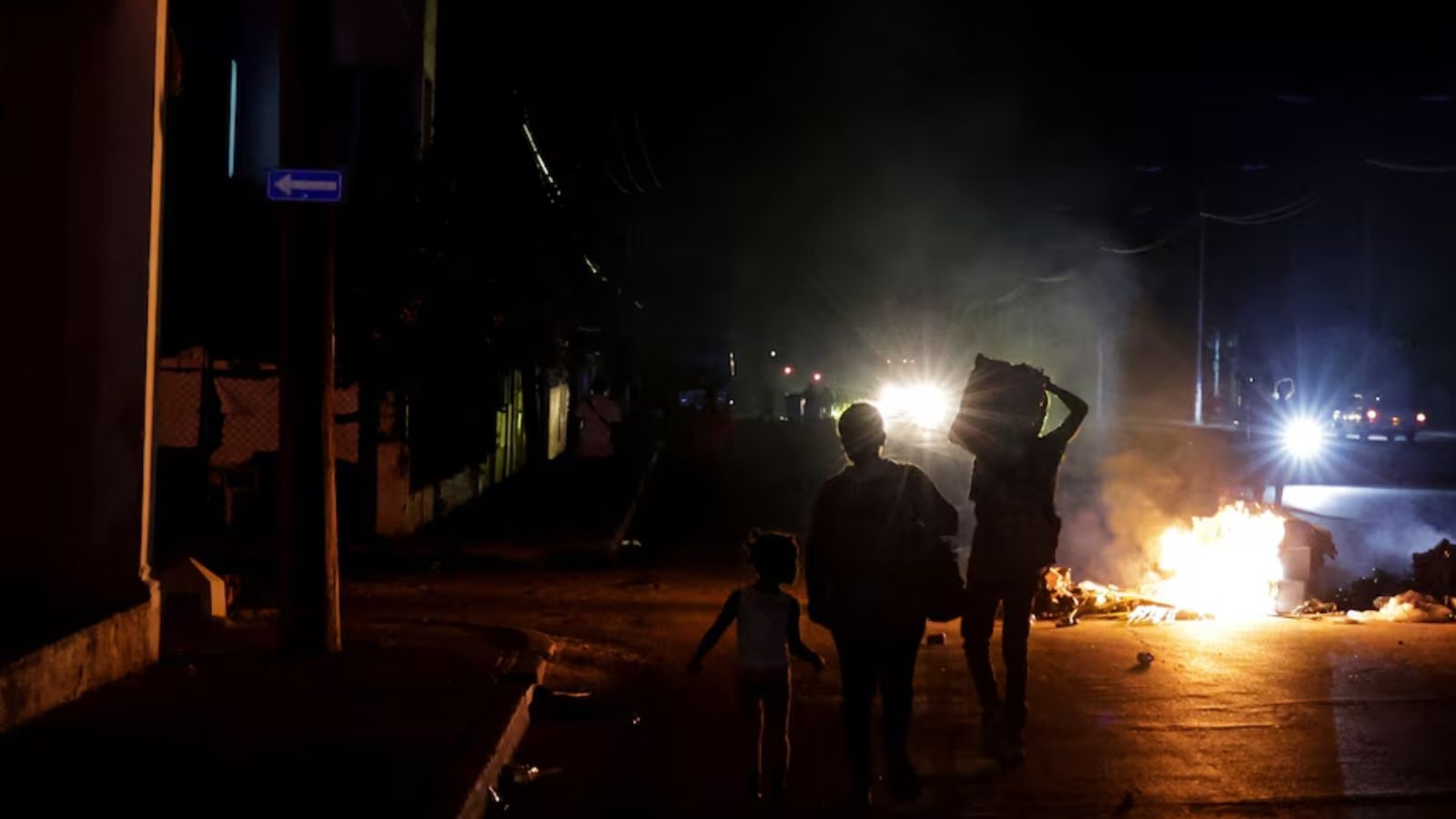
In Cuba, a regime-change target for the US since the 1959 revolution, civilians have reportedly been enduring blackouts lasting up to 22 hours a day, while doctors are sometimes forced to manually pump ventilators to keep newborns alive. For more than four months, the country has received virtually no fuel — a single Russian tanker carrying 10 to 14 days of supply being the sole exception — because Venezuelan shipments have dried up entirely since January, when the US abducted Nicolás Maduro. Mexican shipments have been suspended after the Trump administration authorised tariffs on any country supplying fuel to Cuba.
The US president has since said he hopes to have the “honour” of “taking Cuba” and doing “whatever I want” with it, expressing a rather naked imperial appetite, even as White House documents invoke national security threats and human rights. This week, Trump escalated that pressure with an indictment against 94-year-old former president Raúl Castro, accusing him of murder and conspiracy to kill US citizens — news that has been reaching the Cuban people slowly, if at all, due to widespread blackouts on the fuel-starved island.
Against the backdrop of direct military action, like in Iran or Venezuela, it is easy to underestimate the scale of the sanctions-induced crisis in Cuba because the damage is indirect, diffuse, and slow-moving. Critical shortages of electricity, medicines, food, and fuel are not just consequences; human hardship is the very means to achieve the larger goal of regime change.
As the country that dominates the international financial system, the US has long used sanctions for its compellence strategies in the name of international governance, and, ironically, human rights. An April 1960 State Department memo was quite candid in its policy goals, lamenting that Fidel Castro was “too popular” and that “every possible means should be undertaken promptly to weaken the economic life of Cuba, by “denying money and supplies to Cuba, to decrease monetary and real wages, to bring about hunger, desperation and overthrow of government”. The irony runs deeper when the numbers come out: A recent Lancet study finds that unilateral sanctions imposed by the US and EU since 1970 are associated with 38 million deaths across the world.
One of the most notorious case studies is Iraq. Joy Gordon’s Invisible War (2010) documents how the US systematically blocked humanitarian goods from reaching Iraq — at times objecting to imports of antibiotics and child vaccines while simultaneously accusing the Iraqi government of failing to procure basic medicines. Other cases include Iran, North Korea, and, of course, Cuba. What is common is that all of them are outside the Western — read: American — sphere of influence.
There can be no doubt that they are repressive dictatorships that treat their own citizens miserably to consolidate power. Cuba’s centrally planned economy and one-party state have resisted reform and pursued consolidation of power over decades. But it is also true that much of their economic isolation originates from the fact that they refuse to buckle to the Western order. Which brings us to the other common aspect of these sanctions regimes: They do not work.
Iran, North Korea and Cuba have their regimes intact because sanctions have had the opposite effect: Increased government repression and a reduced likelihood of bottom-up regime change. Robert Pape explains in ‘Why Economic Sanctions Do Not Work’ (1997) that there is “little valid social science support for claims that economic sanctions can achieve major foreign policy goals”. Defeating Maduro in Venezuela was ultimately a US military operation; sanctions did not weaken his hold on power. In Iran, too, the Americans and the Israelis had to resort to military force, and three months into the ongoing conflict, the theocratic regime is far from capitulating.
Dursun Peksen concludes in ‘Better or Worse? The Effect of Economic Sanctions on Human Rights’ (2009) that sanctions not only fail frequently in achieving their intended policy goals, but also lead to unintended negative human rights effects. Finally, the costs of sanctions are passed down by the targeted entities — who often have state backing — to the people. Matthias Neuenkirch and Florian Neumeier argue in a study that US sanctions “indeed are affecting the wrong people” and that it is the general population of the sanctioned state that bears the burden, “an outcome that appears especially unfair given that the regimes against which sanctions are directed typically lack democratic legitimation”. Asset freezes and travel bans targeting particular individuals may be a smarter form of sanctions, but there is little evidence to show that they constitute a more successful form of compellence.
So, sanctions don’t achieve policy goals, they increase repression, and they disproportionately harm the wrong people. The only thing more remarkable than how consistently sanctions fail in the stated goal is how consistently they succeed in the unstated one: Making ordinary life in the target country unbearable.
The writer is deputy copy editor, The Indian Express. saptarishi.basak@expressindia.com
