



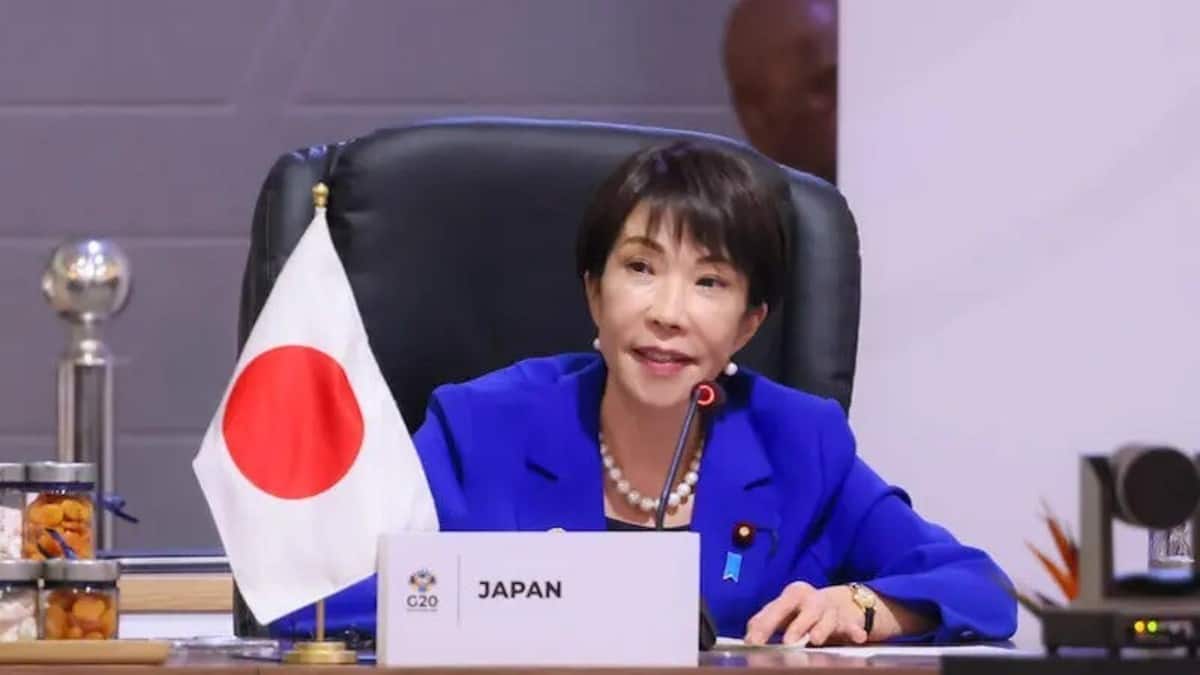
The political earthquake that just rattled Tokyo wasn’t supposed to happen this way. For decades, the Liberal Democratic Party (LDP) has been a fortress of backroom deals, where “grey/blue eminences” in smoke-filled rooms decided the next prime minister long before a single ballot was cast. In a stunning defiance of the old guard, Sanae Takaichi has secured a landslide majority to become Japan’s first female prime minister, riding a wave of populist energy that the traditional factions simply could not contain.
The Takaichi Surge
Takaichi’s victory wasn’t won in the Diet; it was won on the streets and through the screens of a frustrated Japanese public. Her “landslide” was built on a platform of unapologetic national pride and economic “Takaichi-nomics”, a potent blend of aggressive fiscal stimulus and a massive push for technological self-reliance.
She tapped into a deep-seated anxiety among the Japanese people: a feeling that Japan had become too passive in a dangerous neighbourhood. While her opponents spoke in the careful, guarded language of traditional diplomacy, Takaichi spoke with a clarity that resonated. She didn’t just promise stability; she promised strength.
Taikaichi’s popular support was particularly visible among the younger generation and the “internet conservatives” (Netto-uyoku), but it eventually spilt over into the mainstream. Her mastery of digital communication allowed her to bypass the traditional media gatekeepers who often dismissed her as too hawkish. By the time the LDP rank-and-file members voted, the message was clear: ignore the public’s preference at your own peril. The “landslide” occurred because the factional bosses realised that if they blocked her, they risked a total collapse of the party’s brand in the next general election.
The Old Guard in the Shade
This victory effectively diminished the traditional “factional” politics of the LDP. Takaichi is an outlier; she doesn’t belong to the dominant power blocs that have run the country since 1955.
Her win forces the LDP to pivot toward a more ideological, rather than transactional, form of governance. We are likely to see a purge of the “dovish” elements within the party who have long advocated for a softer line on China. The LDP is now Takaichi’s party, and it is becoming a more cohesive, albeit more confrontational, political machine. Of course, with an unprecedented number of MPs, she has to manage them and the party effectively.
Strategic Policy: A ‘Wonderful’ and Rearmed Japan
Under Takaichi, Japan’s strategic policies are set for a radical overhaul. We can expect:
Constitutional Reform: A renewed, aggressive push to amend Article 9 to formally recognize the Self-Defence Forces.
Defence Spending: Pushing well beyond the 2% GDP target, with a focus on counter-strike capabilities and space-based defence.
Economic Security: Aggressive “de-risking” from China, focusing on bringing high-tech manufacturing back to Japanese soil.
The ‘Foreigner’ Question: Firmness vs Necessity
There is a lingering question: will Takaichi deal “firmly” with foreigners? To understand this, we must distinguish between illegal presence and legal labour.
Takaichi’s rhetoric emphasises “law and order”. We will likely see a much firmer stance on illegal immigration and a stricter enforcement of visa conditions. However, Takaichi is also a realist. Japan’s demographic crisis, with a shrinking, ageing workforce, is an existential threat to her “strong Japan” vision.
Should India be anxious? Actually, the opposite might be true. Takaichi views India as a “civilisational ally”. While she may be tough on general immigration, she is likely to carve out “trusted partner” pathways for Indian professionals. For the Indian engineers, healthcare workers, and tech experts Japan needs, the Takaichi administration will likely offer more structured, legal, and high-value work programmes. The “firmness” will be directed at those who flout the rules, not at the legal “Specified Skilled Workers” that India provides.
The India-Japan ‘Indo-Pacific’ Axis
This is where the Takaichi era is likely to truly shine. If there were ever two leaders cut from the same cloth, it is Narendra Modi and Sanae Takaichi. Both are nationalists who believe in a multipolar world where their respective nations are “leading powers”, not just “balancing powers”.
Expect Japan to push for a more “militarised” version of the Quad. Takaichi will want more joint patrols, deeper intelligence sharing, and a clearer collective stance against maritime coercion in the South and East China Seas.
Japan and India will likely collaborate on “Alternative Connectivity”. They will double down on projects like the Japan-India-Indian Ocean Corridor to offer an alternative to China’s Belt and Road Initiative.
Bilaterally we could anticipate a “Golden Age” of defence technology transfer. Takaichi is keen on Japan exporting defence equipment, and India is the perfect partner for co-development of defence electronics, drones, underwater sensors, and perhaps even advanced jet engine technology.
Conclusion: A New Dawn
Takaichi’s landslide isn’t just a win for a politician; it’s a mandate for a different kind of Japan. It is a Japan that is louder, more self-assured, and deeply invested in its partnership with India. For New Delhi, Takaichi represents a partner who speaks the same language of “strategic autonomy”.
The days of Japan being a “silent giant” are perhaps over. In the Takaichi-Modi era, the Indo-Pacific has a new, formidable, evolving axis.
(Gurjit Singh is a former ambassador and Japanologist. His recent book is ‘The Durian Flavour on India and the Act East Policy’. Views expressed are personal and solely those of the author. They do not necessarily reflect Firstpost’s views.)
End of Article

