



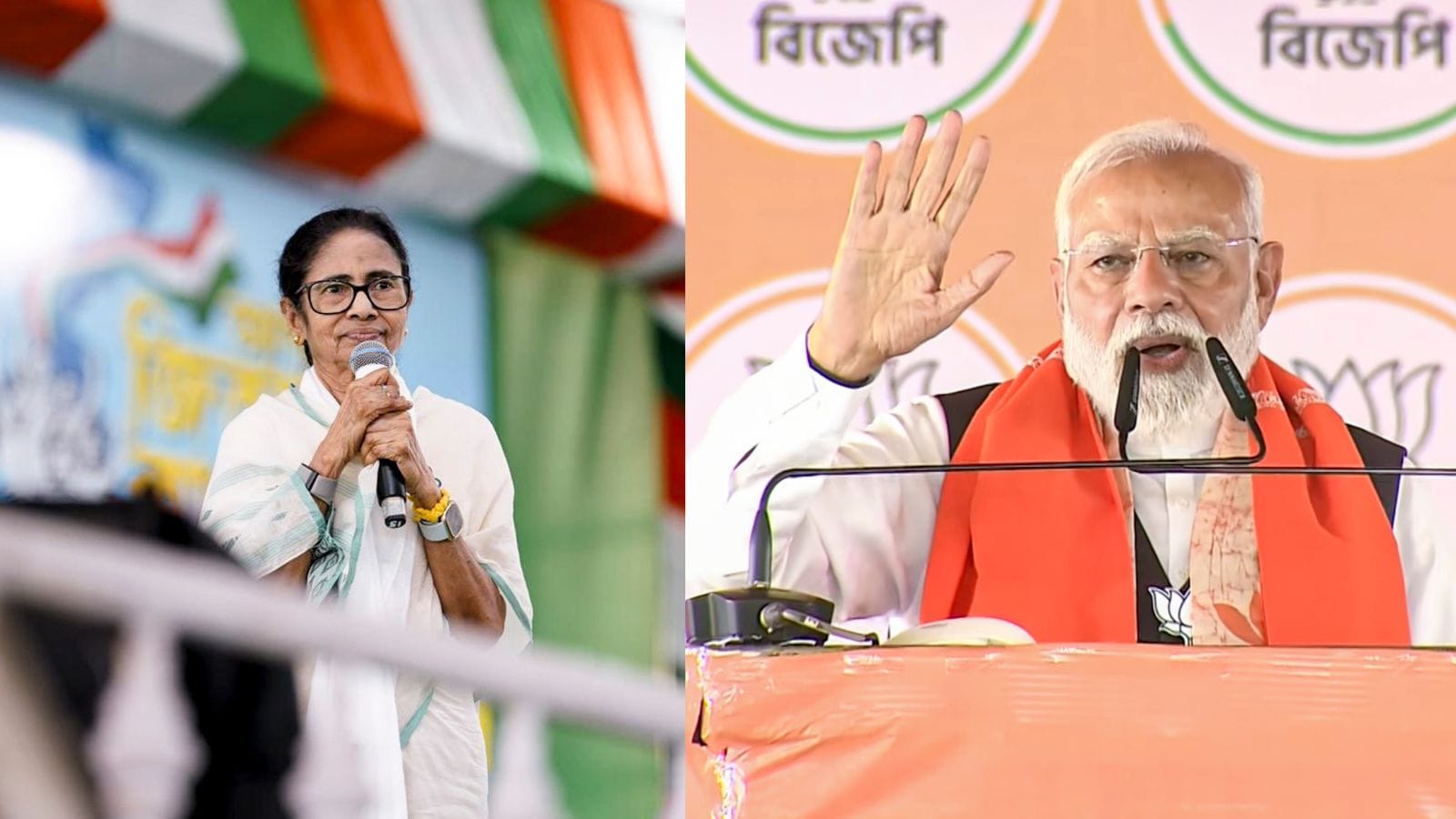
A victory for the Bharatiya Janata Party (BJP) in West Bengal cannot be attributed to any single factor. It reflects the convergence of multiple political, social, and institutional processes that have gradually reconfigured Bengal’s politics. At its core lies a striking reorganisation of political identity — away from older axes such as class and regionalism, toward a more expansive, emotionally charged idiom of religious nationalism.
The most significant driver of this shift is the consolidation of political polarisation along religious lines. The BJP’s rise in Bengal has been premised on its ability to translate national narratives of identity into locally resonant idioms. What stands out is not merely the polarisation, but its efficacy when it comes to elections. Electoral choice has been recast not as a question of governance or policy, but as one of civilisational belonging. In this reframing, older markers of political mobilisation — class solidarity, linguistic identity, and regional pride — are displaced by a more encompassing narrative that seeks to define the political community in cultural and religious terms.

That said, ideological transformation alone cannot explain such an outcome. It has been enabled by a more familiar dynamic: Anti-incumbency. The All India Trinamool Congress (TMC) has had a long tenure, and Mamata Banerjee has inevitably generated fatigue. Allegations of corruption, controversies surrounding recruitment processes, and everyday experiences of bureaucratic arbitrariness have eroded the moral authority that once underpinned TMC’s populist appeal. Over time, this has produced a diffuse but pervasive sense of discontent.
The BJP has successfully channelled this discontent into a demand for change. Its campaign has positioned itself not merely as an alternative, but as a corrective — a force that promises cleansing and renewal. Whether such claims withstand scrutiny is less important than their electoral efficacy. In moments of political fatigue, the promise of rectification often carries persuasive power.
At the same time, the electoral outcome cannot be understood without considering the role of institutions. The conduct of elections by the Election Commission of India, including exercises such as the Special Intensive Revision of electoral rolls, has been a subject of political contestation. Critics have suggested that such processes, along with the broader deployment of state machinery, may shape electoral participation in subtle ways. While definitive conclusions require careful empirical analysis, the perception of institutional alignment — of blurred boundaries between party, state, and regulatory apparatus — is itself politically consequential. It feeds into a wider narrative in which the neutrality of institutions is increasingly questioned.
Alongside these political and institutional dynamics lies an important economic dimension. The BJP’s articulation of “double-engine growth” — the idea that alignment between the state and the Union government can accelerate development — has resonated with large sections of the electorate, particularly among younger voters confronting unemployment, even precarious livelihoods. In a state long marked by industrial stagnation and limited private investment, the promise of integration into a broader national growth trajectory carries considerable appeal.
This economic narrative does not operate independently of identity politics — the two intersect in complex ways. For some voters, the promise of development reinforces their ideological alignment with the BJP. For others, it provides a pragmatic rationale for supporting a party whose cultural politics they may not fully endorse. In both cases, the convergence of material aspiration and identity-based mobilisation has proven electorally advantageous.
One of the most revealing aspects of this transformation is the movement of sections of Left voters towards the BJP. This shift cannot be explained simply as a rejection of the incumbent TMC, though anti-incumbency certainly provides the immediate context. More substantive changes are at work.
The long decline of the organised Left has created a representational vacuum, particularly among lower-middle-class and working-class voters who once relied on party structures for mediation and voice. In the absence of a credible Left alternative, the BJP has, paradoxically, emerged as a vehicle of oppositional politics. At the same time, the ideological vocabulary of class has weakened in everyday political discourse, making it easier for identity-based narratives to reframe social grievances in cultural rather than economic terms.
There is also an affective dimension to this shift. A segment of voters appears to experience a sense of political displacement — a perception that the moral economy of redistribution has become selective or exclusionary. In this context, the BJP’s emphasis on order, centralised authority, and developmental integration offers a compelling alternative. The shift, therefore, is not merely reactive — it reflects deeper transformations in political identity, aspiration, and the language through which grievances are articulated.
Perhaps the most consequential implication of this imagined verdict lies in the limits it reveals in Bengali identity-based mobilisation. For much of its history, Bengal’s political discourse has been shaped by a strong sense of linguistic and cultural distinctiveness. This identity has often functioned as a counterweight to homogenising tendencies emanating from the national level. The assumption has been that Bengali identity possesses an inherent resilience against majoritarian religious politics.
The electoral outcome would suggest otherwise. Regional identity, while still significant, no longer appears sufficient as a standalone axis of mobilisation. The BJP’s success points to the ability of religious nationalism to transcend, and in some cases subsume, linguistic and cultural particularities. Bengali identity has not disappeared; rather, it has been rearticulated within a broader ideological framework that prioritises religious belonging. The limits of cultural nationalism, when confronted with a more expansive and emotionally resonant narrative, become starkly visible.
Taken together, these dynamics reveal a polity in transition. A BJP victory in West Bengal would not simply represent the replacement of one party by another. It would signify a deeper reordering of the principles through which politics in the state is organised and understood. Polarisation, anti-incumbency, institutional contestation, developmental aspiration, and the reconfiguration of identity have converged to produce a new electoral common sense.
What remains uncertain is the durability of this transformation. Electoral victories can consolidate emerging trends, but they can also expose the tensions that underlie them. For the BJP, the challenge would be to translate its diverse and sometimes contradictory sources of support into a coherent governing project. For its opponents, the task is equally formidable: to rethink their strategies, languages, and assumptions in a political landscape that no longer conforms to inherited certainties.
In that sense, this imagined verdict is less an endpoint than a beginning. It compels a re-examination of what Bengal has been — and what it may yet become.
The writer teaches at Jadavpur University, Kolkata, and was the Eugenio Lopez Visiting Chair at the Department of International Studies and Political Science at Virginia Military Institute, US
