



6 min readJun 9, 2026 03:32 PM IST
First published on: Jun 9, 2026 at 03:32 PM IST
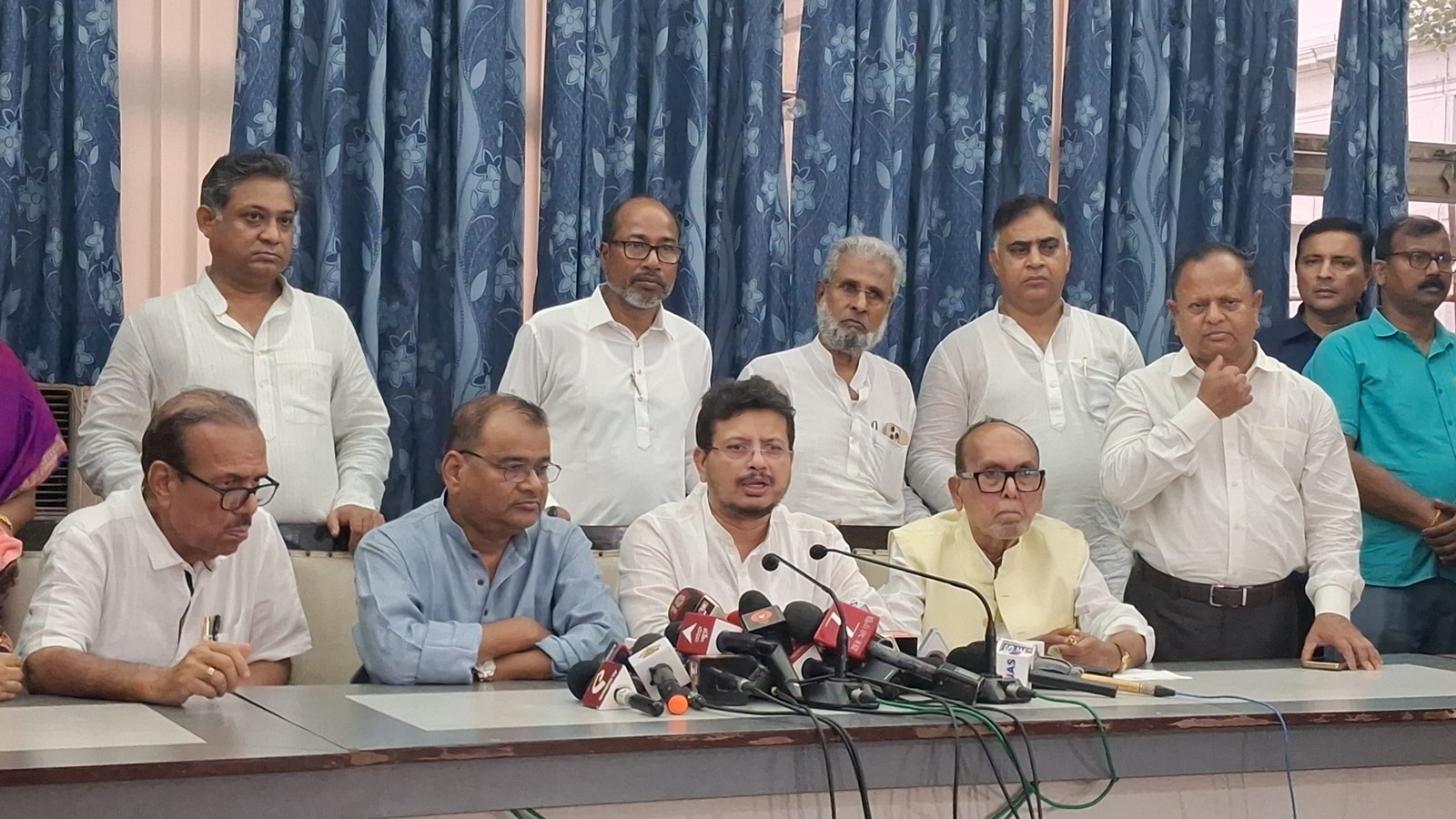
If “detect, delete, deport” is the new government policy of dealing with “illegal migrants” as stated by Home Minister Amit Shah in Parliament when he defended the special intensive revision of the electoral rolls undertaken by the ECI, the BJP’s strategy to deal with the opposition political parties after the declaration of poll results is another 3D formula: “divide, defect, dominate”. The latest example is the crisis of the TMC. The party currently has 80 MLAs in the 18th West Bengal Assembly, 28 MPs in the Lok Sabha, and 13 MPs in the Rajya Sabha. Yet, it finds itself caught in an unprecedented crisis after the BJP came to power in West Bengal on May 4. Not only did the TMC and its president, Mamata Banerjee lose control over the legislative assembly party — some 60 MLAs claimed to be the “real TMC” with an expelled leader and first-time MLA Ritabrata Banerjee as their leader — the developments in Delhi on June 8 exposed the split in the TMC parliamentary party as well.
On a day when Mamata Banerjee was in Delhi to attend a meeting of the INDIA bloc, a significant number of TMC MPs met BJP leader and Union Minister Bhupender Yadav. Veteran leader Sukhendu Sekhar Roy tendered his resignation from the party and as a Rajya Sabha member, and Kakoli Ghosh Dastidar led the rebellion in the lower house, claiming that some 20 TMC MPs have written to the Lok Sabha Speaker expressing willingness to form a “bloc” and support the NDA. The incumbent CM, Suvendu Adhikari, was also in Delhi and met many rebel TMC MPs. The day-long political drama reminds one of similar splits engineered by the BJP in multiple opposition parties in other states, such as Arunachal Pradesh (2016), Goa (2017), Madhya Pradesh (2020), and Maharashtra (2022 and 2023). Now that the split in the TMC is a certainty, one must consider the implications of the politics of “divide, defect, dominate” for Bengal as well as India’s constitutional democracy.

The implosion of the TMC was anticipated by many, if not the pace at which it happened. The divide in the party is therefore not surprising. After the TMC dislodged the longstanding Left Front rule in West Bengal in 2011, it could not reproduce the model of what political scientist Dwaipayan Bhattacharyya termed “party society” — an intricate beehive-like party-centric structure ensuring organisational control and governance. The TMC party model, on the other hand, rested on three pillars: The personality cult of Mamata Banerjee; local leaders who competitively ran the party at the grassroots using her brand (what Bhattacharyya termed “franchise politics”) and financially profited from it; and banking on a symbiotic politics with community organisations of caste groups and religious minorities. All these pillars are now cracked.
The cult of Mamata Banerjee, who came to power in 2011 as a symbol of “honesty” (satatar pratik), is now under severe attack. The BJP has successfully rebranded her as the leader of a corrupt (chor) party who is invested in advancing dynastic interests. The decline of Brand Mamata and the fall of her government is already paving the way for a shift in allegiance towards the BJP among local leaders who no longer find association with the TMC profitable and risk-free. The rebel MLAs and MPs have gauged it. The BJP, with its call for Hindu unity, has also been effective in garnering support from different caste groups, which is evident from the composition of its council of ministers. The minority leaders are thus left with no choice but to negotiate with the BJP.
Dividing a party, however, is not enough. The BJP is a master of the numbers game, and it is aware of its reduced strength in the 18th Lok Sabha. An ADR report shows that the BJP has benefitted the most from defections of Opposition legislators in bulk since 2016. The case of the TMC parliamentary party is a new addition to this trend. What we can expect is a repeat of the Maharashtra case (2022) at the national level. The rebel TMC MPs are claiming to be a “bloc” of the parliamentary party with a two-thirds majority, which is willing to support the NDA government. They want neither to form a new party nor to merge with the BJP. However, such an arrangement will be a violation of the Tenth Schedule or the anti-defection law. A split in the parliamentary party does not necessarily mean a divide in the original political party. Since the law allows a merger, and not a split, the MPs must follow the directions of the original political party. The rebel bloc has to therefore claim themselves as the “real TMC” and its symbol.
A similar legal battle will unfold at the state level. Whether Mamata Banerjee can save her party and symbol will now be decided by the courts and the ECI. Given the trend in defections, what is more concerning is the larger constitutional question of democratic accountability between the legislator and the elector, and the role of institutions in safeguarding the same. The TMC split once again revealed the ineffectiveness of the anti-defection law and calls for a more robust legal reform vis-à-vis political defection.
It’s clear that the BJP is going to overwhelmingly dominate Bengal politics in the coming days. The division and defection of TMC leaders means the absence of any effective Opposition in the legislative space, both at the state and union level. The hobnobbing of the TMC rebels with the BJP leadership signals that the latter will virtually dictate the terms of the Opposition in the Vidhan Sabha, while the parliamentary party remains fractured. At the popular level, the BJP, being a regimented party, is likely to recreate the party society model of yesteryears to penetrate every sphere of public life, foregrounding the Hindutva ideology and the vision of neoliberal development. The Opposition needs to urgently get its house in order.
The writer is assistant professor, Jindal Global Law School, O P Jindal Global University
