



One of the most famous debates in international relations theory is between eminent scholars Scott Sagan and Kenneth Waltz over the following question: Do nuclear weapons make the world safer or more dangerous?
Sagan’s argument is the more straightforward one. Simply put, nuclear proliferation increases the risk of deliberate or accidental nuclear war because states are not completely rational actors, and accidents and organisational failures are real possibilities that could lead to nuclear exchanges. Waltz, by contrast, advances a counterintuitive claim that nuclear weapons can actually make the world more stable and therefore, “more may be better”.

Why? Because nuclear weapons threaten mutually assured destruction and thus discourage states from initiating any conflict that might lead to their deployment when high up the escalation ladder. Waltz’s most enduring example is the Cold War: That nuclear weapons reduced the likelihood of war between the United States and the Soviet Union. Indeed, the two superpowers never fought a direct, declared war against each other because, “Where nuclear weapons threaten to make the cost of wars immense, who will dare to start them?”
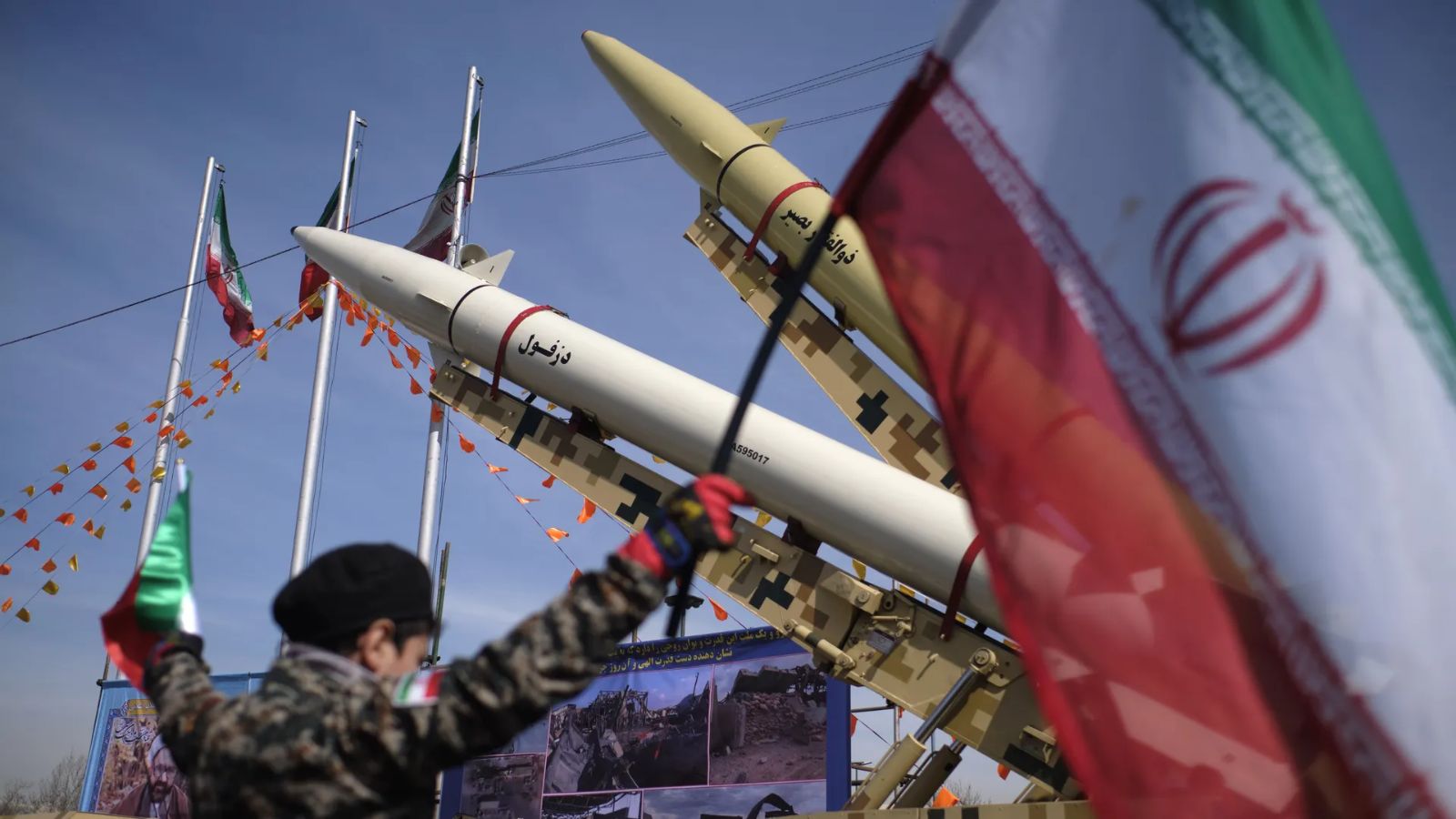
The framing of this debate becomes all the more critical in the context of the ongoing US-Israel war on Iran. The prospect of Iran acquiring nuclear weapons has been unacceptable to both the US and Israel for years. And even as the Iranians signalled during negotiations a willingness not to stockpile material sufficient for a bomb, they found themselves under attack in what has been described as a “preventive war”, that is, launched to prevent Iran from reaching nuclear capability.
And here lies the paradox. A war intended to prevent Iran from acquiring nukes may actually strengthen its incentive to get them, and get them quickly. It risks reinforcing Waltz’s logic that in a world characterised by power and anarchy, nuclear weapons are the ultimate deterrent. If this sounds too abstract a theory, consider two examples from entirely different parts of the world.
In 2017, war between the US (Trump 1.0) and North Korea over the latter’s rapidly advancing nuclear and missile programmes had begun to seem like a real possibility. In August, Trump had warned that North Korea “best not make any more threats… they will be met with fire and fury like the world has never seen.” Note that the language is not so different from what he is saying about Iran today (“death, fire and fury”).
But Trump ultimately did not follow through on the “fire and fury” rhetoric. Why? Likely because North Korea had already tested nuclear weapons successfully, and Kim Jong-un had spent much of 2017 demonstrating that he could strike the US mainland with a nuclear-tipped ballistic missile.
The risk of nuclear escalation pulled both sides back from the brink. Since then, North Korea has doubled down on nuclear weapons, passing a law declaring its nuclear status “irreversible” and ruling out negotiations on denuclearisation. Meanwhile, in September 2018, a year after the standoff, Trump confessed during a rally in West Virginia about Kim Jong-un: “Then we fell in love, okay? No, really — he wrote me beautiful letters.”
For the other example, let’s go all the way back to 1994, when Ukraine agreed to give up what was then the world’s third-largest nuclear arsenal, in return for security assurances from the West and Russia. More than three decades on, Russia controls roughly 20 per cent of Ukrainian territory, its military aggression beginning with the annexation of Crimea in 2014, followed by a full-scale invasion in February 2022.
Would Russia have invaded had Ukraine kept its nuclear weapons?
It is impossible to give a definitive answer to a question like that. But we can at least conclude that security guarantees failed to protect Ukraine. Had it maintained and developed its nuclear arsenal, the prospect that both Ukrainian and Russian societies could be obliterated in a nuclear exchange might have deterred a Russian invasion. Three years before Ukraine transferred all the warheads to Russia for dismantlement, John J Mearsheimer had famously argued that “Ukrainian nuclear weapons are the only reliable deterrent to Russian aggression.”
North Korea and Ukraine, albeit in different ways, reinforce Waltz’s logic of nuclear deterrence. If one accepts the argument that only nuclear weapons can reliably deter military adventurism, then the likely consequence of the present war in West Asia may well be the acceleration of Iran’s nuclear programme. The only scenario in which this doesn’t happen is one where Washington succeeds in installing a compliant government in Tehran, akin to the one being led by Delcy Rodríguez in Venezuela.
West Asia is a volatile region even in the absence of war, but it does have a de facto regional nuclear hegemon: Israel. For decades, Israel has used its military superiority to prevent countries like Iraq, Syria, and now Iran from acquiring nuclear weapons to preserve that nuclear monopoly.
But the anarchic nature of the international system means that overwhelming power will inevitably invite balancing. It is this logic that may now push Iran to try even harder to acquire the bomb. And if it ultimately succeeds — and if Waltz’s theory holds — it could result in a nuclear equilibrium that might produce a more stable West Asia.
The writer is deputy copy editor, The Indian Express, saptarishi.basak@indianexpress.com
