



The seeds soak overnight. By morning, the pumpkin, watermelon, melon, and cucumber kernels — char magaz (four kernels) — have softened enough to grind into a pale, faintly sweet paste. The paste goes into yoghurt-marinated chicken, the gravy is finished with ghee and a whisper of kewra, and what comes out of the pot is not a Nawabi dish at all. Char Magaz ka Murga is a Kayastha Lucknowi dish born in the Hindu kitchens of the city, the kind of recipe a grandmother adjusts without writing down. It tastes like cream but isn’t. It is also the dish I am cooking this week, while I think about a list.
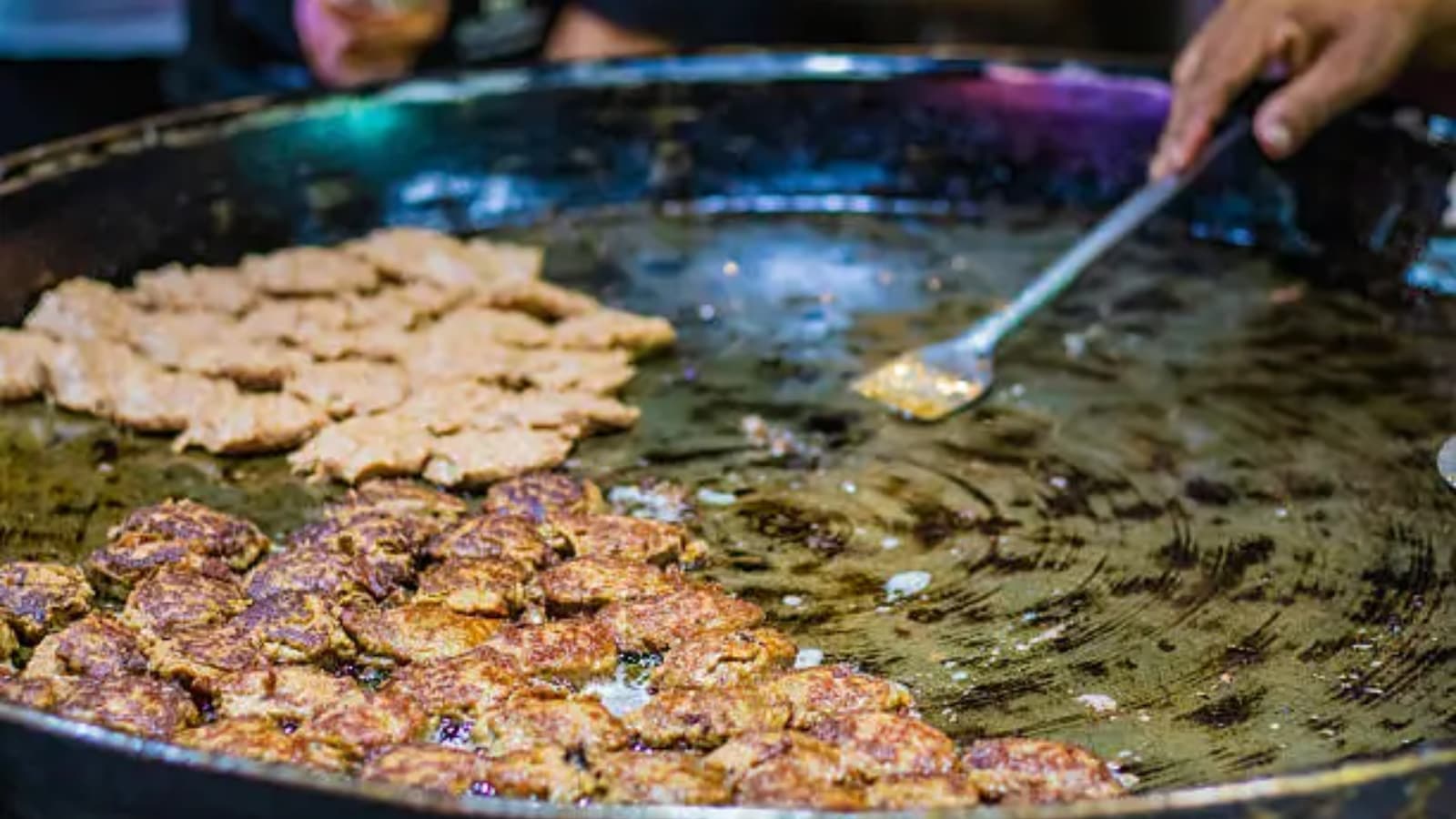
I have been thinking about this dish for the last few days, since the Uttar Pradesh government released its list of 208 dishes for the One District, One Cuisine scheme; the Char Magaz ka Murga was not on it. Neither was Tunday’s Galawati, nor the Awadhi biryani that Idrees has perfumed for generations, nor Moradabadi biryani, nor Bareilly’s mutton preparations, nor Kakori’s kabab, nor the nahari of Agra, the slow-cooked breakfast in the older city. Out of 208, not one is meat-based. For a state where many eat meat across caste, class, and creed, this is a strange kind of map. It charts a country that does not exist.
In July of last year, I wrote in these pages that the One District, One Cuisine idea was conceptually wrong: You cannot reduce a district to a single dish without flattening the kitchens that it is made up of. The list has now arrived, and the argument has changed shape. It is not only that the list is too small. It is that it pretends to be a shape the kitchens never had.

UP’s food was never sorted by religion. The dastarkhwan and the thali borrowed from each other so much that the borrowing is the cuisine. Tehri, the rice-and-vegetable dish the list assigns, correctly, to Azamgarh is a sibling of biryani; same grain, same pot, same hands. The Galawati was invented for a nawab, but it is now eaten by everyone in Lucknow who can stand in queue at Tunday’s. There is even a vegetarian version of it. In Banaras, the halwai and the kababchi have shared the same wall for centuries. In Rampur, the taar gosht — meat reduced until the gravy spins a thread between two fingers — is a Rohilla technique that Hindu households adopted for their own celebrations. The vegetarian and the non-vegetarian here are not parallel cuisines. They are one cuisine taking turns at the stove. This is the reason the list, with all the best intentions behind it, has narrowed the very thing it sets out to celebrate.
I keep thinking about other dastarkhwans, set at the country’s highest table. In March 1990, just weeks after Nelson Mandela had walked free, India hosted him at a state banquet at Rashtrapati Bhavan. The menu, recorded in Around India’s First Table by Salma Husain and Lizzie Collingham, was a regional medley: Rajasthani safed maas sat alongside an Anglo-Indian mushroom jalfrezi, idlis and vadas alongside biryani. In July 2001, two years after Kargil, when President K R Narayanan hosted General Pervez Musharraf, Goan prawns sat next to Kashmiri kebabs, which sat next to Gujarati dal dokhli. Two of the most charged diplomatic moments in our recent history; at both, the message of the table was abundance. Veg and non-veg sat together; nobody was asked to choose. Last week, when President Droupadi Murmu hosted President To Lam of Vietnam, the entire banquet was vegetarian for a guest from a country whose national dish is phở bò. The dishes once served to a freed Mandela and a wartime Musharraf are now too non-vegetarian for India’s own state table and, it turns out, too non-vegetarian for Lucknow’s own list.
I do not mean this as accusation; I mean it as observation. Three menus, three decades, three positions on a curve that anyone can draw. The curve goes one way. That is the logic the list confirms.
What troubles me most, as someone who cooks for a living, is what this kind of curation does to a kitchen. A cuisine is a relationship between dishes, a fabric woven across centuries by cooks who continued the rich tradition of the state and forgot whose recipe began where. When a state draws a line down the middle of that fabric and declares one half official, it loses the creativity that the crossing made possible. The halwai who would have made sevaiyan for Eid and kheer for Diwali because his clients celebrated both, is now being told only one is heritage. The fabric becomes uniform. The kitchen narrows.
I do not think the people who drew up this list set out to insult anyone. I think they set out to make a clean policy document — and a clean policy document is exactly what a cuisine cannot be. Food is messy. It carries the smell of houses you have not lived in. It remembers migrations and marriages and ordinary Tuesday dinners when somebody was sad and somebody else made khichdi. To put it on a list with half the kitchens missing is to lose the thing that made the list worth making.
Rakesh Sachan, the cabinet minister who answered for the scheme this week, said the omissions were “not intentional” and that dishes could be added if recommended. That is a door, and one worth walking through. But a cuisine cannot be assembled by petition, dish by dish, district by district, until somebody at a desk decides which Lucknow is real. The fix is not to add the kebabs back. The fix is to ask whether the exercise of choosing one dish per district was ever the right shape for what UP eats.
Until then, the kitchens will keep cooking what they have always cooked. The galawati will arrive at Tunday’s at noon, the nihari at Raheem’s at dawn, biryani in Moradabad at Alam Biryani and the char magaz on a Kayastha grandmother’s stove on a quiet Sunday in Meerut. A cuisine is not what a government recognises. It is what people remember to make.
The writer is a chef and author
