



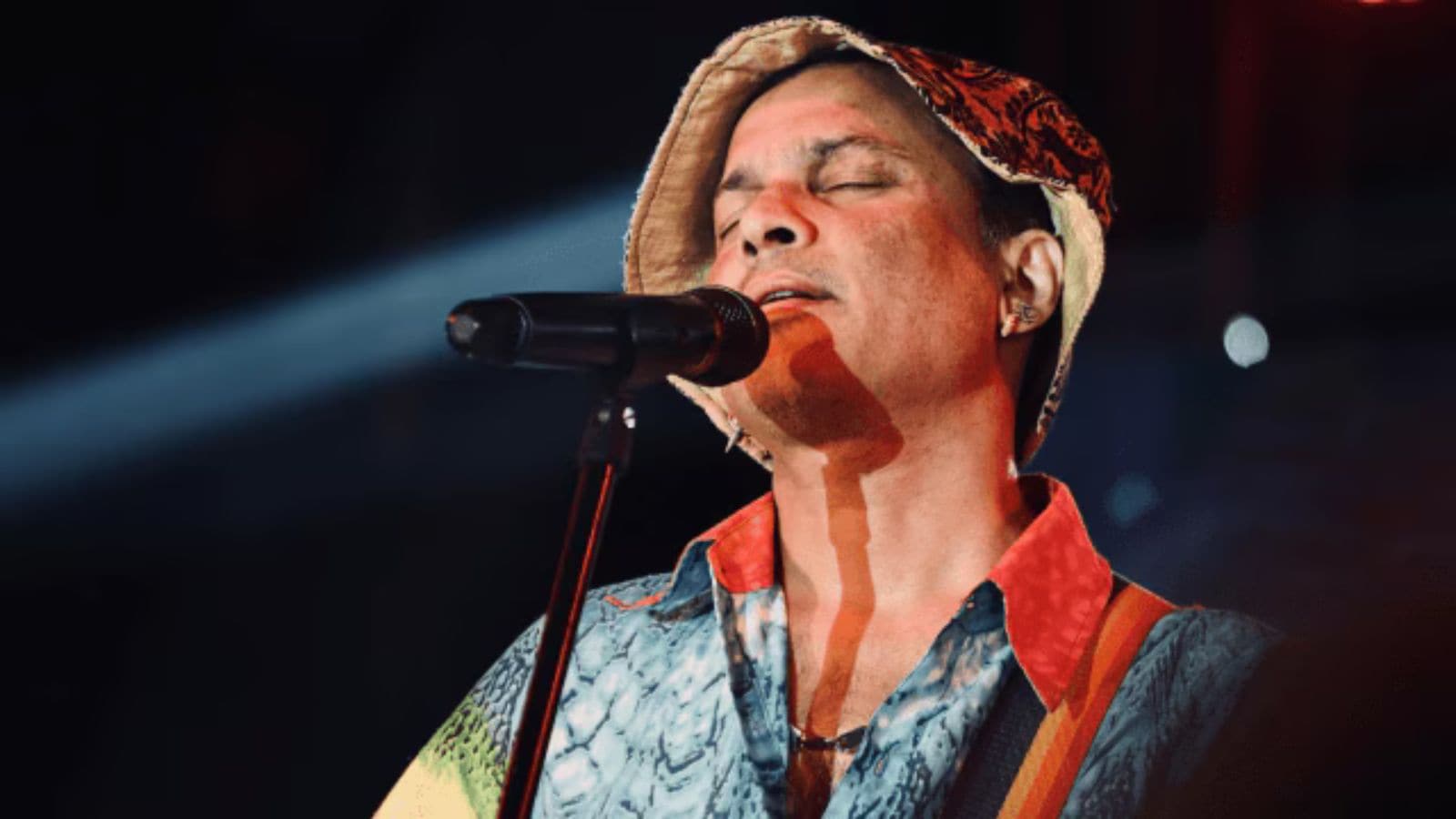
When I travelled recently through Assam, I did not expect to encounter a phenomenon that would leave me both moved and unsettled. I had gone to see Kaziranga’s wildlife, curious, camera in hand. I returned as a witness to something far deeper: The enduring presence of Zubeen Garg, not as a memory, but as a living force in the lives of ordinary people.
Garg, the celebrated Assamese musician, died tragically by drowning in Singapore on September 19, 2025, at the age of 52. Until then, I would not have recognised him if he had stood before me. It was my two housemaids — both Bodo Christians from Assam — who, shattered by the news of his passing, first introduced me to him. They followed every development on their smartphones, playing his songs with quiet devotion. Yet, moving as that was, nothing quite prepared me for what I was soon to encounter.

In Assam, he has not died.
My first hint came in Guwahati. Driving through the city, I began noticing hoardings: Large, striking, and unmistakably personal. They bore his image, sometimes accompanied by lines from his songs, sometimes simply his face. What struck me was not their presence, but their nature. These were not the polished, uniform hoardings commissioned by governments. They were varied, uneven, often modest — put up, I was told, by ordinary people at their own expense.
The contrast became sharper as I travelled further. Towering above highways and intersections were the now-familiar, state-funded cut-outs of Narendra Modi, Amit Shah, and the Assam Chief Minister — immaculate, expensive, and ubiquitous. Yet, somehow, it was the smaller, self-funded tributes to Garg that felt more alive.
On the way to a tea estate near Tezpur, we passed his cremation site on the outskirts of Guwahati. It had become something of a pilgrimage centre.
The approach road itself told a story. “There was nothing here. But look now,” pointed our driver. Hundreds of small shops had come up — selling tea, snacks, photographs, memorabilia — catering to the steady stream of visitors, arriving in buses from distant parts of Assam. We witnessed, also on our return journey, people coming in large numbers. Families, groups of young men, elderly couples — some came in silence, some in conversation, all with a shared sense of purpose, to pay homage to Zubeen.
As I spoke to people, a pattern emerged. They did not speak of him in terms of his discography or cinematic achievements. They spoke of what he stood for. Again and again, his stand against the felling of ancient trees in Guwahati came up in conversation. People remembered how he had not merely expressed concern but had physically joined protests, lending his voice and presence to a cause that mattered deeply to them.
“He was not afraid,” one man told me. “He stood with us.”
Zubeen was not just an artist but a man who never hesitated to challenge authority. Whether it was government policy, administrative decisions, or larger social issues, he spoke with a candour that few public figures dare to risk. My driver admitted that Zubeen could be blunt, even controversial at times, but that people trusted him precisely because he was genuine.
“He said what we felt,” he added.
When the polarising Citizenship Amendment Act was passed, it triggered widespread protests across Assam, where concerns over illegal immigration and the preservation of indigenous identity have long been deeply sensitive. Zubeen Garg did not remain on the sidelines. He openly voiced his opposition, aligning himself with the anxieties of large sections of Assamese society.
Many in Assam saw in him not just an artist, but a voice of conscience.
In a small roadside restaurant later that evening, I noticed something that, in its own way, was even more telling. The waiters were wearing t-shirts bearing Zubeen’s image. Not uniforms issued by management, but personal choices, tributes worn with quiet pride.
His songs blared from the small boat that carried us out onto the Brahmaputra in search of dolphins. He was everywhere – not in an official capacity, but in the everyday lives of people.
What I was seeing was not merely admiration; it was legitimacy. The kind that cannot be manufactured through publicity campaigns or purchased with public funds.
Leadership, I have long believed, is not conferred by office. It is granted by people. By that measure, Zubeen Garg had already crossed a threshold that many elected leaders never do. With state elections approaching in Assam, I found myself wondering, as many I spoke to openly did: What if he had entered politics?
This is, of course, a hypothetical question. But in Assam, it is not an abstract one. There is a palpable belief that had he chosen to contest, the masses would have rallied behind him in overwhelming numbers. His appeal cut across divisions — urban and rural, rich and poor, young and old, Hindus, Muslims, Buddhists and Christians He spoke not as an outsider addressing a crowd, but as one of them.
As I left Assam, I carried with me a lingering reflection. In an era where leadership is often equated with visibility, control, and messaging, here was a man who had achieved something far more enduring: Trust.
He had never held office. He had never governed. He had never even sought power. And yet, across Assam, he continues to command a following that is spontaneous, emotional, and deeply rooted.
In life, he was a cultural icon. In death, he has become something more.
A leader the people chose, without ever being asked to vote.
Bakshi is the author of, among other books, Back to Gondwanaland
