



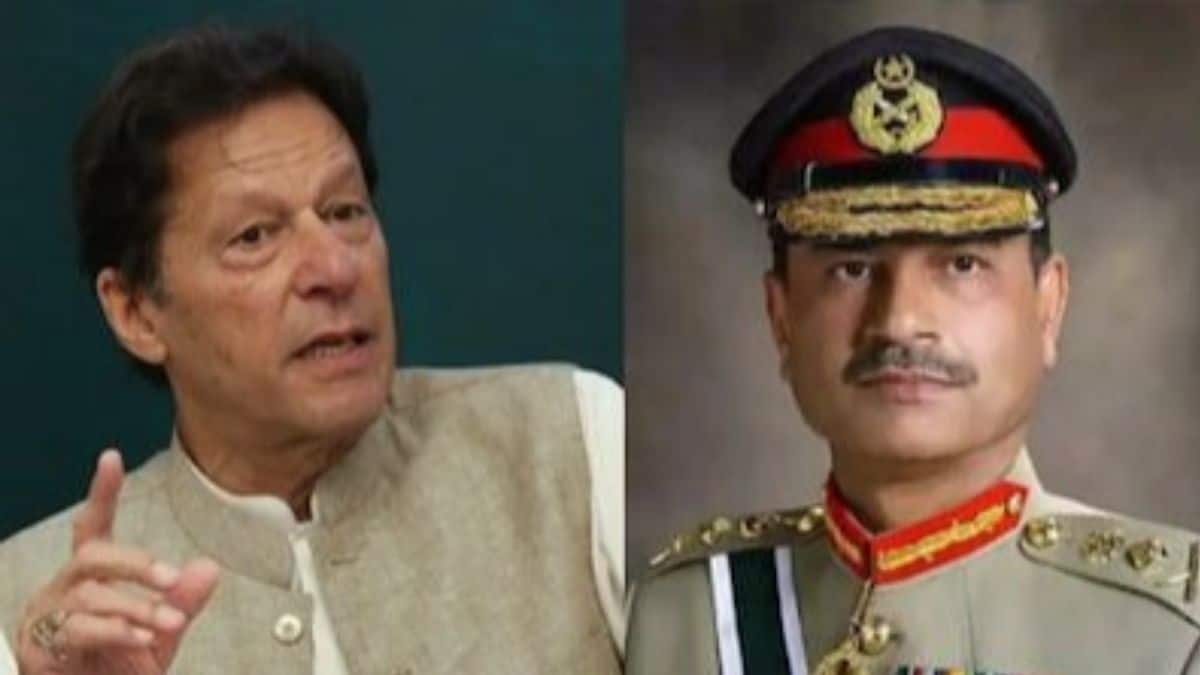
A former prime minister and cricketing icon losing his eyesight behind bars, protests for meeting him continuing, an economy in shambles, surviving on debt, rising unrest in western provinces, tensions with its neighbours India and Afghanistan, the US threatening its third neighbour Iran and a failing economic corridor—once billed as the saviour of the country—are all indicators of a collapsing state. Added is the sectarian violence within, targeting minority Shias, Hindus and Christians. Attacks in Balochistan, Khyber Pakhtunkhwa and the suicide bombing in the Shia Mosque in Islamabad, all in recent days, indicate the instability within.
Yet Pakistan survives, enhances ties with the US, and Trump terms failed marshal Asim Munir as his ‘favourite field marshal’. It offers rare earth minerals from Balochistan to the US, obtaining a loan of $1.25 billion from Washington’s Export-Import Bank for the Reqo Din mining project. It also inks a mutual security pact with Saudi Arabia, gaining a foothold in West Asia.
Such is Pakistan’s economic state that its Prime Minister Shehbaz Sharif mentioned recently, ‘We feel ashamed when Field Marshal Asim Munir and I go around the world begging for money. Taking loans is a huge burden on our self-respect. Our heads bow down in shame. We cannot say no to many things they want us to do.’ Currently Pakistan faces a total debt of $286 billion, of which the external part is $92 billion and the balance is internal. Pakistan’s total budget is around $70 billion, of which it needs $23-25 billion for debt servicing alone.
While its population struggles to live, its generals and politicians continue purchasing property in Europe and the US. At the same time, Khawaja Asif, Pakistan’s defence minister, falsely announces that the demand for the Pakistan-China-manufactured JF-17 aircraft is such that they would soon stop availing IMF loans. Meanwhile, the UAE has demanded that Pakistan repay its $3 billion loan by mid-April with a 6.5 per cent interest rate, for which Pakistan may possibly have to take another loan.
Imran Khan, their former PM, once a cricket star, and head of their largest political party, PTI, has been behind bars since August 2023, and the latest reports indicate that maltreatment in jail has resulted in him losing most of his vision in one eye. Imran was aware that if he chose exile in lieu of jail, he would become irrelevant. His family and party protest against his incarceration, but to no avail. Unlike Nawaz Sharief, Imran refused to seek Saudi assistance to have him released. Nawaz returned only when Musharraf was removed from power and there was a power vacuum.
Imran’s arrest, sentencing on trumped-up charges and maltreatment in jail resulting in vision loss have seen little public protest largely because the army cracks down on them. The government has finally decided to move him to a hospital. He remains Pakistan’s most popular leader and would regain power if released. The army is the institution which fears his release and hence would want to keep him incarcerated. They would prefer him dead but fear internal retaliation. ‘Failed marshal’ Asim Munir hates Imran, as he had him removed from his post as the ISI chief.
There is also no global outcry on Imran’s incarceration. Pakistan is an inconsequential nation; hence, what happens within has almost no global impact. The world is aware that the country has always been a quasi-democracy, ruled by the army. Even West Asian nations, which fund Pakistan, have maintained a studied silence on Imran, largely because of their own interests.
Growing freedom movements in Balochistan and Khyber Pakhtunkhwa have challenged control of the region by its military. Balochistan itself witnessed 254 attacks in 2025, an increase of 26 per cent since the previous year. In the latest incident, hundreds of Baloch freedom fighters attacked and held onto military installations, high-security zones and the provincial capital for a period of time, causing casualties amongst civil and military personnel. True casualty figures would never be known. There are also reports of seven Pak soldiers remaining captive with the Baloch.
The government claims to have killed 216 Baloch freedom fighters, a figure which can never be verified. Interestingly, Pakistan terms the Baloch as terrorists, while terrorists that it supports in Kashmir are freedom fighters. Pakistan has managed to convince nations, including the US, to declare the Baloch Liberation Army (BLA) as a terrorist organisation. The BLAs’ shift in strategy from hit-and-run attacks to taking control of regions briefly indicates their growing confidence while highlighting structural deficiencies in Pakistani security forces. The Jaffar train attack of last year was another example of audacious strikes.
Atrocities committed by Pakistan security forces have alienated locals in its western provinces, and this was visible in the BLA’s latest strike, where the public backed the rebels rather than security forces, offering food as well as carrying ammunition to those on the frontlines. The participation of women as suicide bombers as well as in active operations is a worrying sign and solely due to the high-handedness of security agencies. There are also reports of a tactical alliance between the BLA and the Tehrik-e-Taliban Pakistan. Both have their bases in Afghanistan.
Atrocities committed by the Pakistan army in its western provinces are also ignored by world bodies. This despite Baloch immigrants protesting outside global institutions during annual gatherings. In other parts of the world such atrocities would have resulted in demands for human rights investigations.
This silence is because of a few reasons. Firstly, the army maintains strict control over the media while locking the region away from scrutiny; secondly, successful narrative building highlights attacks by freedom fighters as being against the state; and thirdly, outside nations are blamed for interference, including Afghanistan and India. The impact is such that the UN Security Council condemned BLA attacks while ignoring Pakistan’s atrocities in the same region.
Pakistan blames India for backing the BLA without any proof. It terms their fighters as ‘Fitna-al-Hindustan’ – a term suggesting that these groups act at India’s behest. Internally, this approach helps in perception management, assisting the army in hiding its failures. No nation has supported Pakistan in its accusations against India. The targeting of the China-Pakistan Economic Corridor infrastructure and Chinese workers is an added concern as it angers Beijing. What makes it worse is that instead of addressing the root cause, Pakistan attempts to employ force.
In Operation Sindoor, Pakistan suffered severe damage to its military assets. Its forward posts were destroyed, terrorist camps raised to the ground, air bases made redundant, aircraft hit, and air defence systems severely damaged. It mistakenly released details of over a hundred and fifty soldiers killed before removing the list. It survived only on its narrative of playing on the downing of Indian Rafale aircraft while carefully muting all aspects of its own damages.
While Pakistan goes through crisis after crisis, ‘failed marshal’ Asim Munir is travelling the globe acting as the finance, foreign, defence and prime minister of Pakistan, all rolled into one. He determines directions of Pakistan’s foreign and defence policies while begging for funds.
Despite everything going against them, Pakistan has not only managed to survive but also grown in stature. It has cosied up to US President Trump by playing to his ego and inking a deal with his family-controlled crypto business. It has thanked Trump on multiple occasions for the ceasefire during Op Sindoor, aware that it was a lie. It even joined Trump’s Board of Peace (BoP) and volunteered forces to Gaza, against local public opinion. Shehbaz Sharif attended the signing ceremony of the BoP in Davos and will also attend its inaugural meeting in Washington, chaired by Trump. It went so far as to recommend Trump for a Nobel Peace Prize. This has enabled it to continue receiving IMF loans. A nation with nothing to offer has gained the trust of the world’s most powerful leader.
Pakistan has also signed a mutual defence pact with Saudi Arabia, enhancing its foothold in the Middle East. It will also receive funding from Saudi. It has managed to convince lender nations (less the UAE) to roll back due loans on promises which can never be fulfilled.
India’s attempts to isolate Pakistan do not appear to have succeeded very much. Pakistan’s successful narrative building has somehow played in its favour. At the end of the day, Pakistan is a nation which is surviving and remaining relevant, despite everything being against them. It is a lesson to third-world countries on the art of survivability and success, despite the odds.
(The author is a former Indian Army officer, strategic analyst and columnist. Views expressed in the above piece are personal and solely those of the author. They do not necessarily reflect Firstpost’s views.)
End of Article
