



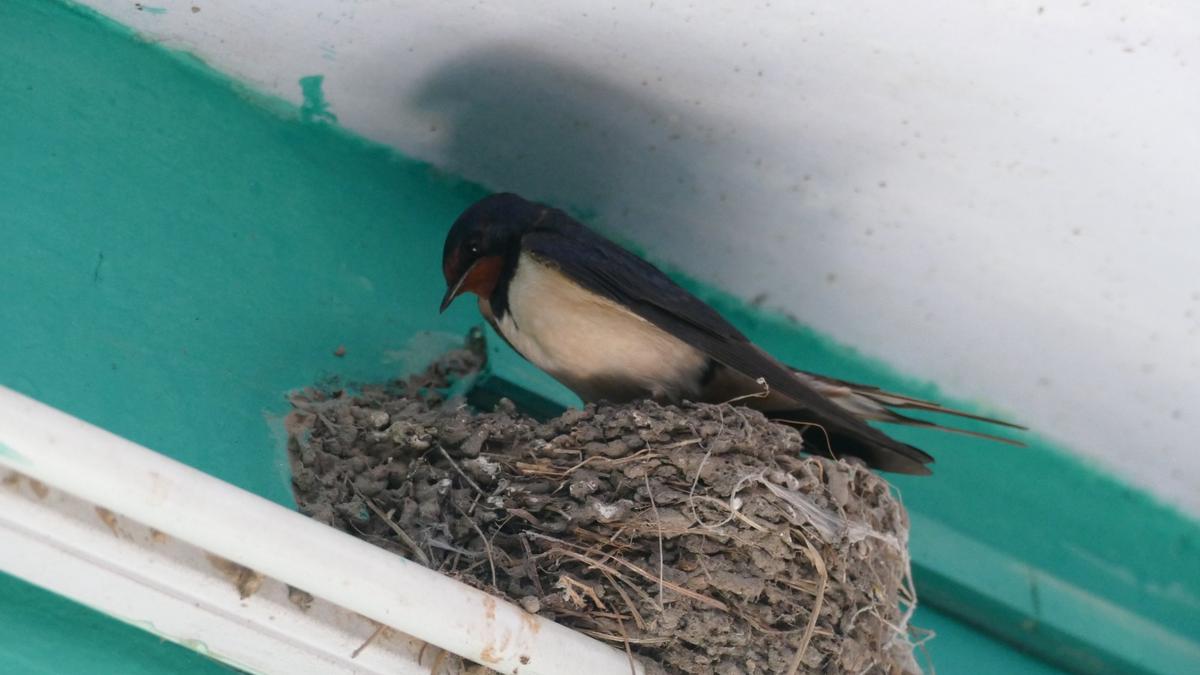
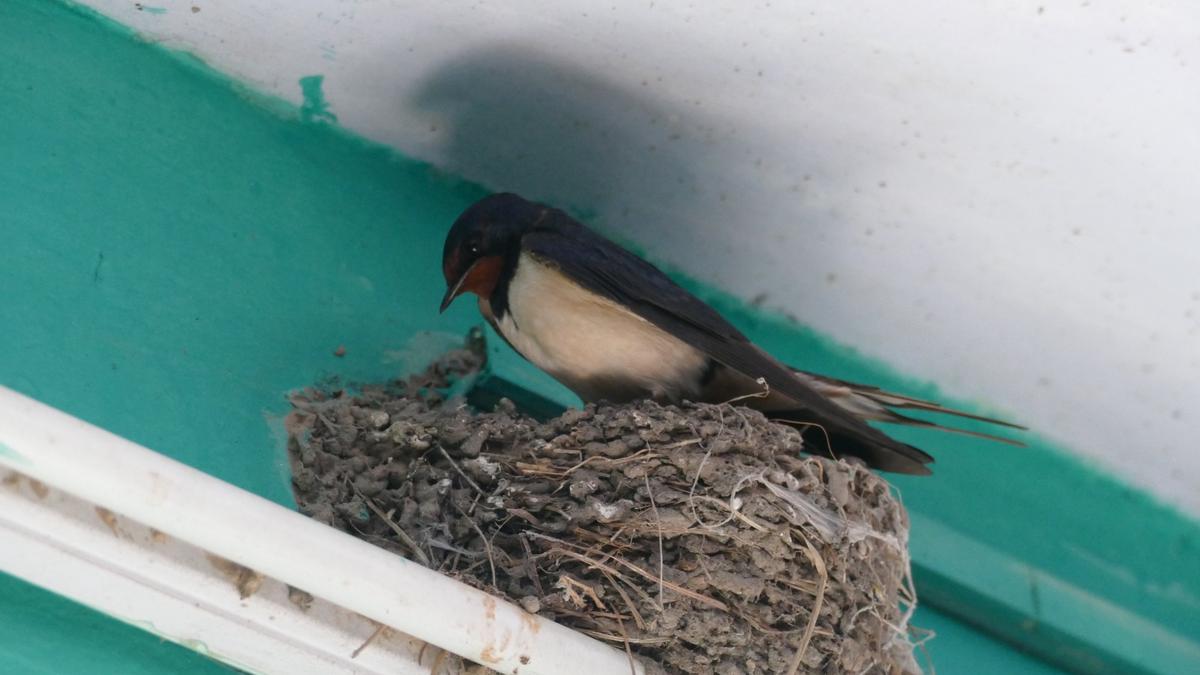
The barn swallow (Hirundo rustica) is a widespread synanthrope that has expanded its range across continents.
| Photo Credit: Special arrangement
GUWAHATI
Descendants of migratory barn swallows may have gradually stopped making long journeys and settled permanently in Manipur’s Imphal Valley, a new study suggests.
The finding, published in the Journal of Wildlife Science, also says that these fork-tailed birds may represent a mixed population shaped by ancient movements and interbreeding between their different groups over thousands of years.
The authors of the study are Amarjeet Kaur and R. Suresh Kumar of the Wildlife Institute of India (WII). Their study is based on field surveys conducted in 2022 and 2023.
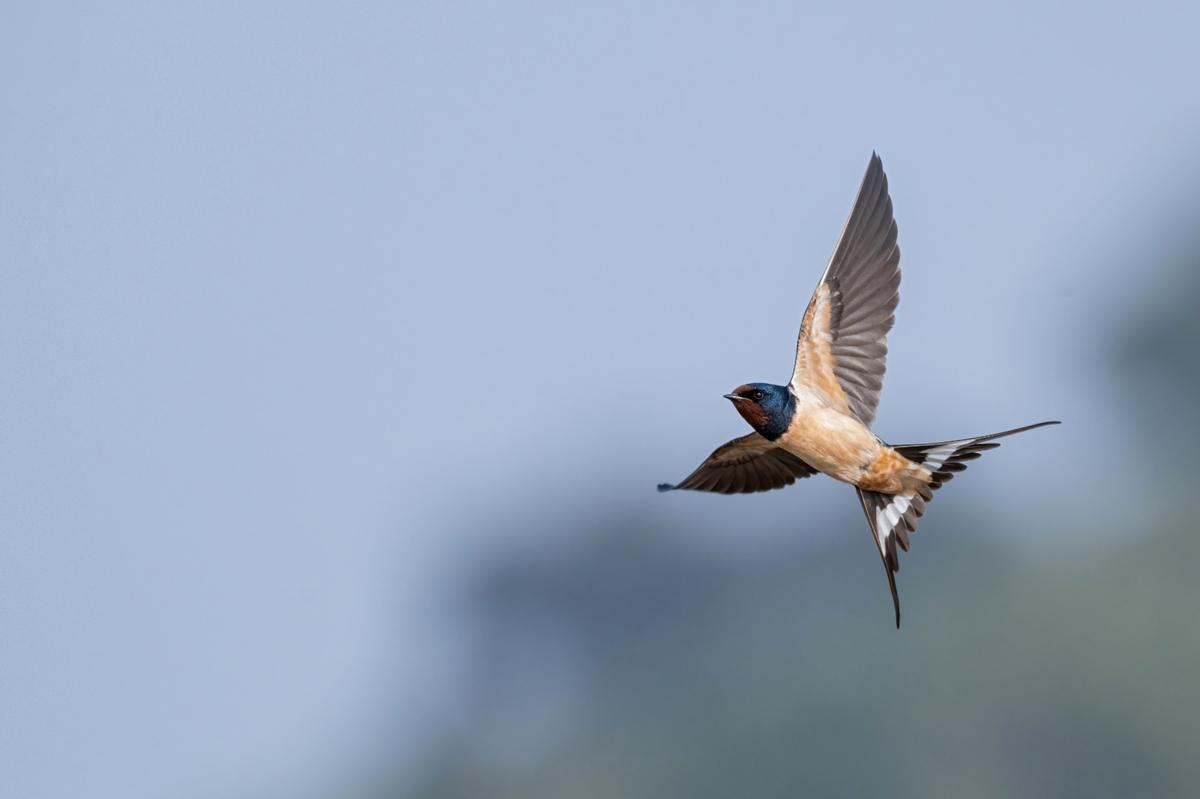
In India, two subspecies of barn swallows are reported to breed in the Himalayas, while one is believed to winter in parts of the country’s northeastern region.
| Photo Credit:
Special arrangement
“Birds have shown notable expansions and contractions of breeding ranges in response to climate change, land-use transformation, and the creation of novel human-made habitats. Synanthropic species, those closely associated with humans, are often at the forefront of such shifts,” the study notes.
The barn swallow (Hirundo rustica) is a widespread synanthrope that has expanded its range across continents. In India, two subspecies of barn swallows are reported to breed in the Himalayas, while one is believed to winter in parts of the country’s northeastern region.
The two WII scientists, one from the Department of Habitat Ecology and the other from the Department of Endangered Species Management, did not find any barn swallows in Manipur’s hill districts. They found thriving colonies in the Imphal Valley, recording nests in about 50 homes and buildings across Bishnupur, Imphal East, Imphal West, and Thoubal districts.
They captured 45 individuals — 26 males and 19 females. The swallows showed a variety of colours, ranging from buff to rich chestnut-orange underparts, with differences in throat and breast markings. Measurements of their wings and tails overlapped with several recognised subspecies, making it impossible to determine which population they belonged to.
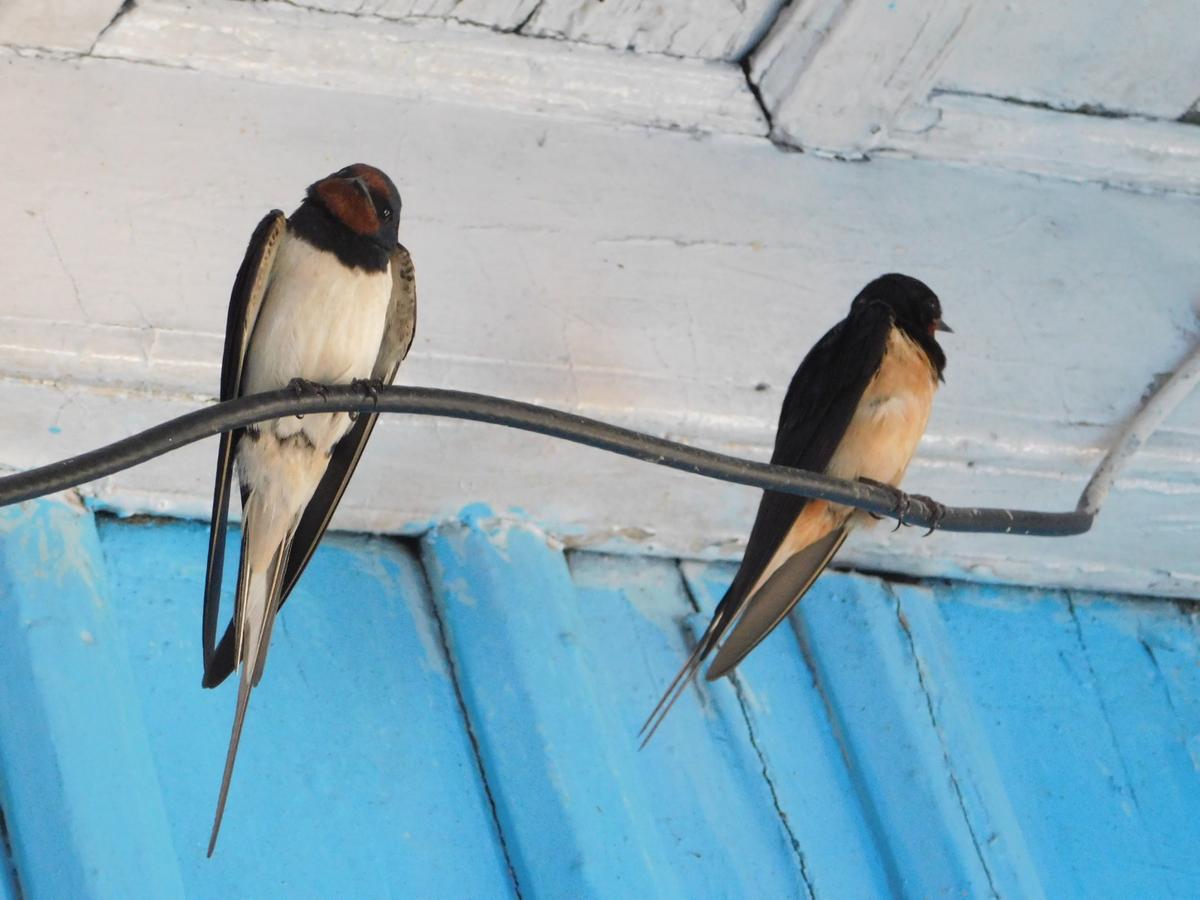
The researchers note that the study provides the first documentation of a resident breeding population of barn swallows in Manipur, extending the species’ known breeding range in the Indian subcontinent.
| Photo Credit:
Special arrangement
During the survey, adult barn swallows were seen at the nesting sites throughout the year, indicating that they do not leave the valley after breeding.
Ideal conditions
The scientists suggest two possible explanations for why the Imphal Valley birds challenge the understanding of barn swallows.
One is that these birds shed the migratory trait of their ancestors to settle down in the valley that offers ideal conditions — a mild climate, plentiful flying insects, and structures suitable for building their cup-shaped mud nests. The other is the impact of interbreeding of different groups over thousands of years.
The scientists did not rule out the role of local culture in the birds’ evolution from temporary to permanent residents.
“The Meitei community, a Tibeto-Burman ethnic group native to Manipur, regards the barn swallow as a symbol of Goddess Lakshmi, prosperity, and good fortune. This belief translates into strong protection of nests and barn swallows within private properties, likely contributing to the persistence of breeding populations in densely inhabited areas in Imphal Valley,” they observe.
The researchers note that the study provides the first documentation of a resident breeding population of barn swallows in Manipur, extending the species’ known breeding range in the Indian subcontinent.
“It highlights a critical ecological gap in our understanding of avian biogeography in this understudied region and challenges long-standing assumptions about subspecies limits,” they state, underscoring the need to use tracking devices and genetic analyses in future studies to find out where these birds came from and how long they lived in Manipur.
Published – May 16, 2026 04:45 pm IST

