



NEW DELHI: The stage is set for the declaration of results for the 2026 assembly elections across West Bengal, Tamil Nadu, Kerala, Assam and Puducherry with counting of votes scheduled to begin at 8 am on May 4. The outcome will decide the fate of 824 assembly seats and determine the political direction in five assemblies.The Election Commission has said counting will take place simultaneously across all constituencies, with early trends expected within the first one to two hours. The early trends are likely to emerge by morning, while final results are expected by evening. Voters can track real-time updates on the ECI website and timesofinfdia.com.Follow full coverage of elections here: https://timesofindia.indiatimes.com/elections/assembly-electionsPolling for these elections was held in April, with Assam, Kerala and Puducherry voting on April 9, Tamil Nadu on April 23, and West Bengal in two phases on April 23 and April 29. West Bengal recorded the highest turnout, crossing 92 percent across phases, while Assam saw a record 85.38 percent participation. Tamil Nadu recorded 84.69 percent turnout, Kerala 79.63 percent, and Puducherry 89.87 percent.
How counting of votes is done
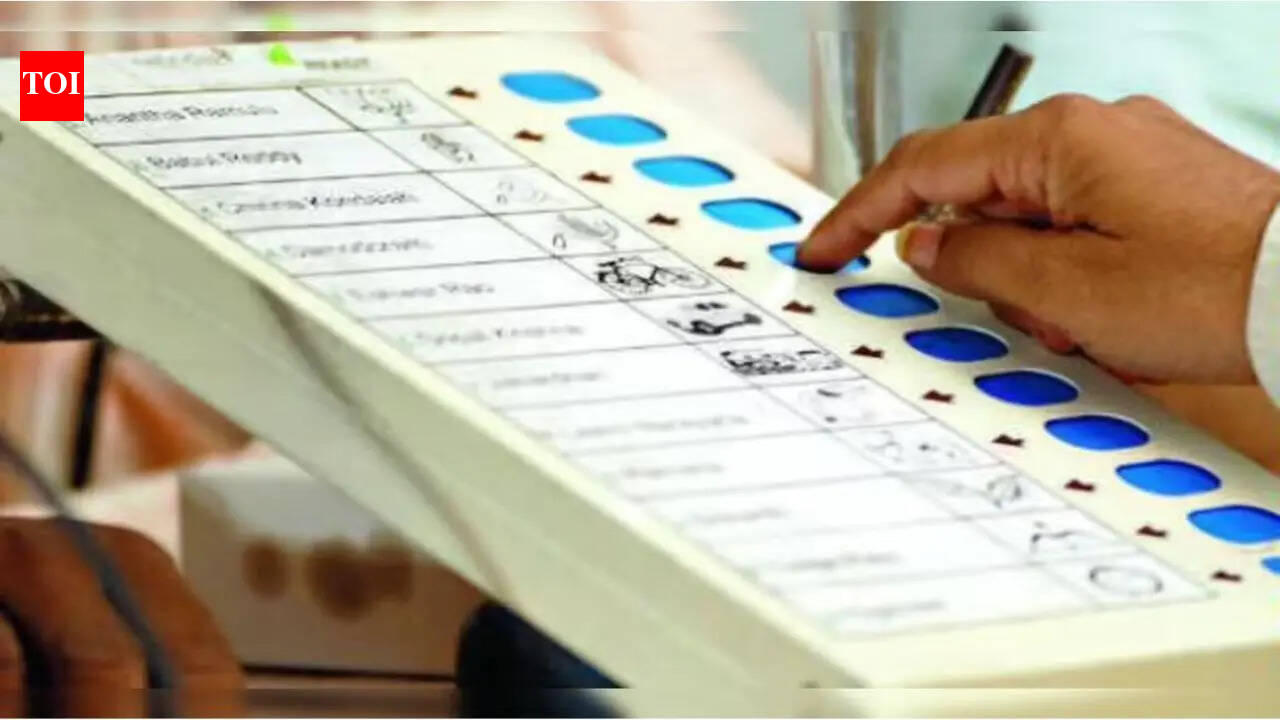
The counting process follows a structured and tightly monitored system. Postal ballots are taken up first, followed by votes recorded in Electronic Voting Machines. Counting is conducted in multiple rounds for each constituency, with results updated after every round. Returning officers declare the final result once all rounds are completed and verified.Security remains tight at counting centres, with strong rooms guarded and access restricted to authorised personnel and candidates’ representatives. The use of EVMs ensures faster tabulation, though verification procedures and round-wise counting mean the process continues through the day.
Exit poll, poll of polls: What projections say
Exit polls for the 2026 assembly elections indicate a fragmented and state-specific verdict, with no single national trend emerging across Assam, Kerala, Tamil Nadu, West Bengal and Puducherry.In West Bengal, most surveys point to a neck-and-neck contest between the Trinamool Congress and the BJP, raising the possibility of a hung assembly. A poll of polls places both parties close to the halfway mark in the 294-member House, suggesting that even minor vote swings could determine the winner. While some agencies such as P-MARQ project a BJP edge with 150–175 seats, others like Matrize show a tighter race, with both parties within striking distance. Tamil Nadu presents a more complex picture. While several exit polls predict that the DMK-led alliance under M K Stalin could retain power with a comfortable majority, others highlight the disruptive entry of Vijay-led Tamilaga Vettri Kazhagam. Axis My India projects TVK as a potential front-runner with 98–120 seats, even placing Vijay ahead of Stalin in chief ministerial preference, though most other pollsters limit TVK to a smaller tally while still acknowledging its ability to influence outcomes. In Assam, projections are more decisive, with exit polls largely predicting a BJP victory. Most surveys estimate the party winning between 85 and 100 seats in the 126-member assembly, comfortably ahead of the Congress, which is expected to remain around the 25–35 seat range. Kerala is expected to witness neck-and-neck contest, as exit polls have predicted. The poll of polls gives a slight edge to the Congress-led United Democratic Front, with estimates around 70–75 seats, while the Left Democratic Front is projected to secure around 60–65 seats. However, varying projections from different agencies underline the uncertainty, with some even predicting a narrow LDF win. In Puducherry, exit polls suggest a clearer outcome, with the NDA projected to retain power in the 30-member assembly. Most estimates place the alliance in the 16–20 seat range, while the Congress-DMK alliance is expected to trail with 6–8 seats. Smaller players, including TVK, could win a handful of seats. Overall, exit polls point to a mix of continuity and disruption, with tight contests in key states and the potential for new political forces to alter established equations.
