



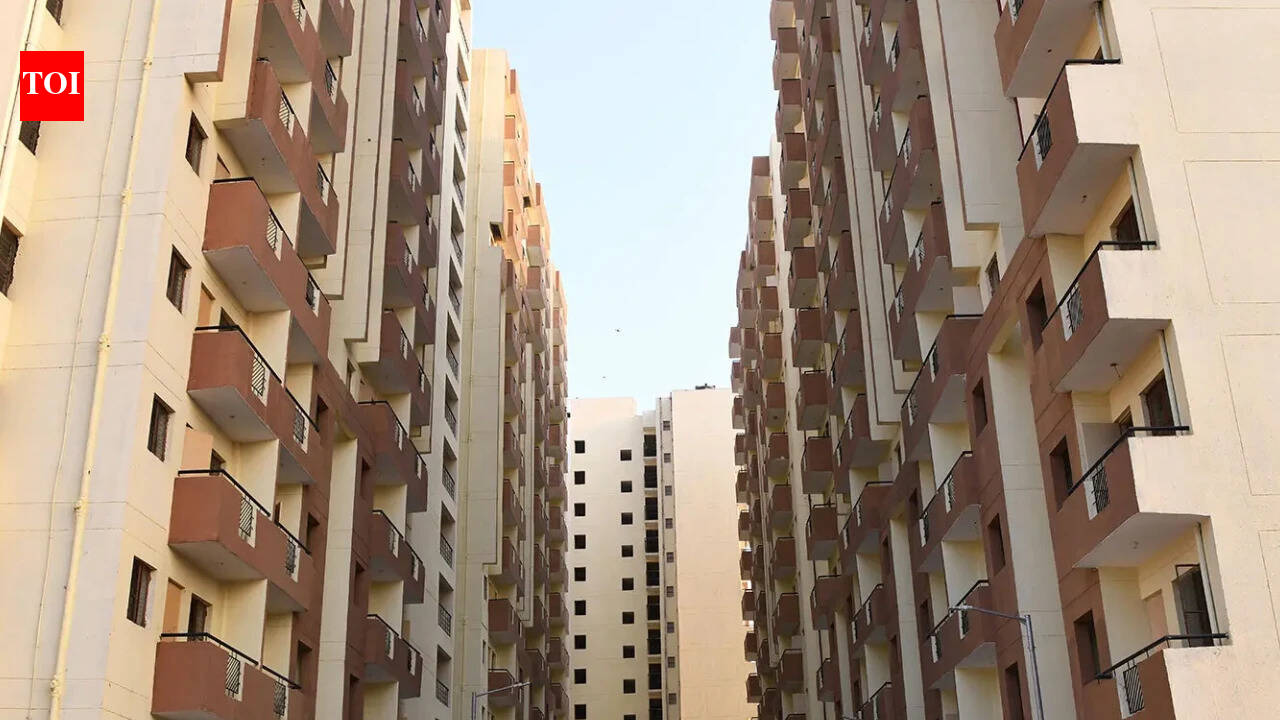
Imagine a housing complex with gleaming towers, landscaped gardens, elevators and parking lots, but almost no one lives there. These are what the real estate industry informally calls “ghost properties”.Such properties remain unoccupied for long periods despite being legally owned or available for possession. The phenomenon has become an increasingly visible feature of India’s housing market.While millions of people continue to search for affordable homes, thousands of completed apartments across cities remain locked, unoccupied or held purely as investments.There are several reasons why homes become ghost flats. Some are purchased as investments, with owners hoping to benefit from rising property prices rather than living in or renting them out.Others remain vacant because of high rents, poor connectivity or a lack of schools, shops, hospitals and employment opportunities in the surrounding area.In some cases, infrastructure fails to keep pace with construction. Large housing projects may be completed before roads, public transport and commercial areas are properly developed, making them unattractive to potential residents.Additionally, legal disputes, delayed approvals, red tape, and stalled projects can also keep the dwellings empty. Buyers may have paid for and legally purchased their flats, but may be unable to move in because the project is awaiting an occupancy certificate or other mandatory approvals. Residential projects in Noida and Greater Noida have often been associated with the issue.A residential project becomes viable only when people actually live in it. Residents support local shops, schools, transport services and other businesses. When homes remain empty, this wider ecosystem may fail to develop, discouraging businesses and services.The phenomenon highlights a paradox in the housing market. While Indian cities struggle with a shortage of affordable homes, thousands of completed flats remain either vacant or used purely as investments.However, ghost properties are not uniquely an Indian problem, but part of a wider global pattern of housing markets and builders that prefer construction and speculation over actual habitation. Chinese cities like Ordos and Zhengzhou are often cited as extreme examples of entire “ghost cities” built at scale but left largely unoccupied. Similar concerns have emerged in parts of Spain following its property boom.
