




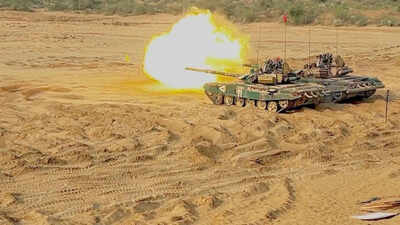
In the ongoing effort to modernise the armed forces, the defence ministry has cleared proposals worth Rs 52,000 crore. The equipment set to be procured for the armed forces will strengthen the capabilities of the forces across land, air, sea and near-space domains. Besides strengthening the forces the money is also a shot in the arm for atmanirbharta. The equipment cleared for procurement by the defence ministry will help the services improve their reconnaissance capabilities, defend them against threats from new age weapons systems and help them take the fight to the enemy.One of the most significant procurements cleared by the defence ministry is for Active protection System (APS) for the T-90 tank fleet of the army. This system will protect tanks from anti-tank missiles or shoulder fired rockets. APS act by first detecting and then intercepting these projectiles before they can make contact with the tank. This upgrade will significantly improve the survivability of the T-90 tank in the modern battlefield. This is especially important as tanks not armed with effective APS have suffered significant damage in the last few years, especially in Ukraine, where both western and Russian tanks have suffered significant attrition rates.The approval of indigenous Man-Portable Anti-Tank Guided Missile (MP-ATGM) has strengthened the capabilities of the infantry, ensuring that frontline troops have effective tools against armoured adversaries. The MP-ATGM is an indigenously developed modern weapon and will be replacing older anti-tank missiles which are license built in India.The introduction of solar-powered pseudo satellites, or High Altitude Pseudo Satellites (HAPS), this system will be a game-changer, especially as India currently lacks the persistent satellite coverage it desires. These stratospheric platforms will be able to remain airborne for weeks, providing continuous surveillance, intelligence gathering and secure communications. Unlike satellites, these systems will can be piloted from the ground and harder to disrupt. This persistent coverage will allow the armed forces to monitor critical sectors without interruption.Air defence, a success story for India will experience further bolstering. The forces will improve air defence in both the medium and short range with the addition of more Medium Range Surface to Air Missile (MR-SAM) and the Very Short Air Defence System (VSHORAD). These systems can defend against threats posed by fighters, helicopters, unmanned aerial vehicles and cruise missiles. The army will receive the Akash Tarang, an indigenous electronic warfare system, will help neutralise drones by jamming the radio link with the operator.Naval capabilities are also being strengthened. Shipborne, runway independent drones will extend shipborne real-time surveillance capabilities. Advanced sea mines add a deterrent dimension, complicating the adversary’s naval operations. These acquisitions enhance India’s ability to project power and maintain security in the maritime domain.This procurement of these systems domestically, India is reducing import dependence and is strengthening its defence industrial base.
