



5 min readJun 13, 2026 12:29 PM IST
First published on: Jun 13, 2026 at 12:29 PM IST
What indeed is the point of having large-scale, unmanageable, homogenised examinations? Generally relying on MCQs or short answers, these assessment procedures neither examine the conceptual clarity of the learner nor her rigour in rational inquiry. Given the digital revolution, such examination papers can easily be shared across geographical spaces, at no cost. Those involved in the process of making such question papers can easily get compromised, making a quick buck.
It should surprise everyone that teachers are not trusted for their primary job of assessing the students they teach for years. Ironically, though not part of their teaching duties, teachers are trusted with much else that is central to the functioning of our democracy.

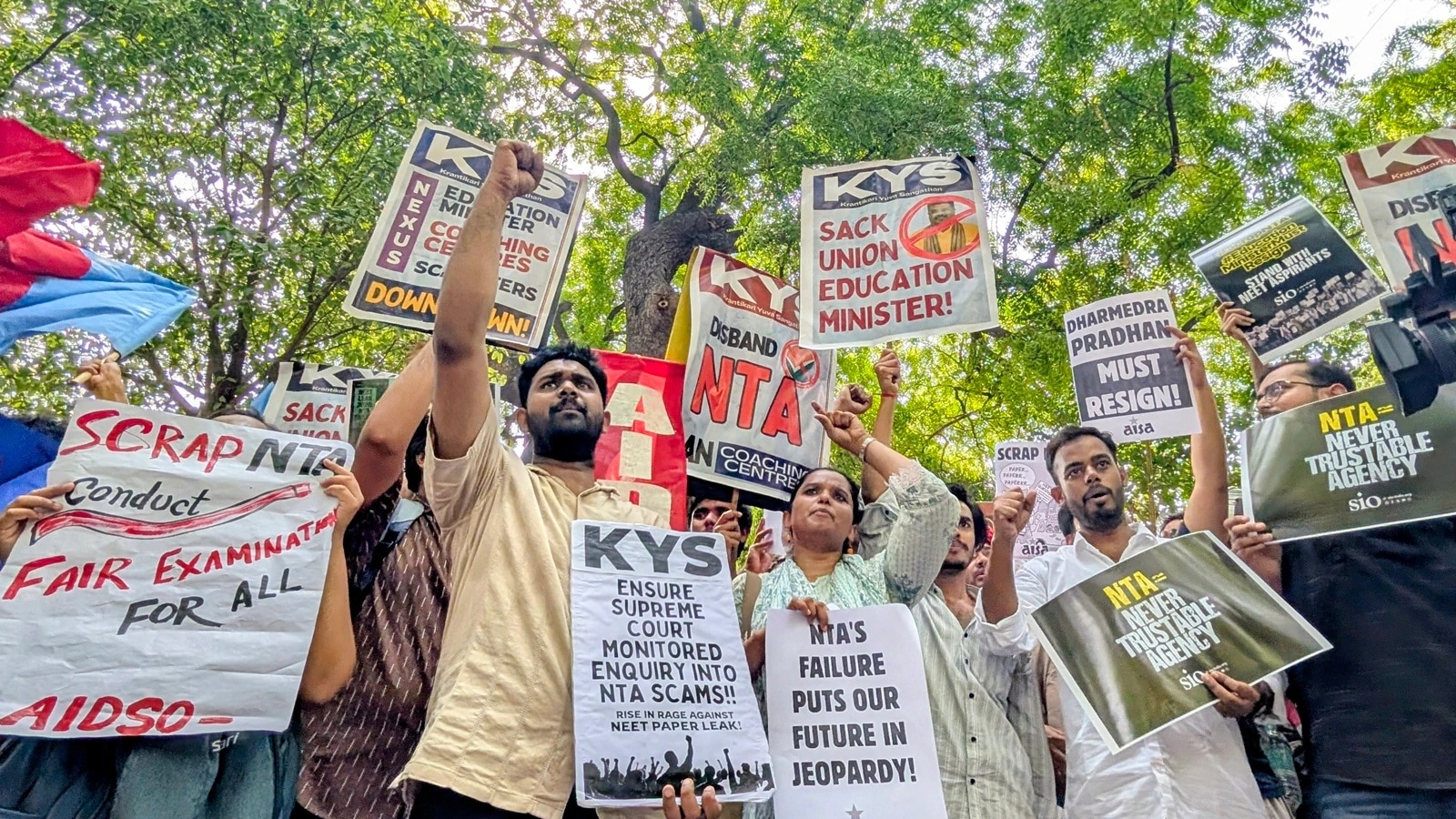
The recent spell of paper leaks and evaluation scandals has eroded public faith in the assessment systems prevalent in the country. During the last 10 years or so, there have been close to 90 leaks at the state or national levels. The latest controversies are the NEET-UG paper leak and the CBSE (both autonomous) evaluation scandal. Lakhs of young students stay unemployed, or their higher education plans are seriously upset. The National Testing Agency (NTA) can simply announce a retest when it discovers that the papers were compromised and leaked at various levels, without realising the magnitude of havoc it plays with the lives of young students.
A Nagpur NEET aspirant, Akanksha Chaturvedi, was shattered when she learnt that the examination for which she had worked so hard and for which her parents had struggled so much had suddenly been cancelled. She could not gather the courage to take the examination again. She committed suicide. She was only 18 years old. Sarthak, a class XII student, appeared before a parliamentary committee on the irregularities involved in the tendering process of the On-Screen Marking of CBSE.
Even when such examinations may have been conducted fairly, they certainly cause avoidable anxiety and hardships to both students and their parents. The rate of suicide and depression is fairly high even during the so-called “normal” times. Since they are marked by cut-throat competition and are powerfully driven by market forces that intensely engage various coaching centres, the teacher-student and peer-group interactions and flights of individual imagination, which are the normal attested sites for learning and knowledge creation, are immediately erased. These are replaced by mechanically attending classes and solving endless papers online that are far removed from any conceptual clarity and rational inquiry.
Why can’t we ask teachers themselves to grade their students on the curriculum and syllabi that are shared across institutions? At the end of the day, a learner’s grade would depend on the level of conceptual clarity they have acquired and their ability to examine the claims made by a given text critically. Any institution, depending on its unique focus, could then ask the students applying for admission to it to write some conceptually sound essays and critically examine some texts; this can indeed be done across disciplines.
The conviction that a homogenised test can replace the teacher is misplaced in the first place. No Indian grades help you if you wish to get admitted to an institution of repute anywhere in the world. They ask you to do exactly what a class teacher should be doing in the first place. We are facing a civilisational crisis. The focus on classroom processes and discourse must intensify.
Even the Right to Education Act, 2009 mandates that teachers continue participating in population census, disaster relief, and election duties. Given the fact that we live in a country where elections are going on all the time at some level and where summer and winter disasters are common, and the Census exercise, though undertaken every ten years, involves going from house to house, teachers are likely to stay away from the classes for long spells.
Teachers are also often given the duty of managing a whole election booth. And depending on the whims and fancies of the powers that be, elections may be held in one or two to six or seven phases. Teachers are the ones who are asked to perform the duties of Booth Level Officers, oversee EVM machines and voter IDs and undergo several mandatory training camps as they get ready for the massive election exercise. Why can’t the Election Commission and the Census Office of India have their own teams?
People undertaking these important tasks have to be trained. Permanent state and national teams would serve multiple purposes.
The author retired from DU and is now Professor Emeritus at Vidya Bhawan Society
