




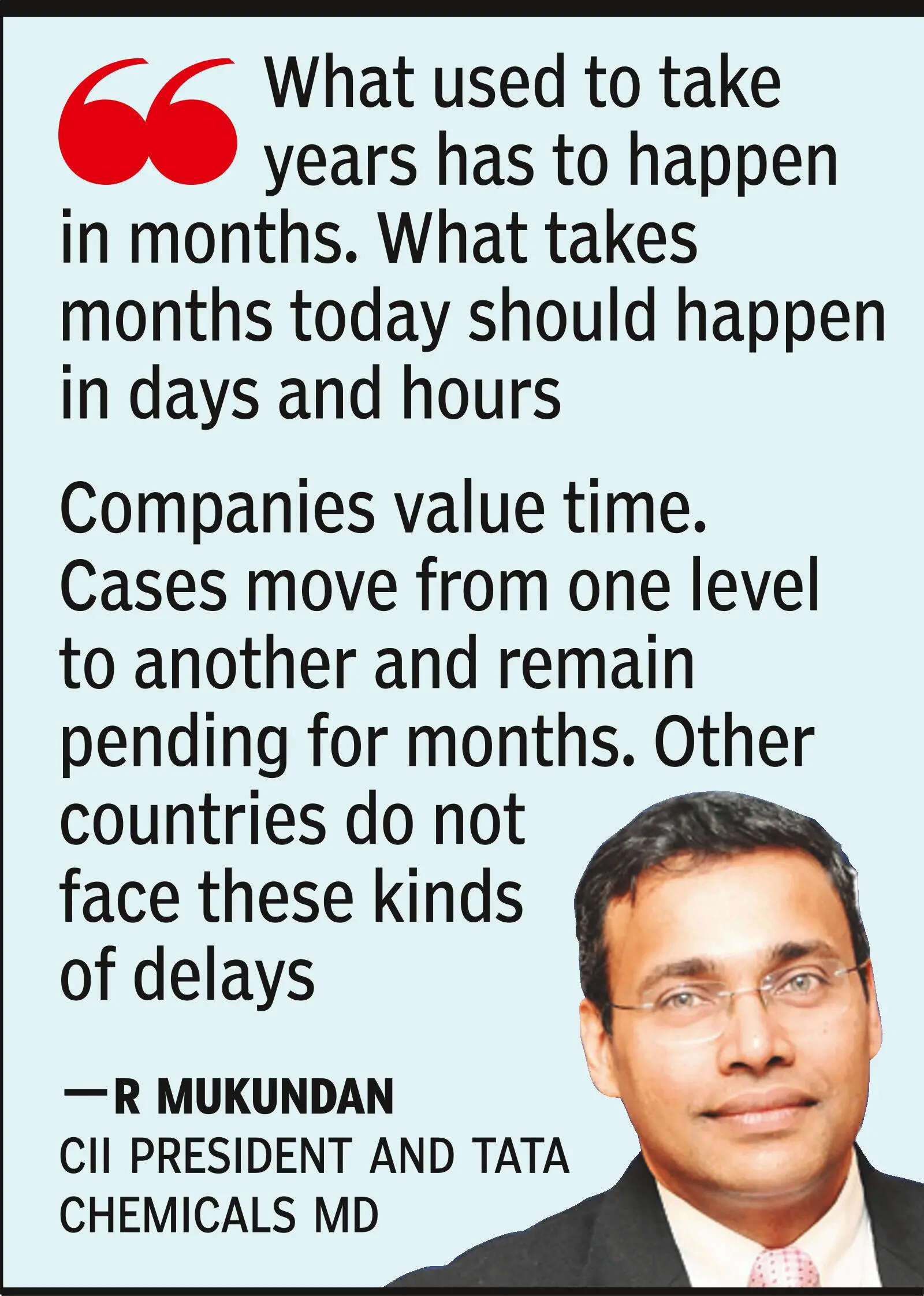
According to him, India is among only three economies, with a GDP of over $1 trillion, that have consistently grown above 6% over last 25 years, alongside China and Vietnam. He said this presents a strong platform for India to target significantly higher growth.Mukundan outlined reforms across three areas – foundational, factor and future-ready reforms. He said agriculture, strengthening MSMEs and improving resource security were among key foundational priorities, while power, logistics, labour and land reforms remained essential to improving competitiveness.He said high power costs, last-mile logistics bottlenecks and difficulties in acquiring and recycling industrial land continued to constrain industry. He also called for greater digitisation of land records and more flexible floor-space norms to enable expansion of existing facilities.On future-ready reforms, Mukundan stressed the need to accelerate adoption of AI, invest more in research and development and step up efforts around sustainability and water management. He also suggested that creation of a GST Council-like mechanism to address issues involving both the Centre and states, including power and agriculture.The Tata group executive identified prolonged litigation and delays in dispute resolution as a major irritant for investors. While policy unpredictability was not the biggest challenge, he said the time taken to resolve disputes raised cost of doing business. “Companies value time. Cases move from one level to another and remain pending for months. Other countries do not face these kinds of delays.”Mukundan also called for smoother policy transitions. While govts would inevitably change regulations, businesses needed clear roadmaps and adequate transition periods, he said. “Predictability is important. Even when changes are required, there should be grandfathering provisions and greater engagement. But what we need most is speed.”To boost foreign investment, Mukundan advocated a targeted approach aimed at the world’s largest companies. He said India should provide “concierge services” to existing and prospective investors and focus on addressing issues around taxation, approvals and operational efficiency.
