



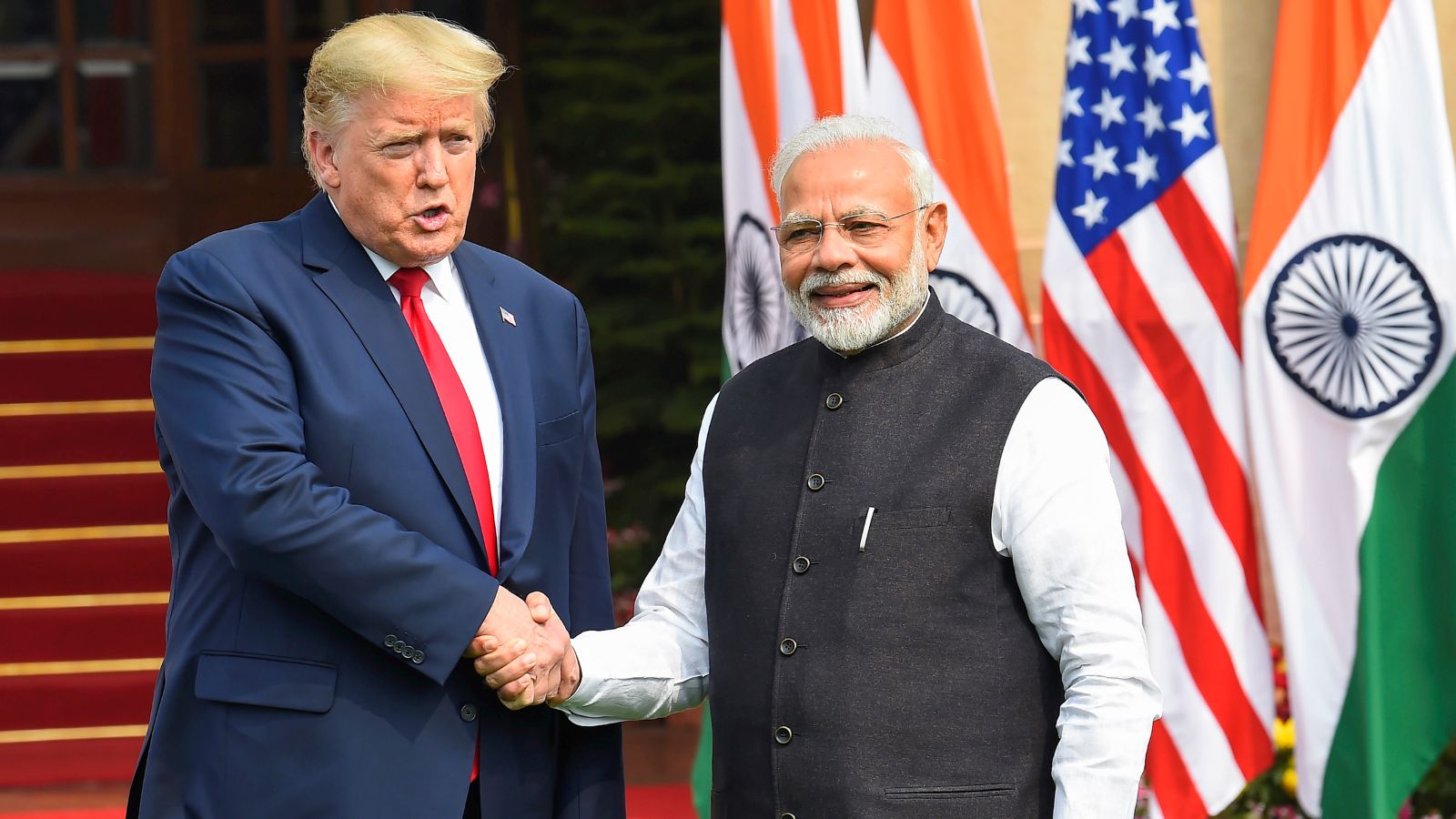
It is not clear how the Iran-US deal will unfold over the next several months. The announced ceasefire and framework are more of a mechanism to postpone resolving deeper divides that still pose risks. Even if it survives, the deal will be at best a sullen ceasefire, not a peace settlement. Ahead of elections, the Donald Trump administration has incentives to avoid appearing bogged down as well as to avoid the risk of inflation and energy shocks. Once that constraint is removed, will Trump accept the strategic reality of the limits of American power? Or will he, and the American system, succumb to temptation to satiate wounded pride?
Israel, so far, has had every motive to undermine a possible agreement. Israel’s quest for complete military dominance has not produced either security or lasting control. It is diplomatically isolated. But the war may produce other convulsions in the region: States like Iraq become more likely sites of proxy competition. Iran’s effective practice of sovereignty has hugely exposed the vulnerabilities and costs to the Gulf states of letting the US set the terms for the region. But all these states, Iran included, could still see domestic political turmoil that complicates any peace calculus.

In India, there is much hand-wringing over the fact that it was an irrelevant player in this entire conflict. But India’s diagnosis of this irrelevance, and what the world needs now, is deeply mistaken. Any mature power should not worry about who gets to mediate. India did not have the leverage, alliance relationships, or, frankly, the diplomatic ability to mediate. India and the world should welcome any mediation that achieves a lasting peace. So, credit to Pakistan, Qatar, Oman, whoever gets the world to where it needs to be. Even on India and Pakistan, we have misplaced pride. The sensible response is not to deny mediation, but to judge the mediator by results: If Pakistan moves toward genuine peace, on terms that are acceptable to us, the mediator should be welcomed. This is a tall order. But the formal obsession with denying “mediation” has cost us. In a nutshell, the problem with India’s diagnosis of its irrelevance is that it is asking the wrong question.
We need to understand a basic fact about the current global situation. We have been consistently framing every war — Ukraine, Gaza, Iran — as if these were bilateral or limited regional affairs. There is a sense in which, of course, they are not our wars. But collectively, these wars have brought the world to unprecedented risks. None of these are regional conflicts. All of them increase the likelihood of catastrophic global economic or military risk. All of them, in their own way, represent the most massive rolling back of norms that underpin any viable international order, restraints on the use of force, respect for sovereignty, and minimal credibility for international law.
In the case of Israel’s war on Gaza, the world comes close to seeing genocide in the 21st century. But other things are moving the world to greater catastrophic risks: Drones have become an extraordinary technology for self-defence. But unregulated, they might proliferate violence more effectively than states can control them. We have already seen effects in Sudan and Yemen, as they have been used by states that are our closest friends. The Iran war has normalised another precedent: The legitimisation of political assassination as an instrument of statecraft. Even if the ceasefire holds in Iran, we are lowering the barriers against systematic global violence.
Where does India come into this? First of all, we spoke with forked tongues about our own positions. We were not, as they say, multi-aligned as we claimed to be. Iran is a complicated power in its region, often disruptive for states in the region, but also a victim of unrequited US attention and an important pillar of any conceivable regional balance. We politically embraced Israel with unrequited enthusiasm, the US, and later the UAE, and in doing so, put ourselves squarely on the side of political forces that were carpet bombing, literally, the international order. The problem was not these relationships; India has stakes in them. But the sense of being a supplicant in the face of the US, and too cowardly to name any crime in the international order, is palpably visible for the world to see. The problem is that we are seen as incapable of defending any principle whatsoever.
Of course, most powers, especially in the West, are deeply hypocritical. But a mature power does not use others’ hypocrisy to condone the kind of international nihilism India has condoned, trying to disguise it behind platitudes about world peace. Now that there is a ceasefire, the task for global diplomacy is not just to ensure that the ceasefire holds. It is to ask whether a measure of international order and norms can be restored. We are in a context where one major power, like the US, is trying to be a revisionist power. The rest of the world has been under the illusion that the way to respond to this is to construct bilateral deals. But the task of mobilising global coalitions that can speak for norms and minimise the possibility of catastrophic risks is a wide open one. India’s only diplomatic relevance can be to bat for those norms.
The world needs to use this ceasefire to reassemble support for principles and public goods that make international order possible. The important thing is that this is also in India’s long-term self-interest and the only source of its leverage. What India lost in the last couple of years was not its power to mediate; it was the sense that no one had any idea what India stood for. There is much consternation against the moralising of pre-2014 foreign policy. It had its limitations. But now it has been replaced by vacuity, masquerading as realism.
The writer is contributing editor, The Indian Express
