



5 min readApr 17, 2026 07:09 AM IST
First published on: Apr 17, 2026 at 07:00 AM IST
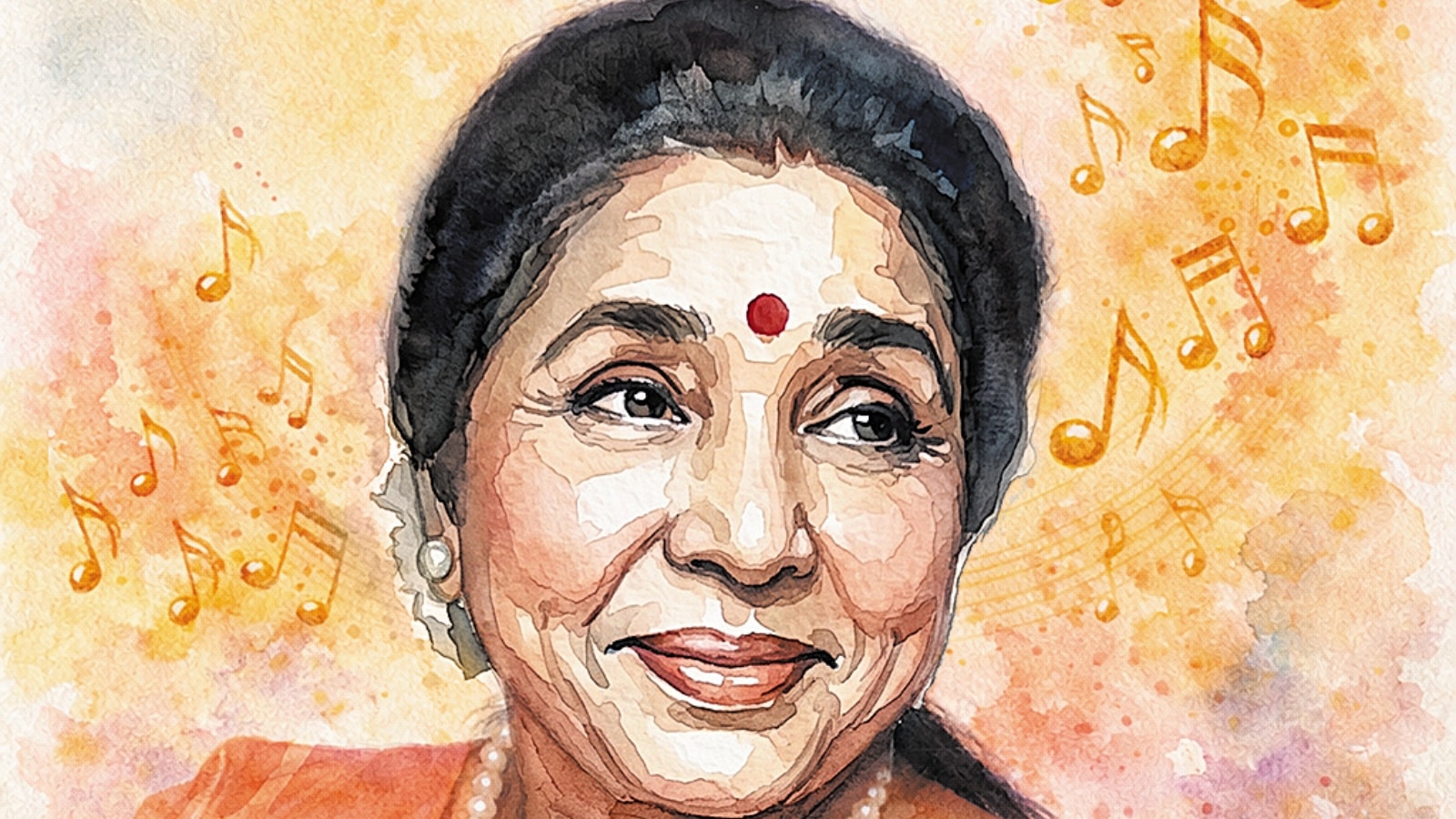
There were four of them, the Mangeshkar sisters, and now Asha Bhosle has been taken from us. If the departure of Lata Mangeshkar felt like the end of an era, our farewell to Asha Bhosle has the sadness of the end of a carnival of delight, a festival of pleasure, a party that has lasted for decades.
These were the two voices that, for decades, defined the notion of femininity. If Lata was up on a pedestal as Saraswati, Asha was much more the Gaon Devi of the industry. Her voice launched a thousand dreams because it did not seem to come from some ethereal realm as Lata’s did. The veteran film journalist Raju Bharatan once told me that it was simple: You could not hear Lata Mangeshkar breathe at her best and that was what gave it such a spirit-song sense; with Asha Bhosle, you could hear the breath, and the humanity behind it made her so much more delectable.

If Lata had her defining moment with Dilip Kumar’s dismissive remark — “awaaz se daal-bhaat ki boo aayegi” — and studied from a maulvi so that she might get every last nukta right, Asha found her way into the upper echelons when Khayyam was asked to score Umrao Jaan. This fictional figure, invented by Mirza Hadi Ruswa, has acquired something of a life of her own. She was Asha’s biggest challenge. I remember watching it in a theatre — Rekha’s presence in the marquee meant a release — and being utterly blown away by the newly acquired diction. It was the perfect meeting ground. For years, we had watched Helen, the H-Bomb of Bollywood as Bunny Reuben had christened her, lip-sync to songs by Asha Bhosle as she danced and we paired them in our heads. I am thinking of that magnificent song sequence, “Piya tu, ab to aa jaa” from Caravan. Broken-hearted Monica, who thinks she has been abandoned by her beloved, drinks the last of the wine and then launches into a raunchy song that involves biting her clothes off herself to get to him. “Tan ki jwaala thandi ho jaaye, aise gale lagaa jaa,” she sings, the wildness of female desire erupting over the audience. Asha sang that.
Lata would not have sung that song. She didn’t read just the lyrics, she
read behind the lyrics too. She refused to sing “Chhod do aanchal, zamaana kya kahega” because she heard the ribald laughter that greeted that first line when it had been read aloud. It was to Asha they went with “Aaiye meherbaan” (Howrah Bridge, filmed on the stunningly sultry Madhubala) and “Chura liya” (Yaadon ki Baaraat). Umrao Jaan was the apotheosis of this: All the cultural capital of Urdu meeting the dulcet seductions of a great singer, performed by another diva who was born to be broken-hearted, filmed by a great aesthete.
But it was not an easy life. Though the Mangeshkar sisters ran Bollywood like a closed shop, it was clear who would get the best songs. Every once in a while, Asha would get a semi-classical number but not too often. (And every once in a while, Lata would do a Helen number: Go take a look at that wildly provocative and completely politically incorrect song, “Aa jaan-e jaan”, from Intaqam.) The other female singers got a look-in once in a while but these two women dominated the landscape.
Asha Bhosle lived under a huge shadow but even so, she glowed because she made the best of things. The heroines came and went but she remained. From the black-and-white era of “Abhi na jao chhodkar” (Hum Dono) to “Sajna hai mujhe” (Saudagar), from “Radha kaise na jale” (Lagaan) to “Le gayi, le gayi” (Dil to Paagal Hai), she was still getting her voice to bounce with the best. The power of it was the invitation to enjoy yourself, to throw your cares to the wind.
There are many legends about that first marriage to Ganpatrao Bhosle. In his memoir, Ekta Jeev (A single life but also a play on the Marathi phrase, “ekta jeev sadashiv”), Dada Kondke says that he proposed marriage and that the singer accepted on the condition that they keep it a secret from her elder sister. Disappointed, Kondke retired from the ranks, and we were all somehow personally very relieved when she married R D Burman. His rhythms and her voice, it was such a wonderful match.
It seems difficult to believe that she is gone for she seemed capable of endless reinvention. She sang for Rangeela, she sang with Boy George, she sang with Gorillaz and that last song’s words are strangely resonant: “Chal mere maajhi, gehera hai pani, mujhe jaana us paar…”
Pinto is author of The Education of Yuri and Helen: The Life and Times of an H-Bomb

