



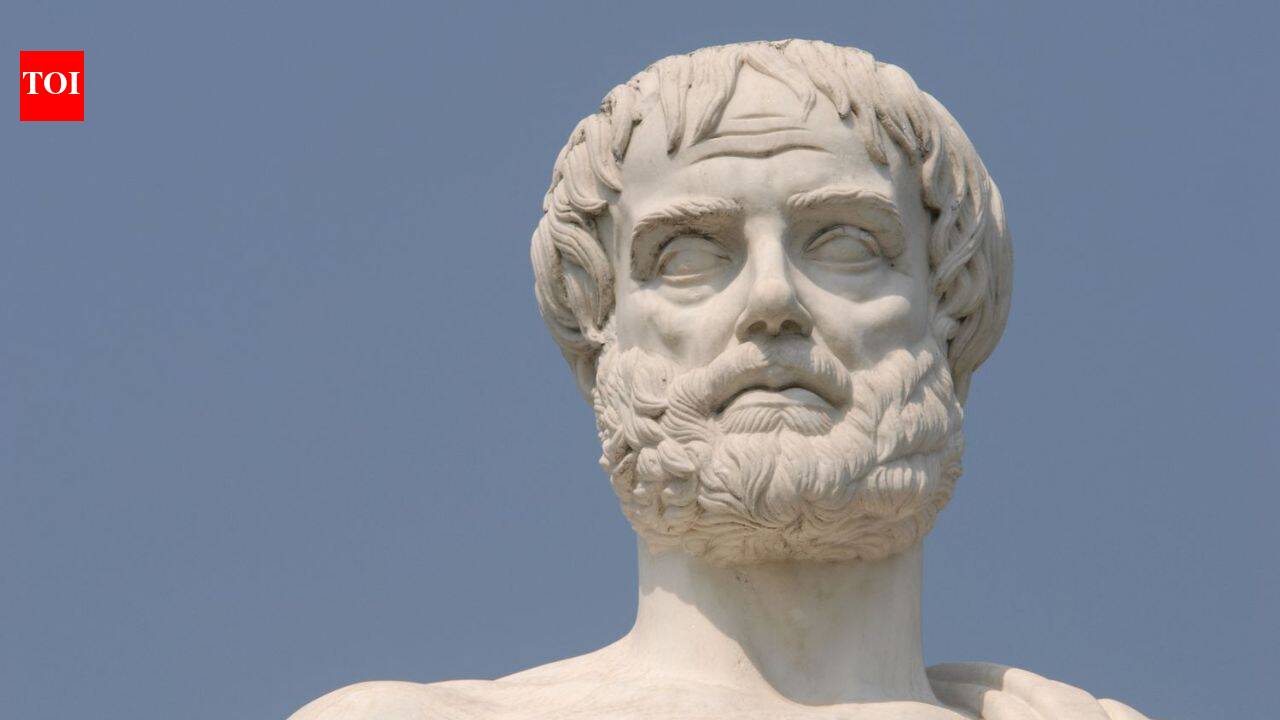
“A tyrant must appear deeply religious. People are less likely to fear injustice from a ruler they believe is pious. They are also less likely to rebel because they think God is on his side.“More than two millennia after his death, Aristotle continues to shape the way we understand politics and power. Among the many ideas attributed to the ancient Greek philosopher, one observation from his seminal work Politics has remained particularly enduring for its stark assessment of how tyrants sustain their rule.The quote is a modern paraphrase rather than Aristotle’s exact words, it accurately captures an argument he made in Politics more than 2,300 years ago.Born in 384 BC in the Greek city of Stagira, Aristotle is regarded as one of the greatest philosophers in history. A student of Plato and later the teacher of Alexander the Great, he made lasting contributions to philosophy, politics, ethics, logic, biology and natural science. Many of his ideas continue to influence modern political theory, with Politics remaining one of the foundational works on the study of governments, constitutions and the exercise of power.Written in the fourth century BC, Politics is Aristotle’s comprehensive study of how states are organised and governed. Rather than proposing a single ideal system, the work examines different forms of government, including monarchy, aristocracy, democracy, oligarchy and tyranny.Book V, from which the famous quote is derived, focuses on political instability, revolutions and the methods rulers use to preserve their authority. The quote is a modern paraphrase of a passage found in Politics, Book V, Chapter 11.“He should appear to be particularly earnest in the service of the Gods; for if men think that a ruler is religious and has a reverence for the Gods, they are less afraid of suffering injustice at his hands, and they are less disposed to conspire against him, because they believe him to have the very Gods fighting on his side.”According to Aristotle, if subjects believe their ruler is deeply religious and respectful of divine law, they are less likely to suspect him of acting unjustly. They may also hesitate to conspire against him because they believe the ruler enjoys the favour and protection of the gods.In other words, the appearance of piety can become a source of political authority, making obedience seem both morally and divinely justified.The philosopher’s point was that people often judge rulers not only by their actions but also by the image they project. A ruler who appears virtuous, just and devout is more likely to inspire trust and loyalty than one who openly relies on coercion.Importantly, Aristotle was describing how tyrants historically maintained power, not prescribing how rulers ought to behave.Aristotle’s observation endures because it is less about religion and more about the psychology of power. His insight reminds us that throughout history, public perception has often been as important to political authority as military or legal strength.
