



3 min readMay 19, 2026 01:03 PM IST
First published on: May 19, 2026 at 01:03 PM IST
By Chandrika Soyantar
Shashi Tharoor, writing in these pages (‘At India-Nordic Summit, turn historical sambandh into future partnership’, IE, May 14), framed the India-Nordic Summit as an opportunity to convert sambandh into strategic alignment. The missing dimension is capital. The Nordic arc spans technology, sustainability, shipping and clean energy across Denmark, Sweden, Finland and Iceland. Within it, Norway stands apart — steward of the world’s largest sovereign wealth fund, at a moment when India is one of the few economies capable of absorbing long-duration capital at scale.

Norway’s Government Pension Fund Global (GPFG) holds patient sovereign capital of $2.1 trillion, which is more than half of India’s GDP, and is owned by 5.5 million Norwegians — fewer than the population of Surat. The GPFG’s inheritance of $382,000 per citizen against $100,000 income — Norway’s answer to Fafnir’s greed — is one of the greatest acts of intergenerational discipline in modern finance and civilisation. India’s share is 1.5 per cent of the portfolio — a fraction for the world’s fifth-largest economy. The real question is not what each side wants. It is what the summit yields for both.
Norway has sovereign capital in search of long-duration growth. India offers one of the world’s deepest long-duration growth opportunities. The India-Nordic Summit is where the two meet. Norway’s Krone rises with Brent crude. India’s rupee falls with every spike. In 1990, India pledged gold to avert default. That same year, Norway made its first quiet deposit into what became the GPFG. Compulsion versus discipline. Oil wealth and oil dependence form a natural complementarity — one capable of funding the transition beyond oil.
Norway’s GPFG holds $34.6 billion across 575 Indian companies. Between 2024 and 2025, most FPIs reduced exposure. The GPFG — singularly — increased. Patient. Sovereign. Counter-cyclical. Sovereign capital of this scale requires clarity, credibility, and visibility. India’s National Infrastructure Pipeline — toll roads, green hydrogen, offshore wind, port logistics — is the asset class designed for such capital. The National Monetisation Pipeline 2.0 adds $174 billion in brownfield assets. Resurgent SOEs across energy, defence and logistics add further depth. Global sovereign capital is increasingly selective. Few economies combine scale, absorption, demographics, and depth as India now does.
What the summit must deliver is not MoUs but a bespoke sovereign investment corridor — one that is ring-fenced for GPFG participation, aligned with governance, tax, currency risk-sharing, and Norway’s Council on Ethics. Norway cast off its oil anchor. Discipline held. It now sails global capital markets. India, too, is casting off. The anchor is heavy. All sails in place — wide and trimmed. For Norway, India’s growth is the wind. For India, Norway’s capital is the tailwind.
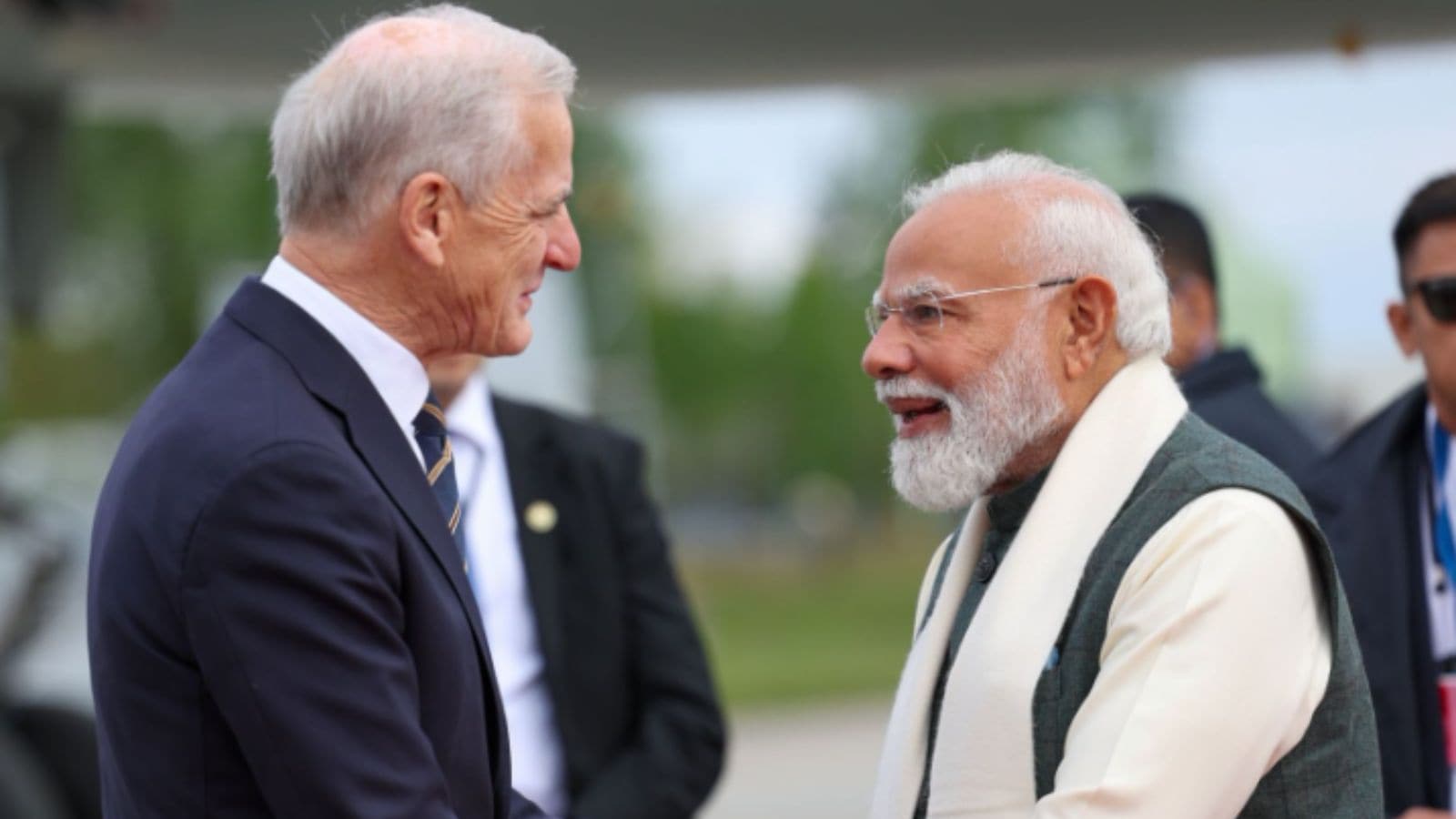
The Prime Minister in Oslo — the first visit in 43 years. The Arctic and the Indian monsoon are increasingly understood to be interconnected. The two sovereigns are linked at a level deeper than capital. The Bifrost already exists. The summit must now widen it — broad enough for the scale of flows, durable enough for their duration. The question is no longer about bilateral ties. The bridge already exists. It is about capital alignment at scale.
The writer is an investment banker and founder-director at Amarisa Capital Advisor

