



5 min readMay 28, 2026 12:48 PM IST
First published on: May 28, 2026 at 12:48 PM IST
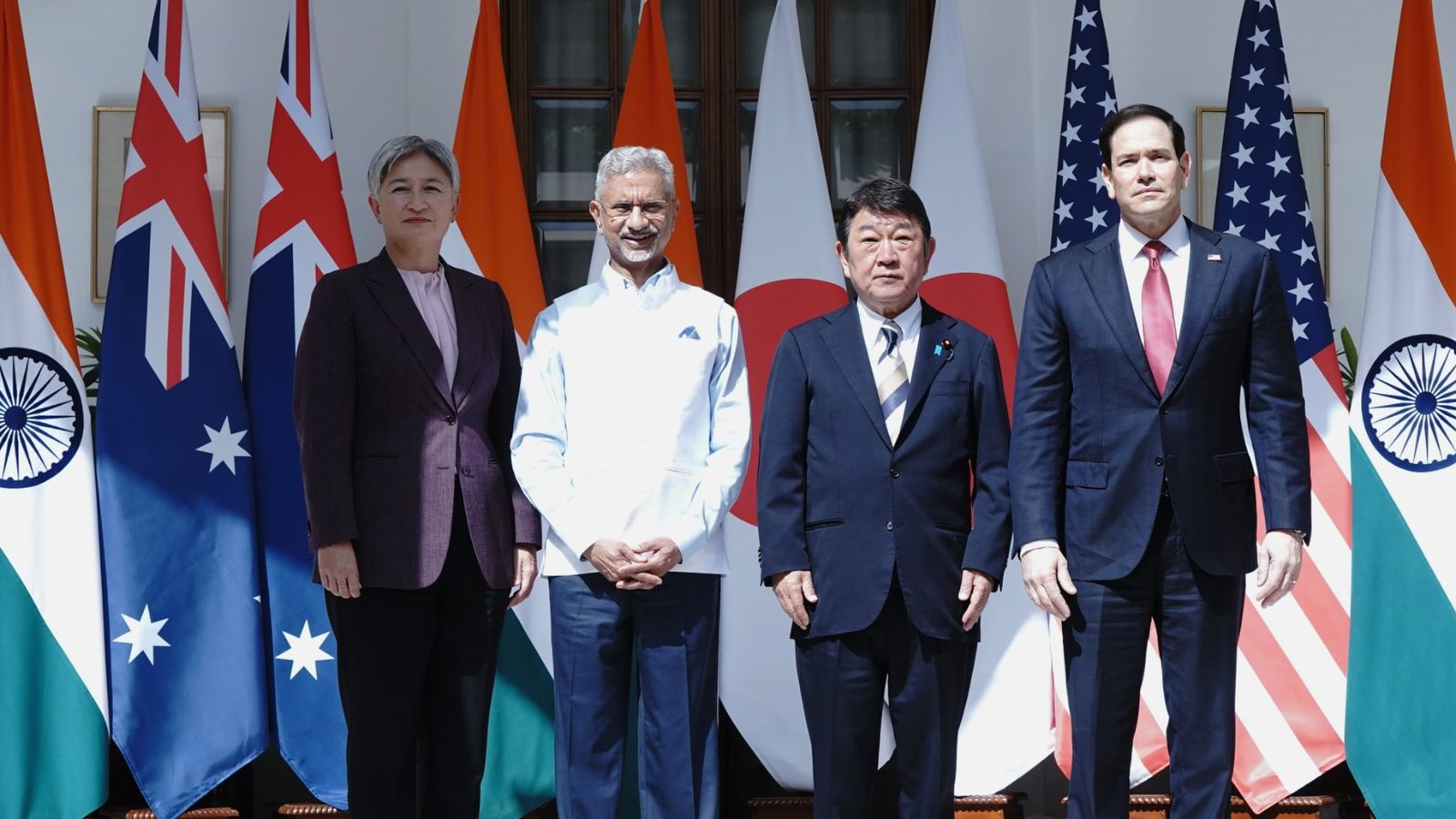
Minilateral arrangements have proliferated across the international system over the past decade, but only a handful have shown the capacity to last. The Quad foreign ministers’ meeting earlier this week was a good occasion to ask why this particular grouping, among so many, has acquired a durability that eludes the rest.
China is the obvious starting point. India, Japan, Australia and the United States have all had to respond to Beijing’s assertiveness in the Indo-Pacific, and the Quad gives them a way to coordinate without becoming a formal alliance. But China alone does not explain the Quad’s durability. The grouping has held through political change in Australia and Japan, shifts in American strategic posture across administrations, and India’s own careful balancing across multiple partnerships. A purely strategic arrangement would have been more vulnerable to each electoral cycle. The Quad has not been. Something else is at work.

What is at work is the cumulative effect of cooperative practice built since the grouping was revived in 2017. The leaders’ track gets the headlines. The foreign ministers’ track does the substantive coordination. But the deeper work has happened at the sub-ministerial level, in working groups on maritime domain awareness, critical and emerging technologies, health security, infrastructure and climate. These working groups have produced modest deliverables, but their importance lies less in the outputs themselves than in the habits they have formed among the participating bureaucracies.
Officials from the four states have developed habits of consultation that no longer require political prompting. They have built shared analytical frameworks for thinking about Indo-Pacific challenges, learned to anticipate one another’s positions, and read one another’s signals with the fluency that only comes from extended professional engagement. The four governments have come to see themselves through one another’s eyes, and to care about how their conduct appears to the others. This is the relational substrate that distinguishes durable cooperation from transactional alignment, and it is what the Quad has quietly built.
The contrast with many other minilateral arrangements is instructive. Several of the groupings that proliferated in the past decade have remained essentially transactional. Parties enter them for immediate gains, the arrangements depend on the continued alignment of narrow interests, and when interests shift, the arrangements either fade, expand beyond their original logic, or turn into something else entirely.
Consider BRICS. What began as a smaller grouping of large emerging economies has expanded into a broader and more heterogeneous platform. The expansion has given BRICS greater visibility, but it has also diluted the intimacy and coherence that small-group cooperation requires. Scale can produce weight, but it does not automatically produce trust or mutual recognition.
The Quad has done something different. Its cooperation has been allowed to develop in domains that are not purely security-coded. Working on vaccine distribution during the pandemic, undersea cables, rare earths and cyclone response have given the four governments occasions to practise cooperation where the stakes are real, but the strategic temperature is lower. These are the conditions under which mutual recognition can develop. A grouping that meets only around threats can remain trapped in immediate calculation. One that works together on a broader practical agenda has more room to build habits of trust and restraint.
This matters beyond the Quad. Much of contemporary international politics is transactional. States bargain for immediate advantage, treat partners as instruments, and enter or exit cooperation as convenience dictates. Adam Smith understood the danger of such a disposition: Cooperation among parties who do not recognise one another as legitimate evaluators of their conduct can lose its moral restraint, even when it speaks the language of mutual benefit.
The Quad’s significance, beyond its contribution to Indo-Pacific stability, lies in showing that another possibility remains open. Durable cooperation requires more than convergent interest; it requires states to care how their conduct is seen, interpreted and judged by others whose regard they value. For India, the Quad shows what becomes possible when partnership is allowed to deepen beyond immediate exchange.
The international system is not held together by the aggregation of self-interested calculations alone. It is held together, in part, by the practised capacity of states to constitute one another as legitimate interlocutors whose recognition matters. Minilateral arrangements that invest in this capacity are more likely to endure. Those that do not can weaken when their immediate transactional logic is exhausted. The Quad belongs in the first category, and that is a better explanation for its durability than any account limited to the strategic balance.
The ministerial communiqué has already set out the Quad’s current priorities. Those signals carry weight, but only partly capture what makes the Quad work. Its deeper strength lies in the steady, practical cooperation that has taken place between the four governments over several years. That accumulated practice is what gives the grouping its institutional depth. It is also the part worth noticing.
The writer is Professor, Centre for West Asian Studies, Jamia Millia Islamia, New Delhi
