



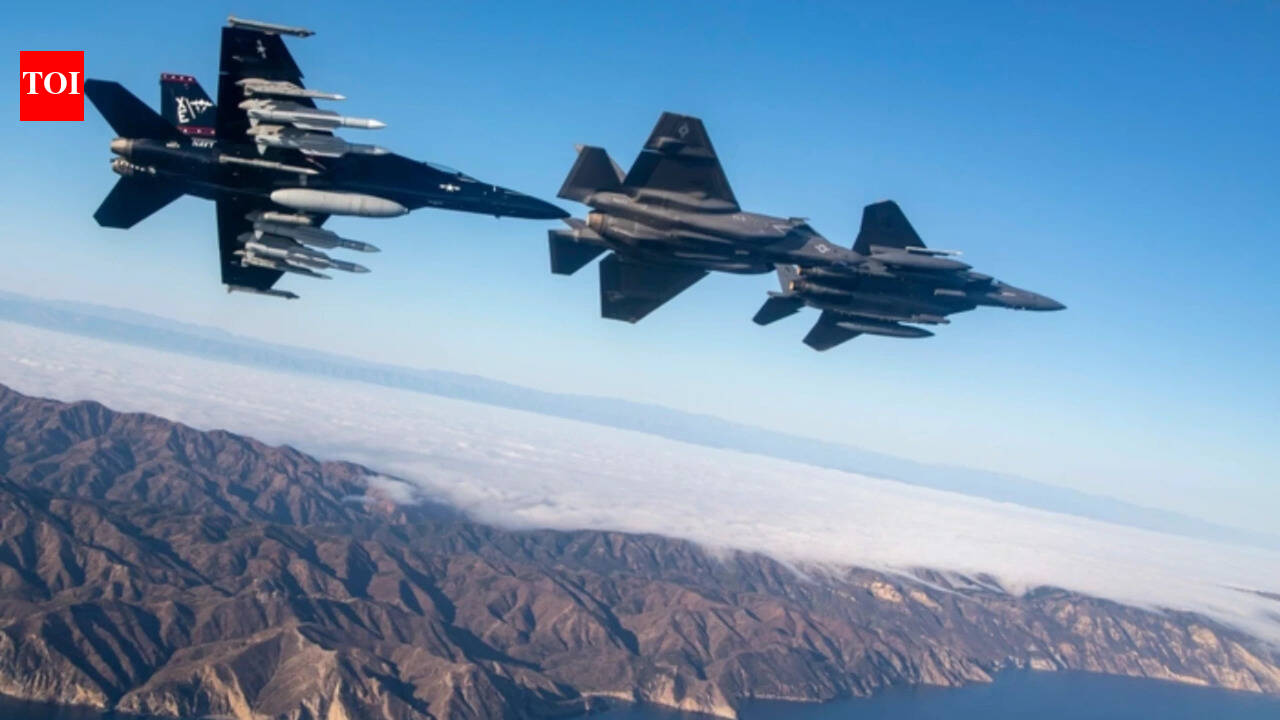
The US Air Force’s Life Cycle Management Center is pushing to change how aerial warfare is viewed.The USAF is seeking a next‑generation air‑launched standoff capability under the Air Force Long Range Weapon (AFLRW) program, which specifies a minimum threshold range of 1,000 nautical miles (1,850 km).The Air Force will hold a closed‑door meeting with defence‑industry representatives on 25–26 August 2026 at Eglin AFB’s Guided Weapons Evaluation Facility.AFLRW envisions both air‑to‑air and air‑to‑surface variants, with priority given to air‑to‑air solutions for initial operational capability under pre‑defined but classified defence planning scenarios 2.1 and 7.1.An air‑to‑air missile with a 1,850 km range would outstrip most current and in‑development systems.For context: China’s PL‑17, reportedly about 400 km, is designed to target high‑value assets such as AWACS. Russia’s R‑37M reaches Mach 6 and about 300 km.The US AIM‑260 Joint Advanced Tactical Missile (JATM) is expected to exceed 200 km and replace the AIM‑120 AMRAAM, which is about 160 km. China’s PL‑15 approaches 200 km.Europe’s Meteor, with a throttleable ramjet, also reaches nearly 200 km and equips platforms such as the Rafale. India’s Astra family is reported to provide stand‑off ranges of 160–350 km.The need for such an extended‑range system is driven largely by the vast distances of the Pacific. As China extends the reach of its air‑to‑air missiles, a weapon with much longer range could restore an advantage to US forces. But how can a weapon engage targets at those distances? A range near 2,000 km is well beyond the radar horizon of an AEW&C aircraft; even at altitude, such aircraft cannot see past roughly 550 km because of Earth’s curvature.Air Vice Marshal Anil Golani, director general of the Centre for Air Power Studies, says: “Such a weapon is within the realm of reality. A modern air‑defence system is based on a kill web, the multiple nodes of which in a network‑centric system can detect a target and guide a weapon towards it. Range here is not an issue; the limiting factor is sensors.”AFLRW’s ambitious range requirement far surpasses current operational systems and signals a substantial leap in standoff engagement. Positioned against China’s advancements, AFLRW reflects US priorities to secure dominance in the long‑range air‑to‑air strike domain. The US is also examining space‑based assets and had planned to augment or replace AEW&C capability with a satellite constellation, although that program reportedly still needs to mature.
