



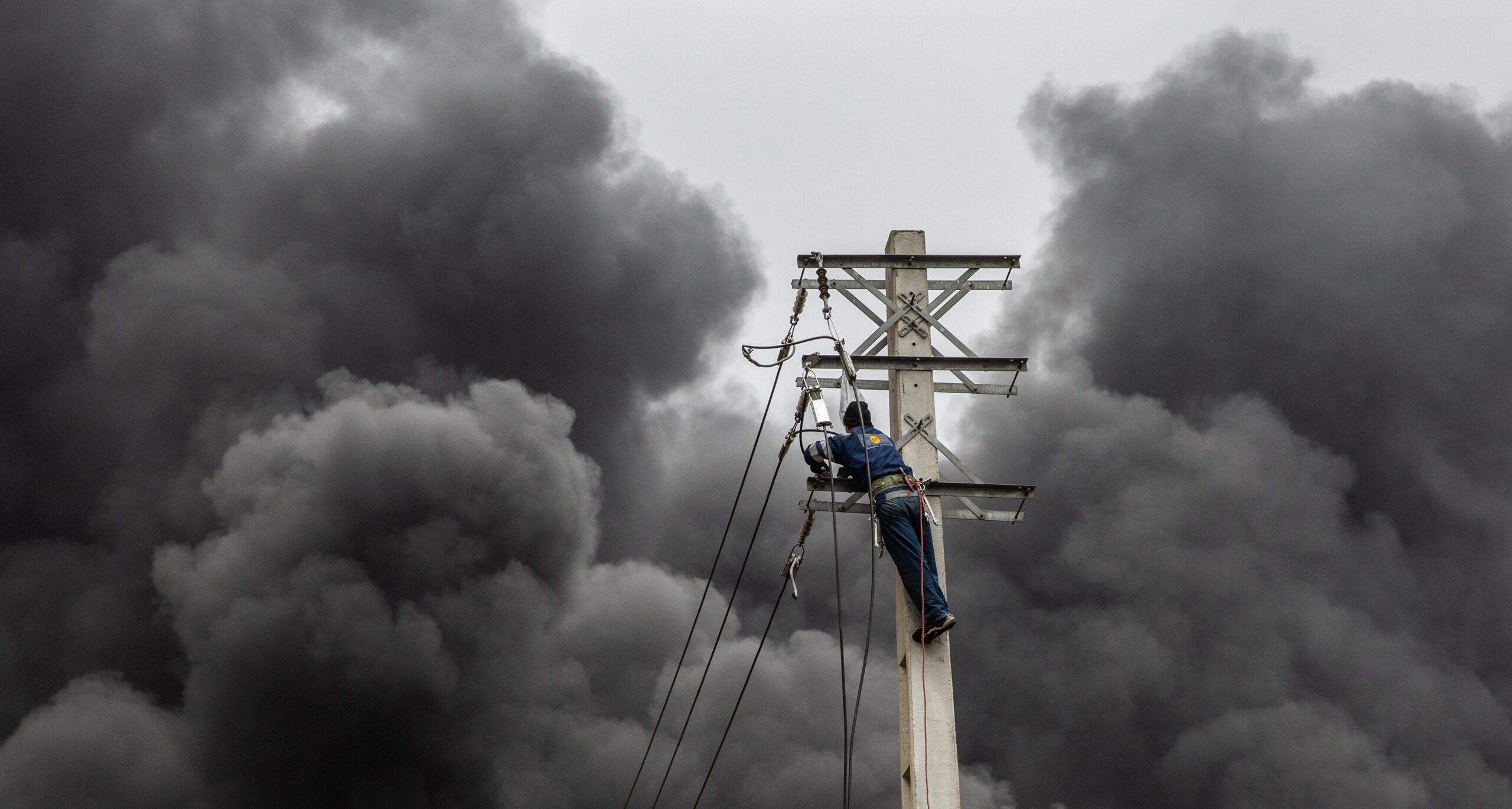
When Arab states launched the 1973 war on Yom Kippur, the holiest day in Judaism, it was widely condemned in Western discourse as a shocking violation of sacred time, framed as both strategically cynical and morally offensive. That language of outrage, of insensitivity, of civilisational affront, was clear and forceful.
And yet today, as strikes on Iran unfold during Ramadan, a similarly sacred period for over a billion people, that same moral vocabulary has grown curiously muted. The asymmetry is difficult to ignore. It raises uncomfortable questions about selective empathy, about whose sacred time is protected by global norms and whose is treated as operational convenience. It also sets the stage for a deeper unease, one that goes beyond geopolitics and enters the realm of meaning itself.

There is something profoundly unsettling about a war that unfolds not just on land and sky, but within sacred time. It is a collision between violence and sanctity, between the machinery of war and the moral architecture of Ramadan. That collision transforms death into narrative, and narrative into legitimacy. And now, as Eid arrives, that transformation stands complete, not in abstraction, but in lived experience.
Let us be morally clear at the outset. The Iranian regime is repressive in structure, punitive in instinct, and often brutal toward its own people. Its record on dissent, detention, and suppression is neither ambiguous nor defensible. But the indictment of a regime cannot become a blank cheque for bombardment, especially when delivered by actors whose own histories in the region are marked by Iraq, Afghanistan, Libya, and a long arc of intervention whose consequences far outlived their justifications. To oppose authoritarianism is not to endorse war.
The timing of the war, during Ramadan, appears designed to weaken internal cohesion, degrade leadership structures, and constrain Iran’s ability to activate regional proxies such as Hezbollah or Hamas. Some analysts go further and suggest that the timing carries symbolic weight, framing the confrontation in civilisational or even religious terms, as an attempt to provoke internal fracture or force ideological overreach.
One must ask, plainly and without theatricality, how Western societies would experience sustained bombardment through Christmas, New Year, and the sacred interval that defines their own calendar. The historical memory of outrage at Yom Kippur suggests that such timing would not be treated as incidental, but as a profound violation. Yet that same clarity has not been extended here. This is not about privileging one faith over another. It is about the consistency of moral imagination. If sacred time matters anywhere, it must matter everywhere.
In Ramadan, suffering arrives already encoded with meaning. This year, funeral processions, mass burials, and the steady emergence of new names have created a cadence of loss that is both immediate and symbolic. Since 1979, Iran has cultivated one of the most sophisticated martyrdom narratives in the modern world, drawing from Karbala and the moral grammar of standing against overwhelming force. Ramadan intensifies it. Across the Muslim world, attacks during Ramadan have historically produced less fragmentation and more emotional convergence. Not necessarily formal political unity, but a tightening of affective bonds where anger, grief, and identification travel faster during sacred time.
Within intelligence communities, timing is never neutral. Religious calendars are studied, mapped, and sometimes leveraged. There are calculations that adversaries are more visible during Ramadan due to gatherings or that leadership structures become more predictable. There are also more unsettling possibilities, that provoking overreaction during sacred time can delegitimise regimes internally. But there is another explanation: Decision-makers operating within secular frameworks do not fully register the depth of sacred time in other civilisational contexts.
In wartime, Eid becomes layered with absence. There are empty chairs at iftar tables that will not be filled, clothes that will not be worn, and prayers that double as funerals. States often attempt to harness this moment, to frame Eid not as relief from suffering, but as affirmation of it, to say that celebration exists because of sacrifice, not despite it. That message can resonate, but it also strains, because beneath every narrative of martyrdom, there are individuals whose grief does not always align with political theology.
Having worked across these societies, I have seen both the power of collective meaning and the quiet exhaustion beneath it. Martyrdom can inspire, but it can also accumulate pressure, and yet the most dangerous misreading would be to assume that this pressure leads to collapse. More often, it leads to endurance.
For policymakers in Washington and elsewhere, the question is not only whether these strikes achieve immediate objectives, but what kind of future they are scripting. Are they weakening adversaries or strengthening the narratives that sustain them? Are they deterring violence or relocating it? Are they making Americans safer or placing a longer fuse under a wider field of grievance?
Finally, there is also, unavoidably, a moral mirror. To strike during Ramadan while invoking values of freedom and human dignity creates a dissonance that is visible far beyond the region. For those of us who have spent a lifetime around these fault lines, this is the part that is hardest to ignore.
The writer is the humanitarian food security and diplomacy ambassador, India, for President Volodymyr Zelenskyy’s office

