



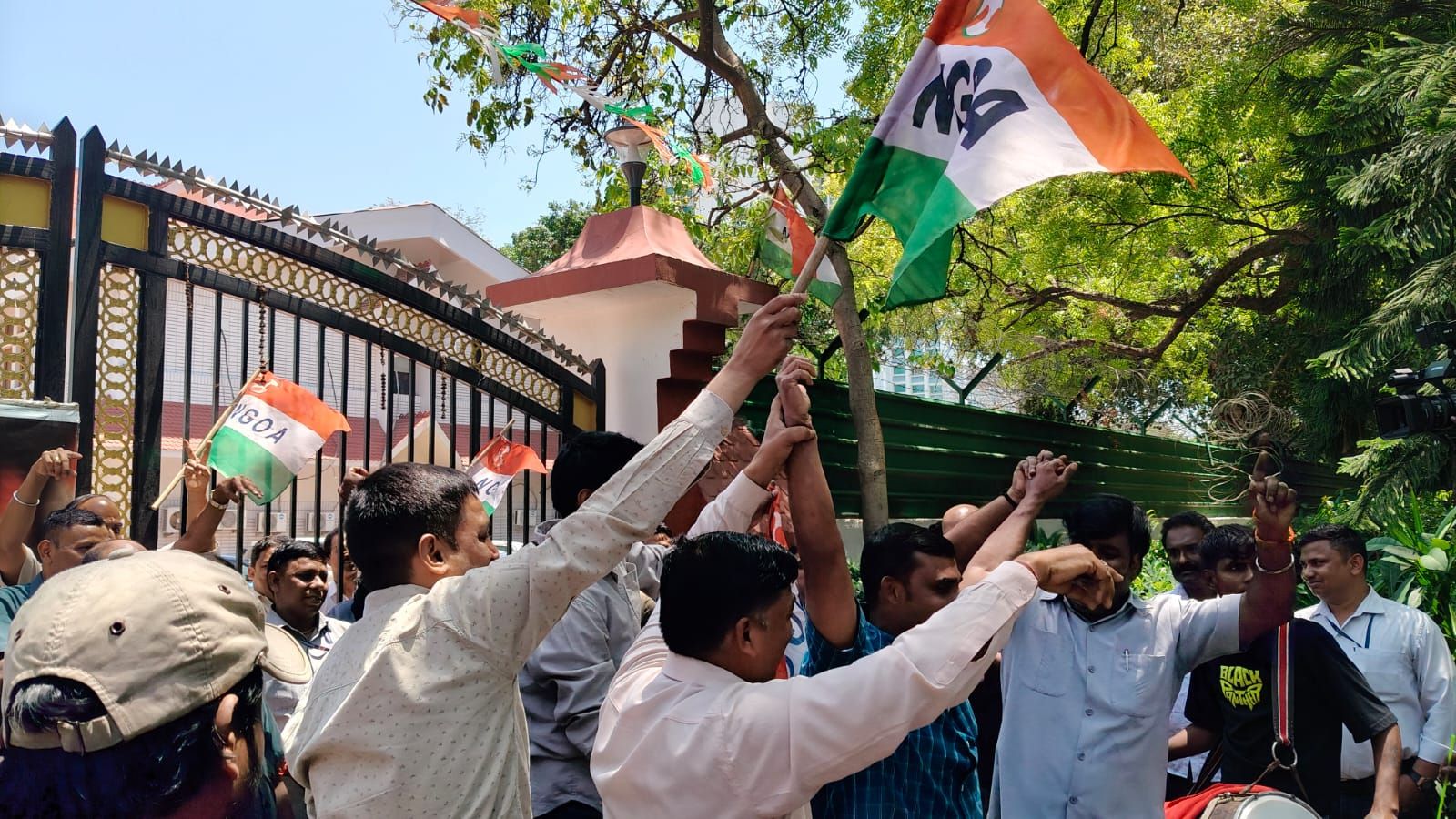
The United Democratic Front’s (UDF) victory in the Kerala assembly election has surprised even its most optimistic supporters. While exit polls and pre-election analyses indicated the possibility of a UDF return to power, the scale of the victory has exceeded expectations, pointing to a strong wave of anti-incumbency against an otherwise confident Left Democratic Front (LDF). At the time of writing, the Congress-led UDF is crossing the 90-seat mark, drawing support across regions and social constituencies. The Muslim League, a key alliance partner, has performed strongly in the seats it contested, while the Congress’s strategy of backing LDF rebels has paid dividends. These rebels secured victories in three constituencies — Payyannur, Taliparamba, and Ambalapuzha — all of which have long been considered strongholds of the Left.
The LDF, by contrast, has suffered its worst defeat in two decades. It had hoped that its record of development and welfare spending would override the pattern of anti-incumbency in the state. Although the local body elections last year had already signalled growing discontent, the LDF remained confident that an aggressive campaign centred on governance performance and the weakness of the Opposition would be sufficient to secure a third consecutive term. Moreover, several analyses had suggested that the Left’s consistent electoral performance since 2006, including the win in 2021, indicated a possible shift away from Kerala’s longstanding pattern of alternating governments. This verdict, however, suggests that 2021 was an exception shaped by extraordinary circumstances. The electorate has once again demonstrated its willingness to vote out even a government largely free from major corruption charges or accusations of non-performance, reaffirming the rule of anti-incumbency.

One could point to several reasons for the UDF’s victory. The first, of course, is the force of anti-incumbency, which once again affirms the stability of Kerala’s bipolar coalition system, and its likely persistence. Second, unlike in the previous election, the UDF managed to run a relatively coherent campaign, where internal fissures and rival leadership claims did not significantly come in the way. The seat-sharing among alliance partners was largely smooth, and competing claims to leadership, primarily among V D Satheesan, Ramesh Chennithala, and K C Venugopal, appeared less as a weakness and more as a form of plural leadership — in contrast to the LDF projecting a singular leadership — that could appeal to wider constituencies. While a detailed socio-economic reading of the results will take time, the immediate picture suggests that the UDF has been able to consolidate its traditional support base among Muslims, Christians, and a significant section of upper castes, while also making inroads into sections of the Left’s social base, particularly among Ezhavas.
The Left’s defeat, while appearing decisive, does not necessarily indicate a deeper erosion of its social base, but rather the cumulative effect of a decade in power. However, two aspects of this defeat are notable. First, the strategy of projecting a strong, centralised leadership in Vijayan, which had worked to its advantage in 2021, may have backfired this time. In the exceptional context of the crisis in 2021, Vijayan’s image as an effective crisis manager had electoral resonance. In 2026, in the absence of such a moment, the same strategy appears to have consolidated anti-incumbency, which may have been more diffused under a more plural leadership line-up. Second, the rise of rebel candidates within the Left, many of them senior leaders, points to a degree of organisational fatigue after 10 years in power. That this was visible even in strongholds such as Payyannur and Taliparamba is significant. At the same time, the BJP’s victories in the Nemom, Kazhakoottam, and Chathannur constituencies in south Kerala, and its performance in Palakkad and several other seats, indicate a challenge to the Left’s social base, particularly among sections of the Ezhavas, which could have longer-term implications.
The BJP’s significance in this election lies less in the number of seats it has won than in the position it is beginning to occupy within the electoral competition in the state. Though the NDA’s overall vote share has declined, partly due to the underperformance of allies such as Twenty20, the BJP has emerged as a decisive contender in several constituencies, and as a factor shaping outcomes in many others. This suggests a slow, but steady, expansion, and raises the possibility of a shift from bipolar to triangular competition. The BJP can no longer be treated as an outsider in Kerala’s political field.
However, while the result may appear as a moment of change, a longer view suggests that the Kerala election points more to continuity than rupture. While in both West Bengal and Tamil Nadu the incumbent fronts have given way to alternative political formations that were, to varying degrees, outsiders to the state’s political culture — more so in the former than the latter — Kerala’s anti-incumbent verdict has reaffirmed confidence in its existing political culture, where bipolar competition appears to remain the longer-term future, leaving little room for the easy emergence of an alternative political force.
The writer is assistant professor of Social Sciences at NLSIU, Bengaluru
