



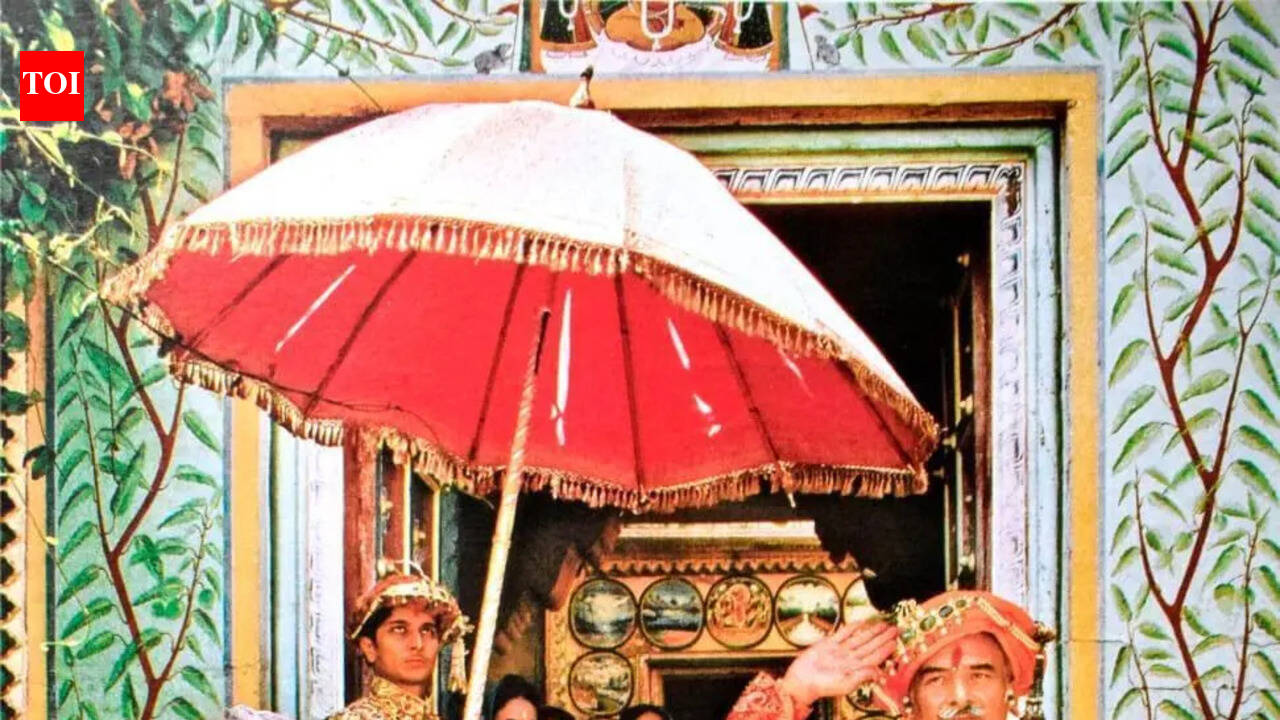
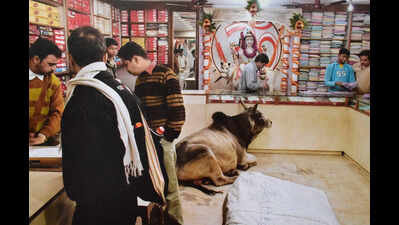
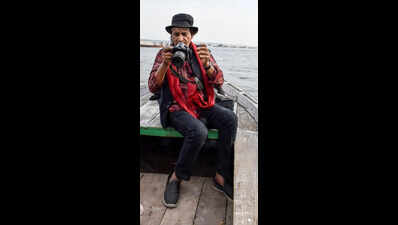
For Raghu Rai, India was not a country. It was a calling. And Banaras was where that calling echoed the loudest. He arrived not as a photographer, but as a pilgrim of light. Camera in hand, armour down, he let Kashi pull him in.“Banaras accepts you if you drop your armour. Then it pulls you into its bosom, and you are transformed from outsider to being one with the flow,” he said. This is how the master of moments met the master of time.From 1975, when he first stepped onto its ghats, Rai chased the soul of Kashi.He did not shoot postcards; he excavated evidence. “Trustworthy evidence,” he called his images of an ancient civilization. For him, Banaras was India in miniature: faith made tangible, culture made visible, history made human.He photographed what refused to pose – a man cupping Gangajal in trembling hands, walking through crowds without spilling a drop of sanctity. The vermillion sun rising like a priest over the river, blessing stone steps, bells, sadhus, and boatmen in one sweep.A bull dozing inside a silk shop while the city bargains outside. The last cane umbrella, frayed but defiant, casting shade on a priest mid-mantra. His lens found the duality that defined the city. Birth and death on the same ghat. ‘Aarti’ and boat races on the same water. Silence and ‘shankh naad’ in the same breath.These, among myriad facets of the legend, find place in art connoisseur & lensman Radhakrishna Ganeshan’s book ‘Raghu Rai and Banaras: An Experience to Cherish’.Detailing Rai’s works, Ganeshan, 62, says: “Rai did not capture Banaras. He translated it. Through aperture and patience, through detachment and deep intimacy… He moved like the city moved: without hurry, without armour, but with eyes that miss nothing.”“In his frames, Kashi is not a subject. It is a conversation. Between light and stone. Between past and present. Between the eye and the insight. And the master of moments listened before he clicked. That is why, when you look at his Banaras, you do not just see the city,” Ganeshan adds.‘KASHI IS MESMERIZING’“For a photographer, Varanasi is mesmerizing – there is extraordinary human energy and intensity of faith wherever you look,” says Rai in the book.“But when everything is so interesting, it becomes difficult to isolate the defining moment. For me, the challenge lies in capturing the extra spark when I feel the current of energy running through the space,” he remarks.“It is a nudge of that fleeting moment that inspires awe in you or touches you with a whisper. My faith lies in the eyes of the people I photograph. It is watching their intensity of expression and their body language that keeps me going,” Rai adds.TRUSTWORTHY EVIDENCEIn his words, the images Rai made of this holiest city are “trustworthy evidence” of India’s intrinsic power. The Ganga, the ghats, and the faith of its people remain the city’s three unshaken pillars, untouched by modernity or globalization.The book quotes Rai: “I came to Varanasi for the first time in 1975. Since then, I have felt an everlasting fascination for a place where Hindu ‘dharma’, which is a way of life, exists in bodily form. You can reach out to those ghats and lanes. You can observe rituals and customs and fathom the depth of an ordinary person’s faith.”“You can empathize with someone who bathes in the Ganga, carries the holy water in a small metal pot, and walks attentively, avoiding contact to safeguard its purity. This is the city where you find a temple in every nook. Dig anywhere, and you are sure to find an idol,” Rai says.THE AMPHITHEATRE OF GHATAlong riverbanks, a crescent of nearly 80 ghats stretches from Assi to Adi Keshav — a seven-kilometre arc rising like a magnificent amphitheatre. Stone steps meet the river. On them: bathers, pilgrims, priests, tourists, sadhus, locals.Behind the ghats, neighbourhoods carry the customs, languages, festivals, and foods of India’s states. Palaces, monasteries, dharmshalas, temples and idols from different eras stand together — a living synthesis of past and present.For Rai, these ghats see everything. Births and weddings one day, last rites the next. Nag Nathaiya at Tulsi Ghat, Akashdeep at Dev Deepawali, Narsimha Leela at Prahlad Ghat, immersions of Durga, Kali, Saraswati, Ganga Dussehra, Ganga Mahotsav, and tazia processions from Muslim neighbourhoods near the ghats.UNITY IN DIVERSITY: KASHI’S GIFT TO INDIAFor Banarasis, the Ganga and her ghats are more than devotion. They are tourism, exercise, and joy. Traditionally, ghats were the place for ‘bhang’, wrestling, sit-ups, boating, swimming, boat races, music on boats, Ganga aarti, Ramlila, kite-flying and boxing. Budhwa Mangal on the Tuesday after Holi once meant large-scale musical soirees — a tradition now revived.SUBAH-E-BANARAS: LIGHT AND RITUALIn the book, Rai says if Varanasi attracts tourists, it enthrals photographers. Every day is a festival here, governed by the sun.According to mythology, the sun, awed by Kashi and Ganga together, vowed never to leave. So, people offer water to the rising sun.Sunlight is a photographer’s boon. Banaras offers two frames. First: the vermillion morning sun, illuminating history and culture, and second, the sun as a searchlight on the ghats — golden rays through clouds, birds in flight, light on the river, the city waking.Local photographers often ignore these scenes. They are too familiar. Newcomers chase light, colour, and composition. It is not enough to show beautiful pictures of Banaras. Banaras should be shown as a city that wears faith like fabric.INSIDER’S LENS, OUTSIDER’S EYEBorn and raised in Varanasi, Ganeshan says he knows its spiritual, religious, and physical contours.“I became a subject for photographers before I became one. For three decades, I have photographed Banaras, watching a city change in real time. A question haunts me: how do outsiders grasp the faith that dominates Varanasi? You cannot know this city in a few days,” he says.“When I first met Raghu Rai in Banaras on Mahashivratri in 2020, I was struck by his energy. For five days, I watched him choose subjects, frame them. He had imbibed that ‘solitary bliss’. He perceived the city through insight and practice, through an inward itinerary, and reached its core,” Ganeshan recalls.“Banaras was his favourite city. Each visit brought him closer to its spirit. He wanted to preserve decaying heritage, rituals, traditions for posterity. He captured every mood — people at work, in prayer, in joy — and the danger modernity poses,” he says.BANARAS IS MINI-INDIAFor Rai, Kashi and Ganga were inseparable. What would Kashi be without Ganga? Many civilizations have vanished. Kashi, with 2,500 years of culture, lives — because of Ganga. Step on this soil and you feel Shiva in every pebble.Banaras is a mini-India. Each locality and area represents a state. Lahori Tola represents Kashmir and Punjab, Gujarat has its representation in Chaukhamba and Soot Tola, Nepal is distinguished by the Nepalese residents of Doodh Vinayak, Maharashtra is found in Durga Ghat and Brahma Ghat, and so on. These localities represent the culture, ethos, rituals, traditions and food habits of the state residents belong to.Muslims live unitedly in Aurangabad, Madanpura, and Alaipura. Temples, mosques, churches co-exist. The ghats are an architectural unity in diversity.
