



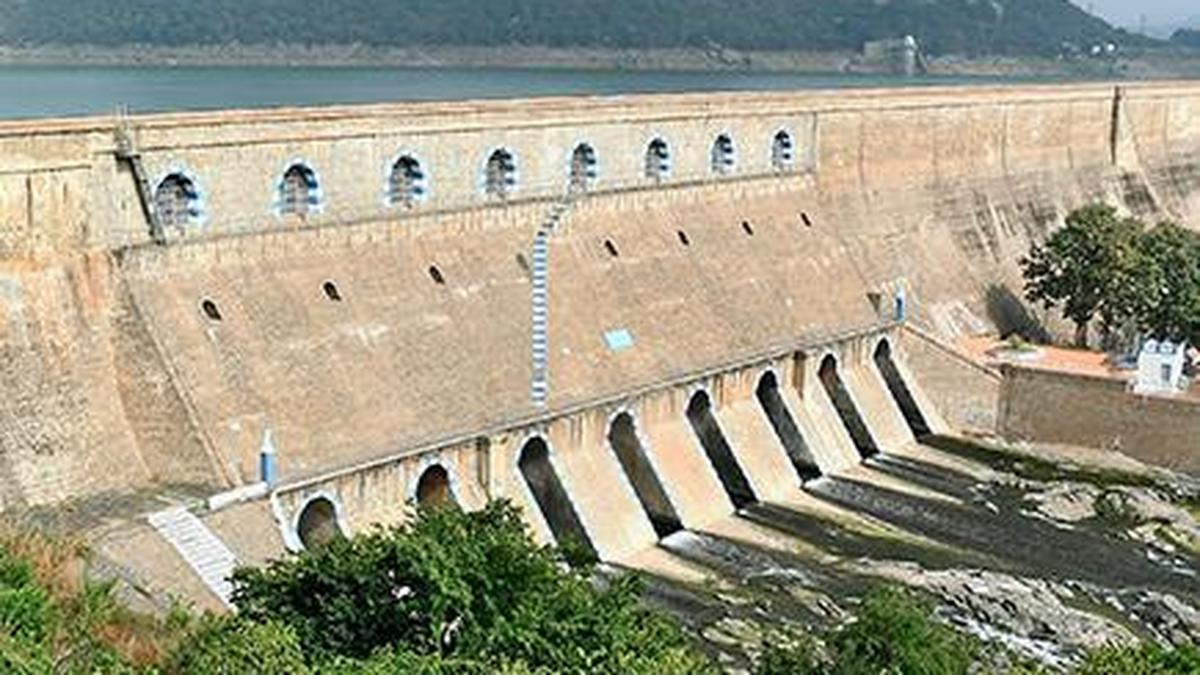

A view of the Stanley reservoir at Mettur dam. Scientists are still discovering the effects of dams on river health.
| Photo Credit: Special arrangement
Dams make rivers warmer downstream: satellite data
Satellite data from 2013 to 2024 revealed that 71% of 287 large dams across the U.S. significantly altered water temperature downstream. In most cases, the water became warmer and — notably — maintained that temperature for at least 20 km downstream. The most extreme shifts occurred at dams with reservoirs. Altered river temperature can disrupt fish spawning and harms aquatic ecosystems, especially in spring and summer. The study highlights the widespread effects dams have on river health.
Rifting event observed for first time in Indian Ocean
Researchers have captured a rare look at how the ocean floor grows. Using underwater sensors in the Indian Ocean, in April 2024, they found magma moving under the crust, the seafloor sinking by 4 m and spreading apart by more than 1 m, leading to an eruption that poured 160 million m3 of lava on the floor over 16 days. Much of this movement happened without severe earthquakes, potentially because magmatic processes allow the plates to slide apart smoothly.
Roman concrete lasts so long thanks to self-healing
After studying samples from an ancient latrine at Hadrian’s Villa in Italy, researchers found Roman concrete grows stronger over time. Lime in the mixture reacts with moisture and carbon dioxide from the air over centuries to create calcite cement, a mineral that fills cracks and pores and reinforces the structure. Thus, unlike modern concrete, which can degrade in a few decades, Roman concrete becomes a long-term sink for carbon dioxide, turning the gas into solid rock.
Published – July 12, 2026 04:07 pm IST
